





This article originally appeared in our inaugural Auto Rental News International digital edition, covering the European rental market. To access our current International edition covering Latin America, click here.
Irish Independent Charts Transition to Franchisee
How do you manage in an uncertain economy to position yourself for success as a new franchisee of a worldwide brand?
December 21, 2015
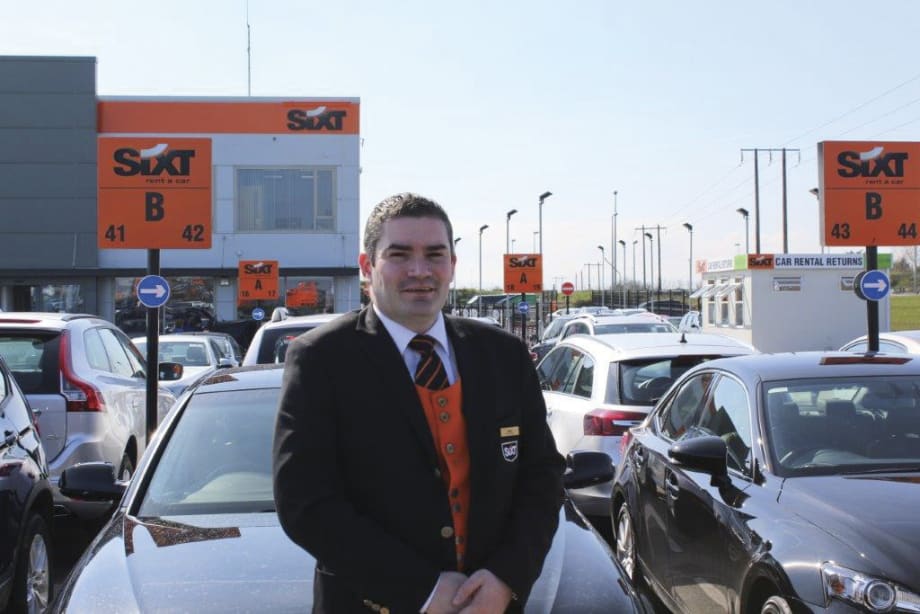
Adrian Treacy is Sixt Ireland’s manager at Dublin Airport.
10 min to read
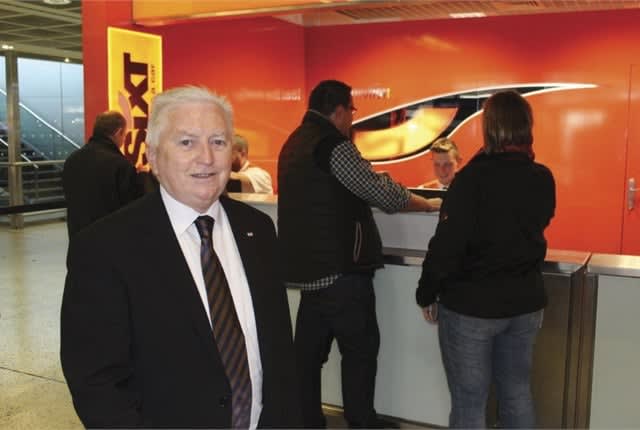
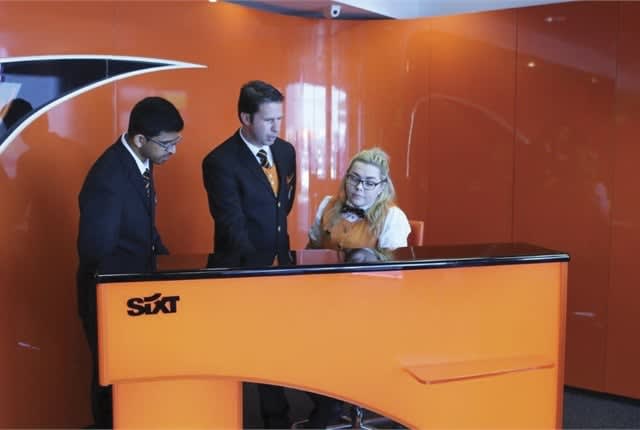
Bernard Loughran, CEO, at the Sixt desk in Dublin Airport’s Terminal 1.
In 2011, Auto Rental News profiled County Car Rentals, the largest independent car rental company in Ireland. The company has since transitioned into a Sixt Rent A Car franchise during a challenging time for Ireland’s economy.
In this most recent Q&A, CEO Bernard Loughran charts the changes in Ireland’s business climate and how his company has adapted its business model to grow and prosper by renting cars on the Emerald Isle.
Q. What’s the history of the company before becoming a Sixt franchisee?
A. County Car Rentals had been Ireland’s largest and oldest independent car rental company. In the 1990s, in order to compete globally with the majors, we structured an Irish franchise operation under the County Car Rentals brand name. It grew to 67 Irish and British rental locations.
The County Car Rentals franchise operation was marketed mainly in the long-haul flight markets, winning the majority of inbound car rental (into Ireland and Britain) from Australia, New Zealand, the Far East and South Africa, with a significant share of the hotly contested U.K. and U.S. markets.
Then 9/11 happened, our franchisees lost their insurance and went out of business.
County Car Rentals relocated its locations to Dublin, which by this time had become the major port of entry to the country. Dublin Airport traffic had expanded greatly as a result of airline deregulation and the removal of the compulsory airline stopover at Shannon Airport.
Our business grew, but by 2011 we had reached a plateau as an independent.
Q. What caused your business to stop growing?
A. Ireland, similar to car rental worldwide, was experiencing an increase in Internet use. This led to stronger recognition of the major car rental brands and greater rate competition.
Yield management, pioneered by the airline and hotel industries, was replacing the traditional booking methods of travel wholesalers, retailers and direct bookings.
Similar to the airline industry, major car rental companies were gaining business through the strength of their brands globally and the power of the Internet. A higher volume, lower margin business model emerged. We did not have the budget to compete and could only achieve expansion by being part of a larger group.
Adrian Treacy is Sixt Ireland’s manager at Dublin Airport.
Q. What was the overall car rental situation in Ireland at the time?
A. Ireland is a small, open economy and is greatly influenced by outside economies. Worldwide, the car rental industry was undergoing consolidation into five major groups.
The U.S. — the world’s largest car rental marketplace — was becoming dominated by three major groups: Hertz, who had already set in motion the acquisition of Dollar Thrifty; Enterprise, who had acquired National and Alamo; and Avis Budget Group. In Europe, car rental’s second largest market, there were two more major players: Sixt and Europcar.
The Irish car rental market was also dominated by these brands. As such, County Car Rentals saw its future as a franchisee.
Q. What factors led you to join with Sixt?
A. We were impressed with the success and growth of Sixt in Europe and worldwide. We were comfortable with the philosophy and structure of Sixt. It is a family business like ours; it has a strong organizational structure and potential for future expansion.
Sixt’s expansion plans in the U.S. were important, as this represented 40% of the Irish car rental leisure business. Sixt had previously worked in Ireland on a smaller scale and we recognized that it was not being used to its full advantage.
The Sixt Rent A Car franchise became available for the Republic of Ireland. We entered into negotiations and were successful in winning the franchise.
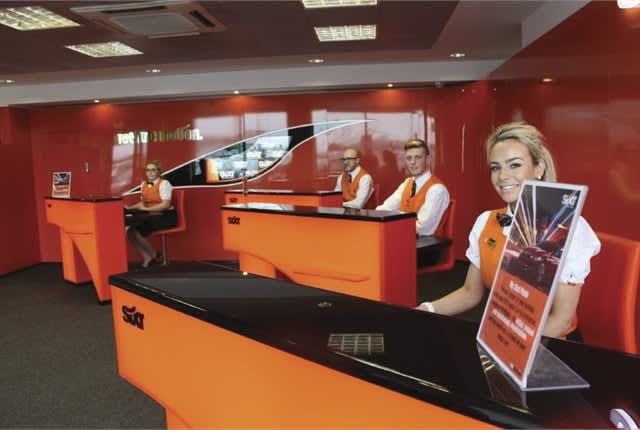
The franchise’s airport staff waits to serve customers at Dublin Airport, which now sees 87% of the country’s arrivals.
Q. What changes did you make after gaining the Sixt franchise?
A. When we acquired the Sixt franchise, it also needed to be aligned with our company’s vision. Although the Irish economy was in a deep recession, I saw opportunity for significant growth, particularly into Dublin, from the strong German and Central European economies.
The next part of the vision was to construct the growth plan. Ireland’s car rental profile had become 89% leisure. The remainder was replacement and corporate.
I chose to focus mainly on leisure, with rental locations initially in the Dublin area. Dublin Airport had just been expanded with a second terminal and a major national motorway network had been recently constructed to connect all major Irish cities within a two-hour drive from Dublin.
We kept Sixt corporate advised of our vision and growth plans, and Sixt, without changing its franchise model, was able to adjust for strong growth. In its franchisees, Sixt recognizes the entrepreneur’s own strengths and abilities.
Q. What challenges came with changing your business name?
A. Although the legal corporate name does not change, the changing of the trading (business) name is probably the biggest emotional decision for an established company. There is the concern that you’re giving away the goodwill and business built up over the years.
We recognized that the long term presented greater potential, and rebranding would work best with a complete change. We put a process in place to advise our customer base.
We retained a very small presence of the County Car Rentals name for one year while we promoted the Sixt brand.
After six months, we engaged a public relations firm and with guidance from Sixt we made our major launch, at one of Dublin’s largest hotels. We were pleased with the turnout, from the majority of the finance organizations and practically all the vehicle distributors. The launch was expensive, but it was well attended and the exposure has paid back many times over.
Niall Bourke, training manager, uses new audio-visual training facilities for new staff orientation.
Q. What were your priorities in moving into a franchise network with a larger scale?
A. The first major requirement was team building, particularly filling senior management positions. Sixt provided guidance for new roles necessary for a strong management structure. I was fortunate to fill most key positions at the time.
I personally took on some tasks, which enabled me to further learn and apply skills that came easier to me.
As with any franchise opportunity, it is essential to embrace the franchisor’s business model. There were issues to address, including taking into consideration the legal and taxation structure in Ireland. These were also quickly incorporated with constructive discussions with Sixt corporate.
Q. Did you need to realign your fleet?
A. The Sixt Rent A Car model is “Premium cars at affordable rates.” Cars in fleet could not be more than two years old; premium cars could not be more than nine months old.
Our fleet at the time of signing was overwhelmingly out of Sixt’s specification, with many vehicles approaching four years of age. We needed a much larger and newer fleet.
We had to bite the bullet and dispose of our out-of-spec fleet and acquire vehicles that met Sixt’s specifications. This required large financing, a difficult task in Ireland’s difficult economic climate.
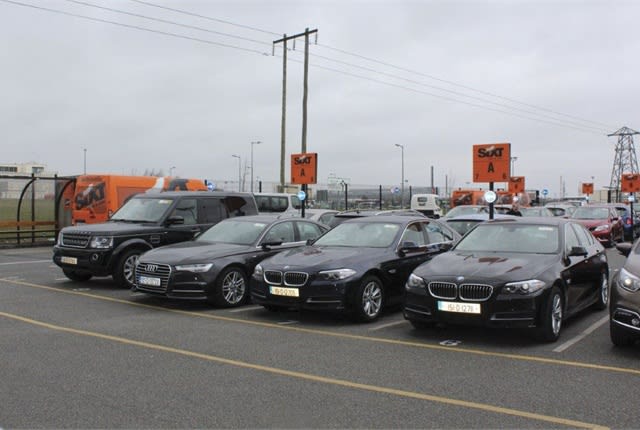
Sixt Ireland claims the largest premium fleet in the country. Because Sixt requires that premium cars be younger than nine months, the franchise needed to upgrade its fleet quickly.
Q. What strategies did you employ to obtain financing?
A. In 2012, Ireland was recovering from the spectacular economic crash from our “Celtic Tiger” economic boom.
Previously Ireland had become one of the world’s fastest growing and richest economies. The country greatly extended its borrowing, and most investment was in long-term strategic infrastructure and business development. Unfortunately, the country overextended its speculative home building construction, with prices reaching worldwide record levels. The country was not well prepared for the events that followed the Lehman Brothers collapse.
We quickly fell into the worst recession in our history and basically had to be bailed out by the major European banks. Austerity was in place — this wasn’t a good time to be visiting financial institutions.
Banks were extremely restricted for lending. The retail auto industry had overextended in the Celtic Tiger years and more than 30% of car dealers went under. It was difficult facing banks not willing to lend to businesses associated with cars.
At this time, there were five major car rental companies who had also avoided being involved in the property crash and had built the necessary reserves. Franchisees are responsible for finding their own financing, and we were in competition with the majors for banking facilities.
To our benefit, as an independent we had a very positive borrowing record and no debt. Our company had steered clear of involvement in the highly speculative property investments and came through the recession with a strong balance sheet.
The most significant argument to get us over the line came from an earlier presentation at the Car Rental Show in Las Vegas on how to get bank financing. We were able to show the banks that the car rental financial model is more aligned to the utility industry, which itself is more recession proof.
These assertions, together with the strong Sixt brand image in Europe, helped to secure the necessary financing.
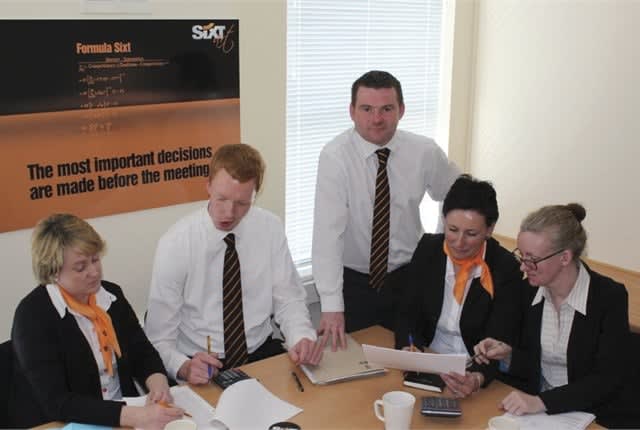
Stephen Kinsella (standing) finance and administration manager, joined the franchise three years ago in the middle of Ireland’s financial collapse.
Q. How did the economy play into your choice of rental locations?
A. As an island, tourists arrive to Ireland by air, and Dublin Airport and city were becoming the major source of this business. Though Ireland’s economic Celtic Tiger Era brought the country to its financial knees, it did have some spectacular achievements.
This included the building of a new terminal at Dublin Airport, which resulted in Dublin taking 87% of the country’s arrival traffic. Dublin Airport’s car rental market is now ranked with Europe’s largest airports such as Munich, Frankfurt and London.
The country had just completed a major rebuild of its motorway system, which connected all major Irish cities to Dublin Airport within a two-hour drive.
Dublin built two stadiums, a convention center, three major theaters and several large hotels and entertainment venues.
As such, although the country was greatly in debt, Dublin had the infrastructure for flights, accommodations and attractions for increased tourism business. We decided on locations in Dublin Airport, Dublin City North and Dublin City South.
Q. After reshaping the business to Sixt’s standards, how did you build business volume?
A. We adopted a strategy of “picking the low-hanging fruit.” Sixt has a strong network of wholesale and corporate contacts who we worked with to attract business to Ireland. Our Sixt branding helped greatly, especially with customers from the strong economies of Germany and Central Europe.
We initially took training from Sixt corporate, and quickly appointed our own training manager and built training facilities. Training has paid off with repeat customers. It is essential and ongoing.
We set up pricing and yield management separately, which was essential to capturing larger business volumes.
As wholesale business comes in at lower rates we set up an incremental sales training function to continuously monitor and train staff at the counters. The strategy worked and we gained significant extra business and increased market share.
Q. Can you share some business performance figures since you became a franchisee?
A. In the three years since we became a Sixt franchisee, our staff has increased fourfold. Our fleet size has increased from 400 units to about 2,000 for the 2015 peak season. Revenue has increased by 428%, versus an overall industry increase of 37%.
Profitability has consistently been positive. Our Dublin Airport share has increased from less than 1% to more than 6%. Our revenue per day (RPD) has increased by more than 94%.
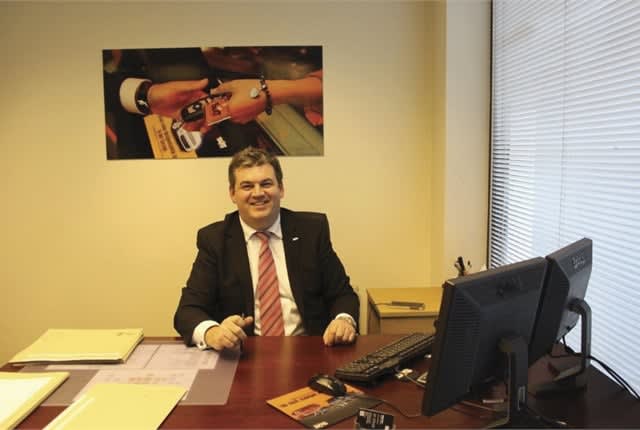
Trevor Toner, operations director, has seen the Sixt Ireland fleet expand from 400 vehicles to more than 2,000 in three years.
Q. What is your outlook for the near term?
A. Ireland is experiencing a tourism boom at present, and we expect this to continue into the next few years. We see opportunities to continue to expand our rental business. We greatly support the expansion of the Sixt network and especially branding in the U.S.
While we are positive, we watch world events and their impact. We have seen the (relatively short-term) effects of terrorism, international sicknesses, ash clouds and economic downturns. As our business built up we were careful not to overextend our capital base to be able to hold onto reserves for unplanned events. For major decisions, we take time to plan and look at “what-if” situations.
Franchising is not a get-rich-quick scheme. It is not for everyone. But for car rental entrepreneurs with vision, willingness to listen and patience, it can bring a great future.
For potential franchisees, our experience shows us to be prepared to adapt to the franchise structure, image and quality requirements. As growth occurs, build a strong financial structure and avoid speculative risks. We are happy to share our success story with any potential Sixt franchisees.
Originally posted on Auto Rental News
Subscribe to Our Newsletter
More Global Fleet
GeoFencing Adds to Your Truck Security Arsenal
Geofencing is a familiar fleet tool today, but its early adoption marked a major shift in vehicle tracking, route monitoring, and the debate over employee privacy.
Read More →
Holman Takes Full Ownership of ARIZA in Mexico
Holman is bringing its Mexican fleet management operation fully under its own brand after more than 30 years as a joint venture. The change gives multinational fleet customers a single Holman operation across the U.S., Canada, and Mexico.
Read More →
5 Tire Maintenance Tips to Help Prevent Work Truck Downtime
Regular tire checks can do more than extend tread life. These five maintenance practices can help work truck fleets catch problems early, reduce costs, and prevent downtime.
Read More →

Proven Ways to Reduce Work Truck Downtime
The age-old problem of downtime will always be a reality, but with new strategies at hand, fleets have more ways to keep trucks on the road longer.
Read More →


Cameras, Safety and Insurance: From Reactive Claims to Real-Time Prevention (Part 2 of 2)
Part Two: Commercial auto remains one of the most challenging and costly lines of coverage for fleet operators and insurers alike. Continue learning more about how to effectively address these issues from Onur Aksan, Enterprise Business Development Executive, Geotab
Read More →
Cameras, Safety and Insurance: From Reactive Claims to Real-time Prevention
Commercial auto remains one of the most challenging and costly lines of coverage for fleet operators and insurers alike. Learn more about how to effectively address these issues from Onur Aksan, Enterprise Business Development Executive, Geotab.
Read More →
Fleet Costs Are Rising: Here’s How Leaders Are Responding
Fleet leaders are under pressure to reduce costs, adapt to economic uncertainty, and make smarter decisions. See how peers across North America are responding with real data, proven strategies, and forward-looking insights. Download the 2026 Market Pulse Report to benchmark your strategy and uncover where you can gain an edge.
Read More →
Enterprise Fleet Management Surpasses 900,000 Vehicles in U.S. & Canada
Enterprise Mobility connects with mobility solutions around the globe
Read More →