




Into the Driver's Seat: States Take Action to Boost NGV Adoption
States have a dramatic role to play in incentivizing private-sector investment in natural gas vehicle (NGV) fueling infrastructure.
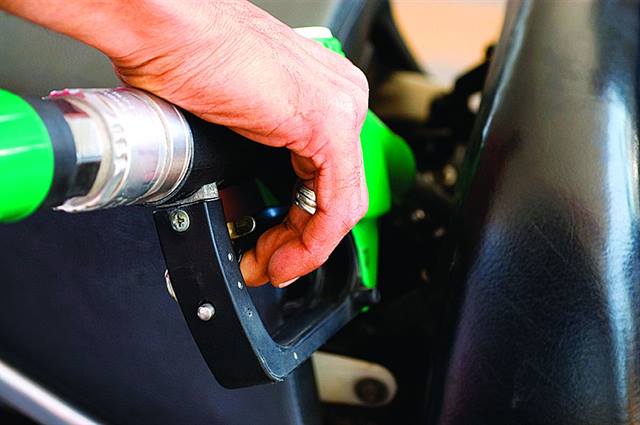
State governments are jumping into the driver’s seat when it comes to natural gas vehicles (NGVs). Led by Colorado Governor John Hickenlooper and Oklahoma Governor Mary Fallin, 22 Democratic and Republican governors have created a multistate consortium to procure NGVs for their government fleets. The goal is to aggregate purchasing power and provide an economy-of-scale incentive for automakers to produce more NGVs at lower prices. But, the purchasing consortium belies a more important role that states have to play in accelerating the nation’s NGV market.
According to global energy consultancy IHS-CERA, several million NGVs could be on the nation’s roads in the future, up from 124,000 today. But, two key obstacles must first be overcome. First, the high incremental cost of purchasing vehicles fueled by natural gas — up to $85,000 for the heaviest duty combination truck-tractors — and, second, inadequate NGV fueling infrastructure.
New compressed natural gas (CNG) and liquefied natural gas (LNG) fueling stations may cost $1 million and $2 million or more respectively, 10 and 20 times the cost of a conventional gasoline station. In a survey by PLS Logistics, 23 percent of fleet executives pointed to high incremental vehicle costs as an impediment to adoption of NGVs. But, over twice as many — 53 percent — pointed to fueling access as the No. 1 barrier to adopting NGVs for their fleets.
States have a dramatic role to play in incentivizing private-sector investments in NGV fueling infrastructure, all the more so because the federal government is taking a back seat (e.g. congressional inaction on the Natural Gas Act of 2011).
The case for action is clear. A recent study by the American Clean Skies Foundation projected that $32 billion needs to be invested over the next decade to build a fueling network backbone, one that reaches a tipping point where natural gas is dispensed as a transportation fuel at 8,650 stations nationwide. The need to increase the number of public access CNG and LNG stations is particularly pronounced.
Deployment of this fueling network would drive a significant expansion in the number of fleet-operated NGVs, producing national benefits potentially valued in the hundreds of billions of dollars when measured in terms of reduced oil imports, lower pollution and greenhouse gas (GHG) emissions, and reduced military spending. Building 8,650 new NGV fueling stations could help create 1.5 million new clean fuels technology jobs, significantly boosting the recovery of state economies.
The following examples highlight policies that states can embrace to incentivize private-sector investment in their NGV fueling networks.
Taking Advantage of Tax Credits
Clear evidence of the effectiveness of tax credits in incentivizing investment in fueling infrastructure can be seen in Oklahoma, where commercial entities are eligible for a state business income tax credit of up to 75 percent of fueling station development costs. There is no cap on the amount of credit that can be taken in any year, and credits can be carried forward for a five-year period. The tax credit has sparked development of more than 40 public-access CNG stations statewide; with a population of 3.8 million and 58 stations, Oklahoma is home to more public-access CNG stations per capita than any other state.
Oregon’s 35-percent Business Energy Tax Credit for alternative-fueled vehicles is unique in that it includes a “pass-through” provision — in addition to commercial entities, government and nonprofits can transfer the credit to another (commercial) entity with tax liability. In return, the transferring entity receives a lump sum payment. The pass-through formula proved highly effective in generating capital investment for wind energy projects, whereby such companies as Walmart served as pass-through partners, providing immediately available capital useful to developers in meeting significant up-front project costs.
A West Virginia business income tax credit that went into effect in 2011 might prove instrumental in sparking investment. A credit of 50 percent, up to a total of $250,000, is authorized for any individual entity. Particularly helpful: Public-access stations are eligible for a 25-percent bonus, raising the tax credit maximum to $325,000.
Grant Programs
The California Energy Commission (CEC) awards grants of up to $300,000 for CNG stations and $600,000 for LNG stations, providing the grants do not exceed 50 percent of station development costs. Notably, all recipients of CEC grants must agree to open their stations to public access. A sign of success: Since 2007, almost $13 million in grant awards have been made, leveraging investment in more than 30 new and upgraded CNG and LNG stations.
In 2011, Texas initiated an ambitious NGV infrastructure grant program as part of the plan to build the Clean Transportation Triangle linking Dallas, Houston, and San Antonio. Grants of $100,000 are available for stations that dispense CNG; $250,000 for LNG stations; and $400,000 for stations that dispense both CNG and LNG. All stations receiving grant funding must be public access. Grants totaling $3.15 million were announced in July that will leverage new investment in three LNG stations, 11 CNG stations, and one station dispensing both CNG and LNG.
[PAGEBREAK]
Leveraging Natural Gas Utilities
Known as LDCs, local natural gas distribution utilities can play an instrumental role in accelerating deployment of CNG fueling infrastructure. A key is to allow LDCs to recover capital costs through NGV tariffs, which must be approved by state public utility commissions. With an NGV tariff that allows for rate-based capital cost recovery, LDCs can build fueling infrastructure hosted at third-party gasoline and diesel stations and fleet operator sites.
Questar Gas, a retail natural gas-distributor, is a prominent example of successful use of an NGV tariff. The tariff has allowed Questar to build 33 public access CNG stations in Utah, a large reason why the state now ranks second only to Oklahoma in terms of public-access CNG fueling stations per capita. The Questar tariff rate is currently equivalent to $1.63 per diesel-gallon-equivalent (DGE) and $1.28 per gasoline-gallon equivalent (GGE). Under an NGV tariff rider approved earlier this year, North Carolina’s Piedmont Natural Gas plans to build new CNG stations. Included is a public-access station being hosted in Charlotte by Frito-Lay Co., which accepted delivery of 67 new Freightliner CNG trucks this summer.
Other states have taken somewhat different approaches. Regulatory approval was recently granted for New Jersey Natural Gas (NJNG) to spend $10 million on a one-year pilot program to build between seven and 10 new CNG stations hosted at third-party locations. NJNG will not initially be able to recover its capital cost, but may be able to do so in the future, with a projected cost of $0.30 per month to non-transportation fuel consuming utility rate payers. NJNG will benefit from a 50-percent federal bonus depreciation allowance that, however, is set to expire at the end of 2012.
In late 2011, National Fuel Gas Company of New York received regulatory approval for a three-year program that will see the LDC issue $3.5 million in grants to build new NGV fueling stations (and can also be used for vehicle purchase and conversion). The utility will recover its costs under fuel sales contracts with the fleet customers that receive the grants and host the fueling infrastructure.
Atlanta Gas Light Company (AGLC) is implementing an approved program, whereby it will use $11.5 million in a utility Universal Service Fund to lease CNG compression infrastructure to up to 10 third-party fuel retailers. AGLC will own, operate, and maintain the equipment with host vendors being responsible for fuel marketing and transactional functions, including signing up fleet operators to fuel-service contracts.
Allowing regulated LDCs into the NGV fueling market is highly contentious. Independent fuel vendors and utility ratepayer advocates often oppose NGV tariffs on the grounds that they can result in cross-subsidization of fueling infrastructure costs by utility customers who do not consume CNG as a transportation fuel. A key to allowing LDCs to invest in fueling infrastructure lies in state lawmakers and regulators considering not just pure utility economics, but the full range of social and environmental benefits to be derived from encouraging LDCs to invest in expanded fueling infrastructure.
Into the Driver’s Seat
Despite their effectiveness, NGV infrastructure tax credits have been allowed to expire in five states: Colorado, Missouri, New York, Ohio, and Pennsylvania. A grant program in Arkansas has also been allowed to lapse while a program authorized by the Indiana legislature in 2009 to provide grants of up to $200,000 has never been funded. Likewise, the ability of LDCs to own and operate public access NGV fueling infrastructure is circumscribed in most states. Against this background, state governments would be wise to provide sustained support for private sector investment in NGV infrastructure over the long haul, as inconsistent support to date has tended to discourage user buy-in for NGVs.
In sum, billions must be invested in NGV fueling infrastructure if fleet owners are to exponentially expand the number of NGVs on our roadways. Embracing incentive policies will cement state leadership in a crucial opportunity the transportation sector has to save money, improve air quality, reduce GHG emissions, create jobs, and bolster U.S. energy independence.
About the Authors
Gregory Staple is CEO of the American Clean Skies Foundation. He can be reached via e-mail at
gstaple@cleanskies.org.
Matthew Slavin, Ph.D. is principal of Sustainability Consulting Group of Washington, D.C. He can be reached via e-mail at matt@sustaingrup.com.
More Green Fleet

Merchants Fleet Reports 290M EV Miles as Fleets Navigate Changing Electrification Market
From millions in operating savings to hundreds of millions of EV miles, Merchants Fleet’s latest report reveals what’s working and what’s changing in fleet electrification.
Read More →
The EV Breakdown Nobody's Talking About: Why Most Electric Vehicle Roadside Calls Aren't Mechanical Failures
Here's why EV breakdowns are widely misunderstood.
Read More →
ChargePoint Now Available in Energy Pass
ChargePoint and additional planned charging network integrations were added to GM's Energy Pass.
Read More →

First Look: Slate Auto's Electric Fleet Pickup
Could an affordable, modular EV pickup make electrification more practical for fleets?
Read More →
Slate Debuts Colorful, Unique EV Models
A recent media and client event, studded with electric vehicles dressed up on platforms, planted a new position for the manufacturer in the wider EV market. Fleets will find cost-saving advantages.
Read More →
Slate Electric SUV, Pickup Switchable Model Aims For Light-Duty Fleets
Everything about this EV is counterintuitive and understated, making it stand out from the crowd.
Read More →
Inspiration Mobility Acquires Key Electrada Assets
Inspiration Mobility Group has acquired select assets of Electrada, adding the fleet electrification provider's team, technology, and charging infrastructure development capabilities to its energy management business.
Read More →
Turning Connected Vehicle Data Into Decisions That Matter
Fleet leaders have more data than ever, but turning that data into clear, actionable decisions remains a challenge. This white paper shows how leading organizations are using connected vehicle data to improve safety, reduce costs, and optimize fleet performance. Learn how to turn insight into action across your fleet.
Read More →
Are You Tracking Your Fleet's True Total Cost of Ownership?
Bobit Business Media surveyed 190 fleet professionals and found that while most fleets are tracking costs, fragmented systems and data gaps are keeping true TCO visibility out of reach. With rising pressure to control spend in an increasingly volatile environment, the gap between what fleets think they know and what the data actually shows is wider than you might expect. See how your peers are managing costs today and where the industry still has room to improve.
Read More →