




Hydroplaning: What It Is and How To Avoid It
Hydroplaning is an extremely common danger to avoid while driving. Here’s how understanding it can help prevent accidents and improve driver safety.

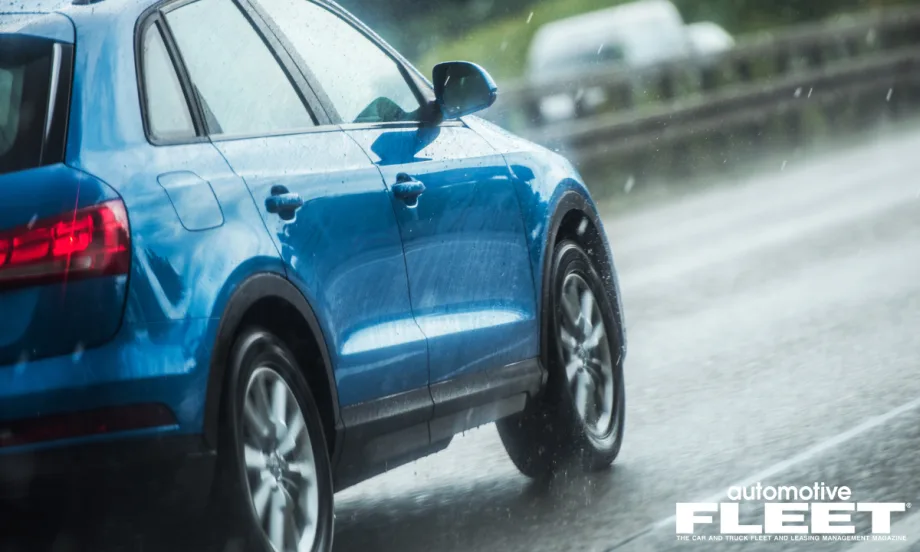
Hydroplaning happens when tires lose contact with the road and skim across water — a dangerous situation that can strike at speeds as low as 35 mph during heavy rain. Proper tire maintenance and cautious driving are key to staying safe.
Image: Automotive Fleet
Remember back in high school, when driver’s ed classes taught you not only where to place your hands on a steering wheel, but also what to avoid in tough driving weather?
That’s still relevant today. One of the most common risks drivers face in inclement weather is hydroplaning. Here’s exactly what it is, how to avoid it, and what to do if it arrives.
What is Hydroplaning?
Hydroplaning occurs when a tire encounters more water than it can scatter. As speed increases, the tires start to ride up on the layer of water, much like waterskiing. This means the driver can't brake, accelerate, or turn, and eliminates all traction from the tires—and it happens in a matter of seconds.
Hydroplaning can occur at speeds as low as 35 mph, and the likelihood increases when traveling at 55 mph or higher. According to AAA data, cars are at greatest risk during the first 10 minutes of a downpour, especially if the water is more than one-tenth of an inch deep.
“When hydroplaning, you are literally riding on top of water without any control of your vehicle,” said AAA Car Doctor John Paul.
Light rain, however, mixed with oil residue on the road surface, can also create slippery conditions that can lead to hydroplaning.
How Can Drivers Avoid Hydroplaning?
To avoid hydroplaning, experts recommend the following:
Keep tires properly inflated and maintain good tread.
Rotate and replace tires when necessary.
Slow down on wet roads.
Avoid driving in outer lanes where water tends to pool and steer clear of puddles.
Try to drive in the tracks of the vehicle in front of yours for a clear path.
Don't use cruise control.
Avoid sharp turns or hard braking.
Pay attention to a “shushing” sound — it's a signal to slow down.
What Steps Can Drivers Take to Recover from a Hydroplane Incident?
Keep the wheels straight and reduce speed.
Don’t brake. Stay calm and ease off the accelerator. Allow your vehicle to regain traction first.
If you need to brake, simply pump it, and do so gently with a light foot.
Understand anti-lock brakes. If you have anti-lock brakes, you can brake normally, as the technology is programmed to mimic pumping when necessary.
Editor's Note: This piece was originally published back in 2019 and has been checked for continued relevance.
More Safety

Fleet Manager’s Ultimate Playbook: Navigating the New Standard in OEM Connectivity
Rising operating costs, driver safety concerns, and unplanned downtime are putting unprecedented pressure on modern fleets. Discover how fleet managers use embedded OEM connectivity and real-time vehicle data to cut TCO, prevent downtime, and protect drivers without aftermarket telematics hardware.
Read More →
From Driver Well-Being to EV Charging | AF News Recap
Mental health belongs in the fleet safety conversation. This week, we’re looking at five ways fleets can support employee well-being before a crisis, plus Holman’s expansion in Mexico, new one-day Fleet Forward passes, and why EV charging demand is outpacing infrastructure growth.
Read More →
Nexar-Nauto Merger Aims to Give Fleets Better Safety Intelligence Through Larger Driving Dataset
Stefan Heck tells Automotive Fleet that combining more than 10 billion miles of driving history with Nexar's AI models will give fleets deeper insights into driver risk and roadway conditions than either company could provide independently.
Read More →
Don't Wait for a Crisis: 5 Ways to Build Mental Health Into Your Fleet Safety Program
For Suicide Prevention Month, fleet and safety leaders have an opportunity to put mental health where it belongs: at the center of workplace safety.
Read More →
How Camera Data Can Strengthen a Fleet’s Insurance Renewal
Insights from a commercial insurance carrier and a broker show how fleets can turn video telematic data, driver coaching, and improved claims results into a stronger case at insurance renewal.
Read More →
The Safest Fleets Aren’t the Ones with the Most Technology
You’ve made the telematics investment. Here’s how to capture the other half of its value and build the safest fleet on the road.
Read More →
Hidden in Plain Sight: Fleet Compliance Risks
Fleet compliance isn't just about having policies — it's about consistently enforcing them. This practical guide reveals six hidden compliance risks common in public sector and shared fleet operations and outlines proven strategies to improve visibility, accountability, and audit readiness
Read More →
NETS Sets 2026 Fleet Safety Benchmark Conference for Indianapolis
The Sept. 15–17 program will feature fleet benchmarking data, case studies, emerging technologies, and implementation strategies while running alongside the NSC Safety Congress & Expo.
Read More →
Off-the-Job Crashes Account for 43% of Employers’ $61.7 Billion Crash Burden
NETS quantifies costs dispersed across fleet, risk, HR, and other departments while providing new per-crash benchmarks for employers.
Read More →
Ram Recalls More Than 1.27 Million 1500 Pickups for Seat Belt Anchor Issue
The recall affects certain 2019-2026 Ram 1500 pickups that may have improperly attached second-row seat belt buckle anchors.
Read More →