




Hybrid Conversion Cuts Fleet Vehicle’s Fuel Usage by 30%
This Ohio-based heating and cooling company represents a good test case for an aftermarket electric drive system due to its daily stop-and-go service routes.

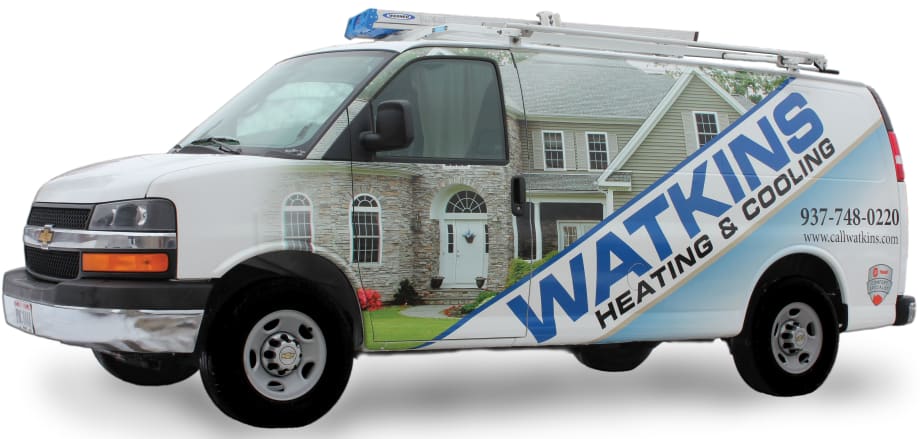
Watkins Heating & Cooling has converted one of its GMC Savana fleet vans using XL Hybrids' technology.
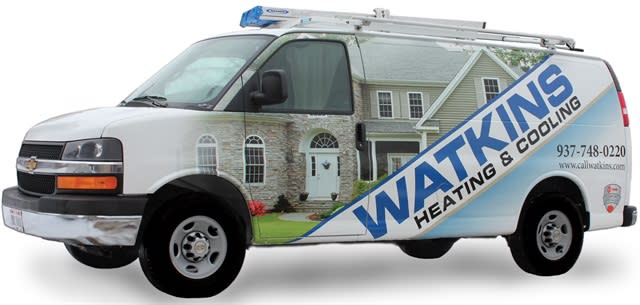
Watkins Heating & Cooling has converted one of its GMC Savana fleet vans using XL Hybrids' technology.
When David Watkins started reading up on alternative fuel options for his company’s fleet, he looked at several options, including mild hybrids, CNG and propane.
“I came across XL Hybrids while doing research on energy efficiency,” says Watkins, vice president of Watkins Heating & Cooling, a family-owned and operated HVAC service company headquartered in Springboro, Ohio.
Based in Boston, XL Hybrids offers fleet electrification solutions for class 2-4 fleet vehicles, including cargo vans, passenger wagons, box trucks and step vans. The XL3 Hybrid Electric Drive System is a regenerative braking system that helps save fuel.
“As the vehicle decelerates, our motor generator charges up the battery pack while helping the vehicle slow down,” says Clay Siegert, co-founder and vice president of XL Hybrids Inc. “When you press the accelerator, the motor generator helps to propel the vehicle using electric power. We offer an assist so the engine uses less fuel and doesn’t have to work as hard to propel the vehicle.”
So far, Watkins has added the electric drive system to one of his fleet’s GMC Savana vans. He plans to convert four more of his vans this year and eventually replace his entire 15-vehicle fleet with hybrids in the coming years.
Case Scenarios
Watkins Heating & Cooling is a good candidate for the electric drive system because each technician’s daily route consists of a lot of stop-and-go driving, according to Siegert. Covering the area between Dayton and Cincinnati, each technician usually has at least six appointments per day.
“Watkins’ service technicians drive in and around neighborhoods carrying heavy equipment,” says Siegert. “Their service routes involve lots of stop-and-go driving, which enables the customer to take better advantage of the XL3’s regenerative braking and reduce fuel consumption.”
Watkins’ converted van has experienced a 30% mpg improvement with the hybrid electric powertrain. “We anticipate getting a positive return on our investment in just over two years because we’re seeing a 30% to 35% improvement in fuel efficiency,” says Watkins.
Watkins is seeing an even higher fuel savings than the average XL Hybrid customer.
“Over the course of a drive cycle, the system can boost a vehicle’s mpg by an average of 25%,” says Siegert. “Watkin’s drive cycle is so ideal that he is seeing a higher mpg.”
In addition to the fuel savings, there is also no extra cost involved with managing the system or training employees how to drive the converted vehicles. According to Watkins, there hasn’t been a learning curve. He describes it as driving a Prius but with a stronger motor.
Plus, technicians don’t have to spend as much time at the gas pump. “We anticipate saving our service technicians about 20 gas fill-ups a year,” says Watkins. “Our technicians will have more time to focus on customer service while minimizing time on refueling the van.”
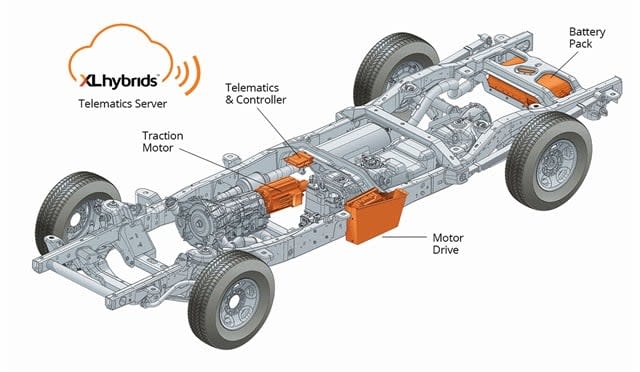
XL Hybrids' hybrid electric powertrain.
Conversion Process
Compatible with any type of fuel engine, the hybrid conversion system is installed post-transmission as a retrofit or a new vehicle upfit.
The conversion can be done in one day. Watkins dropped off the van in the morning at a XL Hybrid upfitter and picked it up the next day as a hybrid van.
Recommended for vehicle model years 2010 and later, the hybrid system generally lasts for 10 years or 250,000 miles.
“We have restricted the upfitting to newer vehicles (only a year or two old) so we can get the most use of the hybrid system before it’s time to retire the vehicle,” says Watkins.
Originally posted on Work Truck Online
More Vehicle Research

Hall of Fame Inductee: John Dmochowsky
The longtime Mondelēz International fleet executive joins the Automotive Fleet Hall of Fame.
Read More →
Hall of Fame Inductee: Lee Miller
After more than four decades at Boehringer Ingelheim, Lee Miller leaves a legacy built on fleet expertise.
Read More →
Hall of Fame Inductee: Mark F. Petersen
From managing fleets of thousands of vehicles to advancing safety and mentoring fellow professionals, Mark F. Petersen made his mark across both the corporate and supplier sides of fleet.
Read More →
When Charger Downtime Becomes a Fleet Availability Problem
As EV deployments move beyond pilot programs, charger reliability can directly affect vehicle readiness, driver productivity and route scheduling.
Read More →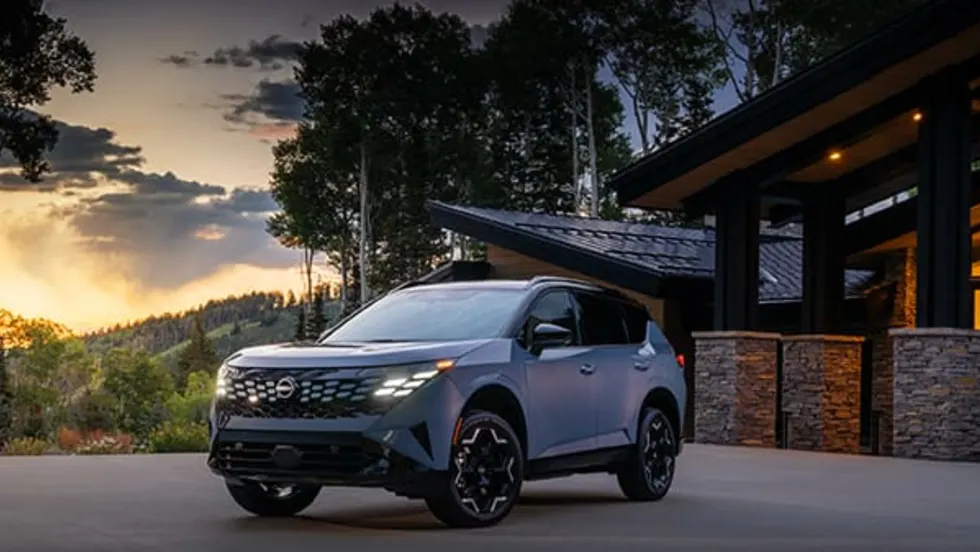
2027 Nissan Rogue Hybrid Adds e-POWER, Standard AWD
The new Rogue Hybrid uses Nissan’s e-POWER system with dual electric motors, offers an estimated 40 mpg and starts at $35,490.
Read More →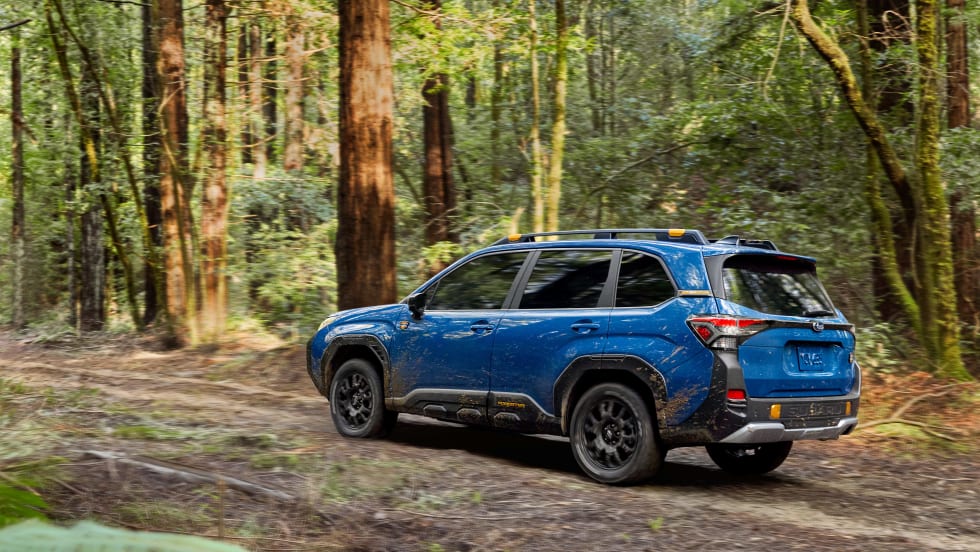
2027 Subaru Forester Adds First Wilderness Hybrid
The 2027 Forester lineup starts at $29,995 and adds a Wilderness Hybrid with 194 combined horsepower and 9.3 inches of ground clearance.
Read More →
EV Realty Names Henrik Holland President as Charging Platform Expands
The former Prologis Mobility and Shell executive will help expand EV Realty’s truck charging business and move its power-first infrastructure model into autonomous vehicle depots and other fleet sectors.
Read More →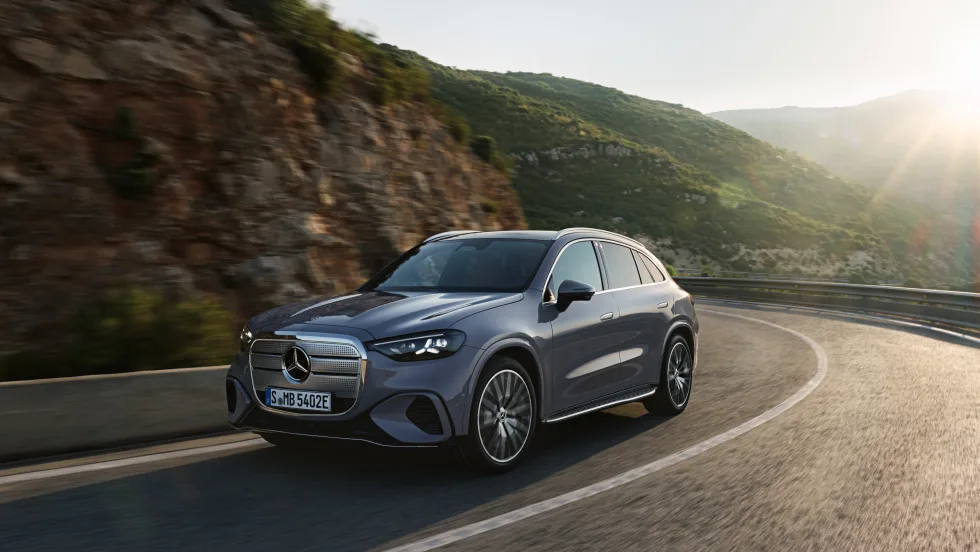
Mercedes-Benz Introduces Electric GLC With Up to 350 Miles of Range
The GLC 400 4MATIC Electric features an 800-volt architecture, 330-kW DC fast charging and a 94-kWh battery, along with Mercedes-Benz's new MB.OS operating system.
Read More →
Fleet Has a Talent Pipeline Problem, not a Talent Problem
Where will the next generation of fleet leaders come from, and what does the industry need to do differently to find them?
Read More →
Fleet Hacks: What Are You Still Doing Manually?
From daily recaps to repeatable workflows, fleet professionals share how AI can cut through busywork while keeping human judgment at the center.
Read More →