




How to Reduce Drivers' Idling Behavior
Vehicle idling wastes billions of gallons of fuel annually and sullies the air with pollutants. An eLearning program aims to change fleet drivers’ vehicle idling habits with an emotionally engaging curriculum.

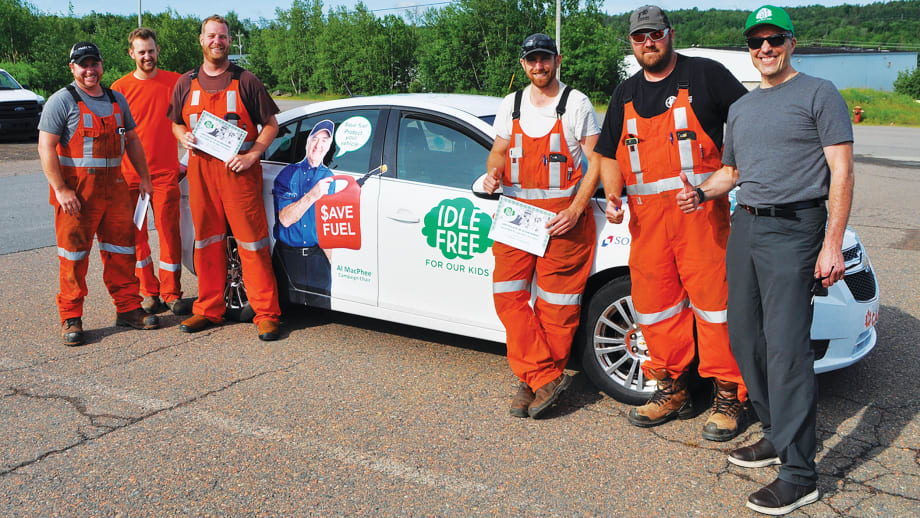
Ron Zima (far right) - aka IDLE FREE Guy™ stands with utility fleet graduates and GoGreen’s IDLE FREE Pace Car.
Ron Zima
The U.S. government estimates 6 billion gallons of fuel are wasted annually by drivers who idle their light- and heavy-duty vehicles. At today’s $3-$4/gallon fuel costs, that’s a whopping $18-$24 billion cost to consumers and businesses each year.
At the same time, idling contaminates the air with some 30 million tons of CO2 and other harmful pollutants.
Idling results in still more damage and fleet expense through engine wear and associated maintenance costs.

Ron Zima founded GoGreen Communications and IDLE FREE for Our Kids.
GoGreen Communications
How can fleets reduce idling? How can fleet managers change drivers’ unconscious idling behavior?
Ron Zima, former self-admitted idler and CEO of GoGreen Communications, believes his eLearning program can be a game-changer in modifying fleet drivers’ unnecessary idling behavior.
Building a Movement
“I used to be the North American Idler. I had no idea what harm idling added up to,” says Zima. “Today, however, we’re building a movement led by corporate fleets that can save millions of dollars in fuel and emissions.”
In 2006, realizing the fuel waste and emissions dangers posed by idling vehicles in his kids’ school parking lot, Zima began “IDLE FREE for Our Kids” idle reduction campaigns for schools and businesses as well as public awareness-building events.
The non-profit activities led Zima to found GoGreen Communications, headquartered in Halifax, Nova Scotia, to fund and expand the mission of reducing vehicle emissions and improving air quality, and to address North American fleets’ enormous costs resulting from non-operational idling.
Idling ‘By Choice’
Zima identifies non-operational driver idling behavior as mostly avoidable idle time performed for minimal personal or business benefit: “by choice” idling. Examples of “by choice” idling include: waiting in a running car to pick someone up; completing paperwork or having lunch in a stationary vehicle with the engine running; idling while drivers make deliveries; even idling when in the coffee shop.
Zima points out, however, that unless the weather is “really hot or really cold, the vehicle operator isn’t idling on purpose. It’s an unconscious belief and automatic behavior.”
GoGreen research reveals individual fleets across all sectors spend an average 40% of engine hours at idle “by choice” by the driver. The lion’s share of this idling is avoidable while in traffic or performing a business function, such as running power take-off (PTO) to run a bucket on a utility truck.
Changing Behavior
Changing driver behavior by exclusively using idle reduction technologies can help reduce idling. It’s difficult to build or promote any type of fleet culture, however, without winning the hearts and minds of the drivers.
While some fleet managers are highly skeptical of attempts to alter driver behavior, Zima believes those managers “underestimate how enthusiastic their drivers will become with an effective, up-to-date coaching program on how to idle 21st century engine technology, which requires virtually no idling at all.”
The GoGreen “IDLE FREE for our Kids” curriculum features auto experts, physicians, educators, and school children providing “credible, updated information from sources drivers can trust and who will inspire them to change,” Zima explains.
The program’s five online modules take under three hours to complete and offer 42 engaging short videos, interactive quizzes, multimedia, and idling belief before-and-after surveys.
The program is designed to be taken over a period of 4-6 weeks. Drivers absorb and apply the lessons, steadily building their awareness of North America’s 6.6 billion gallons-per-year idling habits (U.S. and Canada), while adjusting their own real-world driving beliefs and behaviors.
Upon completion of the program, participants receive “IDLE FREE for Our Kids” certification, which includes an individual fuel and CO2 savings forecast provided by the IDLE FREE calculator.
According to Zima, the program shows that the most effective idle reduction habits begin at home. Many drivers begin exhibiting their updated idling beliefs and behaviors at work, and most are thankful to management for providing the program.
“The educational and entertaining content is designed to hook drivers and engage them with messaging and images that speak directly to the three values they care most about: ‘How does my idling affect my kids, my car, and my cash?’ ”
When shown a direct cause and effect between their idling behaviors and these “hot button” values, drivers “typically become emotionally engaged and highly receptive to receiving and acquiring up-to-date idle reduction beliefs and behaviors,” says Zima.
Changing Outdated Beliefs
The “IDLE FREE for Our Kids” curriculum tackles three 1960s-era myths that drive idling behaviors today:
Idling is good for the vehicle.
Long vehicle warm-ups are required.
Restarts are hard on the starter and the vehicle.
These myths no longer apply when operating today’s finely tuned, fuel-injected, computer-assisted, catalytic-converted, particulate-filtered engine technology, Zima observes. “In fact, idling today’s engines is the worst operating condition for practically every vehicle today.”
Creating an Idle-Free Culture
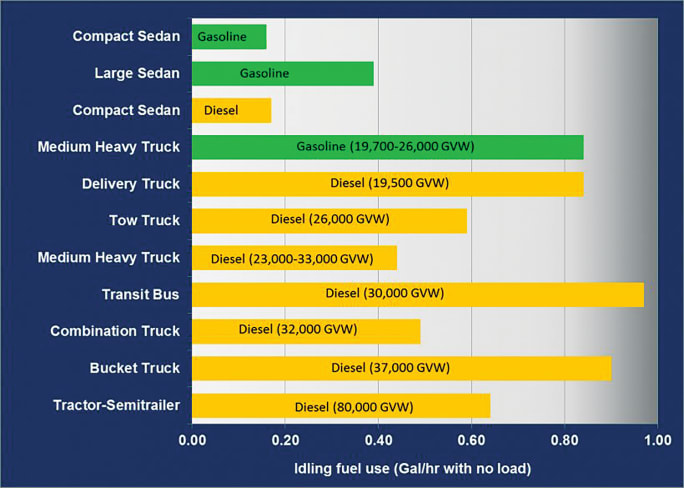
The idle fuel consumption rate for gasoline and diesel vehicles with no load varies widely. Compact sedans with 2.0-liter engines each consume about the same amount of gasoline or diesel fuel at idle. By comparison, the large sedan with a 4.6-liter engine consumes just over twice as much fuel at idle.
GoGreen
Creating a corporate idle-free culture is key to long-term behavior change and cost savings. In the process, management will also distinguish its fleet as an idle-reduction green fleet leader.
Zima believes three critical elements of such a culture are:
Policy: The company’s stated position on non-operational idling, communicated to employees;
Technology: Fleet data, measuring and tracking idling behavior;
People: Training, education, incentives, and continuous management strategy.
George Survant, a 40-year fleet management veteran with the likes of Florida Power and Light and Charter Communications, is an ardent advocate and certified “IDLE FREE for Our Kids” driver. He believes two critical aspects to implementing idle reduction driver education are:
Fleet managers’ ability to make the business case for idle reduction;
Their understanding of how idle reduction behavior modification works.
To help document potential savings and make the business case for a vehicle idle education program, GoGreen offers an Idle Reduction Opportunity Assessment, a forecasting tool to calculate a range of savings in fuel and CO2 emissions through curtailing driver “by choice” idling.
Fleet managers plot their fleet by vehicle class and similar idle characteristics, fuel type, driver count, estimated idle time per group, average annual fuel burn per group, with up-to-date fuel pricing from the government’s Energy Information Agency. Generally, most fleet operators have no idea of how significant the cost-savings average from an effective ilding-reduction program will be. This assessment provides a reliable forecast.
To further illustrate how the behavior modification program works, GoGreen also provides a comprehensive Fleet Manager’s Guide, outlining the curriculum, module topics and rationale, strategies, and recommendations to prepare participants.
Before-and-after participant assessments help document individual comprehension and belief changes.
Employing logic, emotion, and a call to action, Ron Zima believes the GoGreen “IDLE FREE for Our Kids” program and movement will put a big dent in North America’s annual 6.6-billion-gallon idling habit.
More Maintenance

Fleet Manager’s Ultimate Playbook: Navigating the New Standard in OEM Connectivity
Rising operating costs, driver safety concerns, and unplanned downtime are putting unprecedented pressure on modern fleets. Discover how fleet managers use embedded OEM connectivity and real-time vehicle data to cut TCO, prevent downtime, and protect drivers without aftermarket telematics hardware.
Read More →
How Can Fleet Managers Tell Which Repairs Require Closer Review?
Fleetio’s Brianna Perry demonstrates how Service Advisor evaluates maintenance requests, identifies pricing anomalies, and provides the context fleet managers need to focus their attention on potential problems.
Read More →
Why Roadside Assistance Belongs in a Fleet Risk Strategy
Roadside assistance is more than a tow. See how the right partner can protect drivers, uncover fleet trends, and strengthen your risk strategy.
Read More →
Hidden in Plain Sight: Fleet Compliance Risks
Fleet compliance isn't just about having policies — it's about consistently enforcing them. This practical guide reveals six hidden compliance risks common in public sector and shared fleet operations and outlines proven strategies to improve visibility, accountability, and audit readiness
Read More →
How Maintenance Costs Compare Across 27 Fleet Vehicles
Vincentric’s three-year, 60,000-mile projections reveal wide differences for both scheduled and unscheduled maintenance among selected vehicle categories. Projected maintenance visits also play a factor.
Read More →
The EV Breakdown Nobody's Talking About: Why Most Electric Vehicle Roadside Calls Aren't Mechanical Failures
Here's why EV breakdowns are widely misunderstood.
Read More →
How Stellantis Plans to Get Ahead of Fleet Downtime
Keeping fleet vehicles on the road has become as important as buying them. Darren Bradshaw of Mopar North America explains how connected vehicle data, AI, and proactive service strategies are helping Stellantis reduce downtime and move closer to predictive maintenance.
Read More →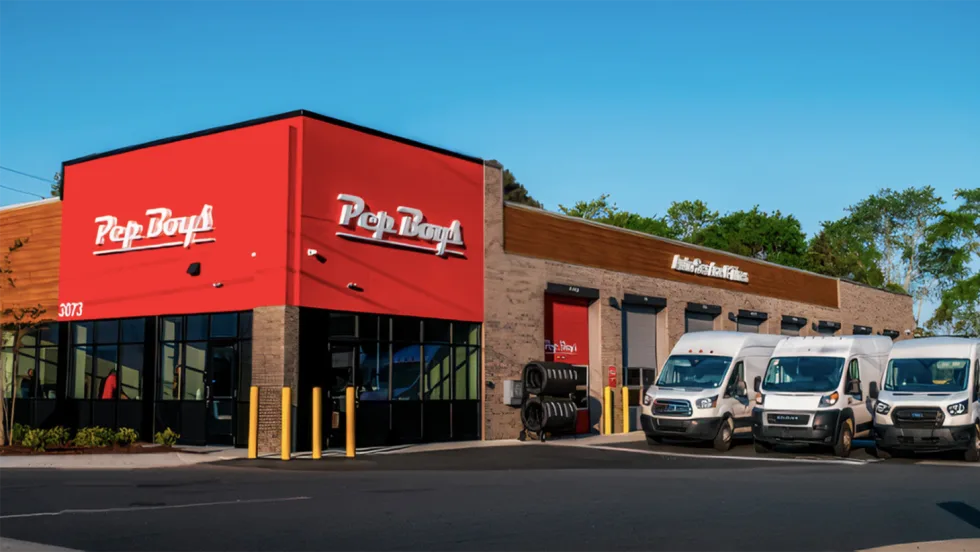
Merchants Fleet Expands Maintenance Network with Pep Boys
Merchants Fleet has expanded its relationship with Pep Boys, increasing the service provider's role within its national maintenance network. The move is intended to enhance maintenance coordination and support commercial fleets through Pep Boys' nationwide footprint.
Read More →
The Two Biggest Summer Downtime Threats for Fleets
A conversation with a maintenance expert reveals the two most common summer maintenance pains and how to prevent them.
Read More →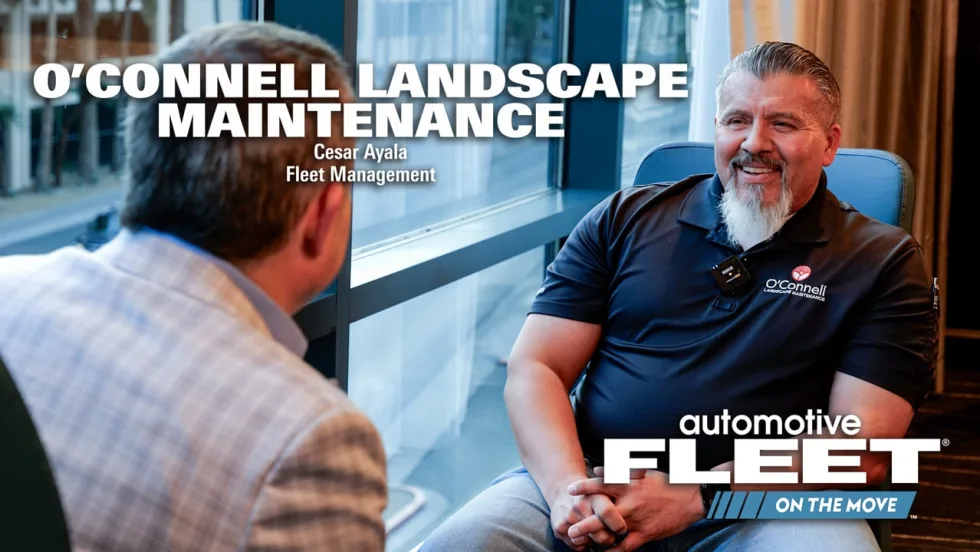
From Marine Corps Motor Pool to Managing 460 Fleet Vehicles
Cesar Ayala of O’Connell Landscape Maintenance shares how he transitioned from the Marine Corps to managing a 460-vehicle fleet—and the real-world challenges of maintenance, compliance, and driver management in California.
Read More →