




How to Evaluate and Hire Light-Duty Vehicle Drivers
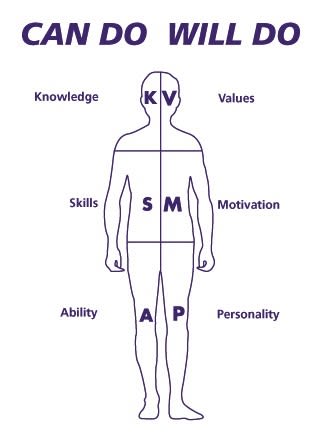
In the Can Do/Will Do Model, there are six characteristics that contribute to whether or not someone will succeed in a role.

Driving tests, in-person structured interviews, and personality assessments are some actions you can take to hire a reliable light-duty driver.
Photo via pxhere.com
You need light-duty vehicle drivers who will avoid accidents, reduce risk, and get the job done without incident. In short, you need safe and reliable people behind the wheel for you. The question, of course, becomes how do you determine if a potential hire is a good fit for your company?
This article will explore how to evaluate, select, and hire high-quality light-duty vehicle drivers for your fleet of vans, sedans, or light-duty trucks.
Employee Selection 101
Employee selection is all about hiring the right person for the right job. You need someone who is safety-oriented, cares about succeeding in their role, and will complete the necessary work without causing any issues. You don’t want to hire your next accident.
In order to determine a potential hire’s projected fit into a position, companies should use something called the Can Do/Will Do Model.
Source: Avatar Fleet
The Can Do/Will Do Model is Avatar Fleet’s proprietary tool used to determine if someone is a good fit for a job. In this model, there are six characteristics that contribute to whether or not someone will succeed in a role:
Knowledge
Skills
Abilities
Values
Motivations
Personality
These characteristics are split into two categories. There’s what someone CAN DO (knowledge, skills, and abilities) and there’s what someone WILL DO (values, motivations, and personality). All six of the characteristics determine if someone will succeed in any given role.
The six traits are defined as follows:
Knowledge - the concepts, principles, and mental processes committed to memory. Your drivers should know company policies, defensive driving practices, traffic laws, etc.
Skills - how to do something. Your drivers should know how to perform a safe left turn. They should know how to perform a pre-trip inspection. They should know how to maintain a safe following distance.
Abilities - physical and mental traits that are unlikely to change as the result of education or training. For example, no one can change a driver’s ability to sit for long periods of time or whether or not they are able to see and hear, but these are necessary abilities to succeed as a driver.
Values - the principles and beliefs upon which a person bases decisions. You want your drivers to value safety. The ones who don’t are more likely to cause an accident.
Motivations - the activities and rewards that attract a person. You need to hire people who are attracted to the type of work you offer.
Personality - the measure of how a person will typically interact with situational demands or other people. There are personality traits that make a good driver (even-keeled, reliable) and personality traits that make a bad driver (hot-headed, unpredictable).
The Can Do/Will Do Model and Hiring
With the Can Do/Will Do Model in mind, how can you use this to improve your employee selection and hiring process?
To begin, you must understand that there are some characteristics you cannot change about a person.
As hinted above, knowledge and skills can be changed. You can educate an employee on the necessary knowledge for a job. You can train an employee on the necessary skills for a job. However, you cannot change someone’s abilities, you cannot force an employee to adopt values that they don’t have, and you have little to no effect on a person’s motivations and personality.
That means you must hire for the characteristics you cannot change.
Laying The Groundwork: Characteristics of a Good Driver
If you want to hire someone who has the correct abilities, values, motivations, and personality, you have to begin by determining what you’re looking for.
Make a list of the ideal characteristics for your drivers for each category. Here are some examples to get you started:
Abilities - able to sit for long periods, able to lift 20 pounds or more, adequate vision or has corrective lenses.
Values - values safety, reducing risk, preventing accidents, working as a team, cooperation, and structure.
Motivations - is motivated by a consistent schedule, providing excellent service to customers, and receiving predictable pay.
Personality - is even-tempered, has a consistent demeanor and outlook on life, is cooperative and cordial with co-workers, and is kind and professional to customers.
If you need help coming up with the ideal characteristics for potential employees, think of your best current employee. Determine these characteristics based on him or her. Be as specific as possible.
Employee Selection Based on Can Do/Will Do Traits
Determining the characteristics of your ideal employee is the groundwork. Now, it’s time to put it to use. You need selection and hiring tools/processes that help you determine whether or not a potential job candidate has the ideal characteristics you’re looking for.
Here are three selection and hiring tools companies should use to select best-fit candidates for light-duty driving positions:
1. Self-Directed Personality Assessments
This is the first step we recommend to any company.
Have your potential light-duty drivers take a self-directed personality assessment. There are many great tools and resources available to create your personality assessments online.
When used properly, employee personality assessments will score potential hires based on the desired traits you’re looking for. It’s an easy way to screen out employees who would be a bad fit for your company. You can determine if they have the right values, motivations, and personalities to succeed in the given role.
2. In-Person Structured Interview
Interviews are a classic example of employee selection. However, interviews in their most common form are not always effective. That’s why we recommend a structured interview.
Structured interviews consist of specific, standardized questions that are asked in the same order every time. Then, the candidate is graded based on his or her responses. These grades are added up to determine if someone would be a good fit for a role. Think of it as an oral test used to determine someone’s values, motivations, and personality.
Depending on the questions you ask, you’ll quickly learn if someone values safety, teamwork, and any other ideal trait for your company.
3. Driving Tests/Exams
We highly recommend you perform a 20 to 30-minute behind-the-wheel driver assessment of potential hires. Without proper training, potential hires are unlikely to excel at this evaluation, but a driving test is a great way to determine if someone:
Obeys traffic laws
Speeds or takes unnecessary risks
Considers driving to be dangerous
Is prone to road-rage
Are You Hiring Your Next Accident?
Your company is only as good as the drivers you hire. Whether you’re pest control, delivering products, or performing road maintenance, you succeed or fail by your drivers. Make sure you’re putting the right people in your seats with proper selection and hiring processes.
About the Author: John Kuder is a senior instructional designer at Avatar Fleet, the creators of the non-CDL safety training course, The Fleet Safety Course.
More Safety

Does Your Fleet's Culture Encourage Distracted Driving?
What happens when the people responsible for enforcing safety rules are the ones setting the wrong example? The answer may reveal why some of the biggest risks to fleet drivers have little to do with what's written in the employee handbook.
Read More →
Fleet Manager’s Ultimate Playbook: Navigating the New Standard in OEM Connectivity
Rising operating costs, driver safety concerns, and unplanned downtime are putting unprecedented pressure on modern fleets. Discover how fleet managers use embedded OEM connectivity and real-time vehicle data to cut TCO, prevent downtime, and protect drivers without aftermarket telematics hardware.
Read More →
From Driver Well-Being to EV Charging | AF News Recap
Mental health belongs in the fleet safety conversation. This week, we’re looking at five ways fleets can support employee well-being before a crisis, plus Holman’s expansion in Mexico, new one-day Fleet Forward passes, and why EV charging demand is outpacing infrastructure growth.
Read More →
Nexar-Nauto Merger Aims to Give Fleets Better Safety Intelligence Through Larger Driving Dataset
Stefan Heck tells Automotive Fleet that combining more than 10 billion miles of driving history with Nexar's AI models will give fleets deeper insights into driver risk and roadway conditions than either company could provide independently.
Read More →
Don't Wait for a Crisis: 5 Ways to Build Mental Health Into Your Fleet Safety Program
For Suicide Prevention Month, fleet and safety leaders have an opportunity to put mental health where it belongs: at the center of workplace safety.
Read More →
How Camera Data Can Strengthen a Fleet’s Insurance Renewal
Insights from a commercial insurance carrier and a broker show how fleets can turn video telematic data, driver coaching, and improved claims results into a stronger case at insurance renewal.
Read More →
The Safest Fleets Aren’t the Ones with the Most Technology
You’ve made the telematics investment. Here’s how to capture the other half of its value and build the safest fleet on the road.
Read More →
Hidden in Plain Sight: Fleet Compliance Risks
Fleet compliance isn't just about having policies — it's about consistently enforcing them. This practical guide reveals six hidden compliance risks common in public sector and shared fleet operations and outlines proven strategies to improve visibility, accountability, and audit readiness
Read More →
NETS Sets 2026 Fleet Safety Benchmark Conference for Indianapolis
The Sept. 15–17 program will feature fleet benchmarking data, case studies, emerging technologies, and implementation strategies while running alongside the NSC Safety Congress & Expo.
Read More →
Off-the-Job Crashes Account for 43% of Employers’ $61.7 Billion Crash Burden
NETS quantifies costs dispersed across fleet, risk, HR, and other departments while providing new per-crash benchmarks for employers.
Read More →