




Learn More: What Happens During Propane Infrastructure Installation
How Low Can Vehicle Emissions Go with Renewable Propane
There is a growing interest in renewable propane due to its near-zero-emission levels, reduced greenhouse gases, and the ability to help meet the ever-increasing demand for cleaner products.
by Todd Mouw, ROUSH CleanTech
December 1, 2020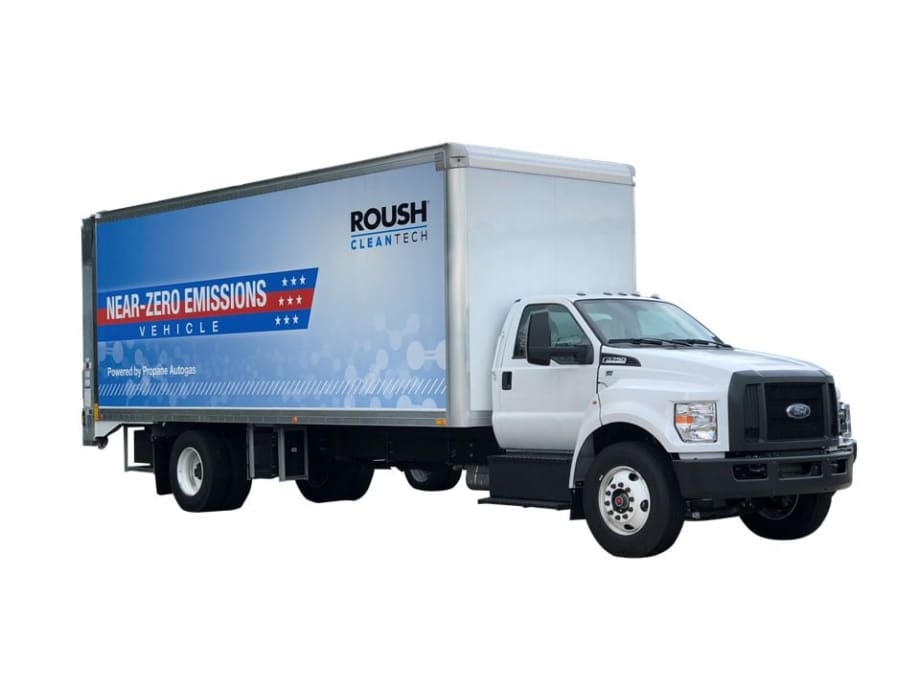
Prooduced from raw and renewable materials, renewable propane has a lower carbon intensity than conventional propane.
Photo: ROUSH CleanTech
3 min to read
- Renewable propane is gaining attention for its potential to significantly reduce emissions.
- It contributes to lowering greenhouse gases, supporting environmental sustainability.
- This energy source addresses increasing demand for cleaner energy solutions.
*Summarized by AI
As the number of vehicles that operate on propane autogas increases, a “new” yet similar fuel that reaches near-zero-emissions is coming into play. That fuel is renewable propane. Many experts predict the entire worldwide demand can be met with renewable propane in 20 years.
Why Renewable Propane?
Renewable propane is a non-fossil fuel produced from 100% renewable raw materials, such as beef fats, vegetable oils, grease residue, and other biomass feedstocks that are inexpensive and abundant. Sometimes referred to as “biopropane,” renewable propane has the same benefits as conventional propane autogas, which has been used for over a century as a transportation fuel and to fuel our home heaters and backyard grills.
Both propane types reduce emissions, cut costs, and provide fleets with the same vehicle performance and reliability. Simply put, the chemical structure and physical properties of renewable and conventional propane are the same — they just come from different sources.
There is a growing interest in renewable propane due to its near-zero-emission levels, reduced greenhouse gases, and the ability to help meet the cleaner products’ growing demand.
How Does it Work?
Propane autogas vehicles don’t need to be retrofit to accept renewable propane. Renewable propane can be used as a “drop-in” replacement fuel because it’s chemically nearly identical to conventional propane. Since it’s produced from raw and renewable materials, renewable propane has an even lower carbon intensity than conventional propane and is far cleaner than other energy sources. At the point of combustion, renewable propane is carbon neutral.
“Renewable propane’s benefits are amplified when coupled with ultra-low NOx engines that are 90% cleaner than the EPA’s most stringent standard,” said Joy Alafia, president of Western Propane Gas Association.

Sometimes referred to as “biopropane,” renewable propane has the same benefits as conventional propane autogas.
Photo: ROUSH CleanTech
What’s the Demand?
Pricing is competitive with conventional propane. As the demand grows in places like California, the producers of renewable propane will develop the infrastructure to distribute this fuel efficiently.
Already on the West Coast, U-Haul purchased its first million gallons of renewable propane, available to customers at U-Haul autogas facilities across Southern California.
According to the Western Propane Gas Association, this initial U-Haul purchase and customer offering of renewable propane have the effect of eliminating 5-million tons of greenhouse gas emissions from the atmosphere. And the association said renewable propane is on track to play a major role in California’s green energy future, with the industry targeting 2030 for supplying the state with a 100% sustainable energy source.
Many companies worldwide are developing renewable propane production technology, with some in commercial volume as a byproduct of renewable diesel plants.
Renewable propane is produced in several European and Asian countries. Several U.S. refineries in California, Texas, and Louisiana have the existing capacity to produce renewable propane as part of their renewable diesel production systems.
Research is being done on the merits of renewable propane by the Propane Education & Research Council (PERC), a nonprofit that provides leading propane safety and training programs. The council is testing renewable propane, including blends with conventional propane and standard development. It has been informing OEMs of potential engine use and creating awareness of the fuel for the producer, seller, transporter, and end-user.
As new technologies and new fuels reach the market, renewable propane adds to our nation’s energy portfolio and expands propane as an essential energy source.
About the Author: Todd Mouw is president of ROUSH CleanTech, an industry leader of advanced clean transportation technology. Mouw has served as president of the NTEA Green Truck Association. Reach him at (800) 597-6874.
Quick Answers
Renewable propane is attractive because it offers near-zero-emission levels and significantly reduces greenhouse gases, contributing to cleaner air and compliance with environmental regulations.
*Summarized by AI
Originally posted on Work Truck Online
Subscribe to Our Newsletter
More Green Fleet
Sponsored•October 1, 2026
New Propane Autogas Program Offers Fleet Compensation
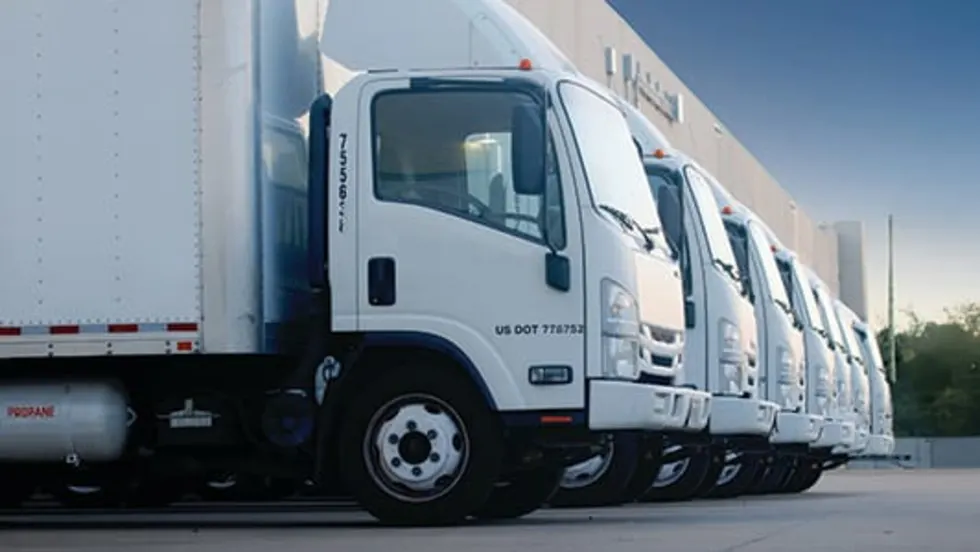
Qualified commercial fleets can receive $7,500 per eligible propane autogas vehicle and up to $10,000 for new refueling site prep. Learn how the program works and see whether your fleet qualifies.
Read More →
EV Charging Use Is Outpacing Infrastructure Growth
ChargePoint’s 2026 Charging Forward Report points to rising charger use, higher-powered charging, commercial vehicle electrification, and energy-management technology. Here’s what fleets should know.
Read More →
Merchants Fleet Reports 290M EV Miles as Fleets Navigate Changing Electrification Market
From millions in operating savings to hundreds of millions of EV miles, Merchants Fleet’s latest report reveals what’s working and what’s changing in fleet electrification.
Read More →

The EV Breakdown Nobody's Talking About: Why Most Electric Vehicle Roadside Calls Aren't Mechanical Failures
Here's why EV breakdowns are widely misunderstood.
Read More →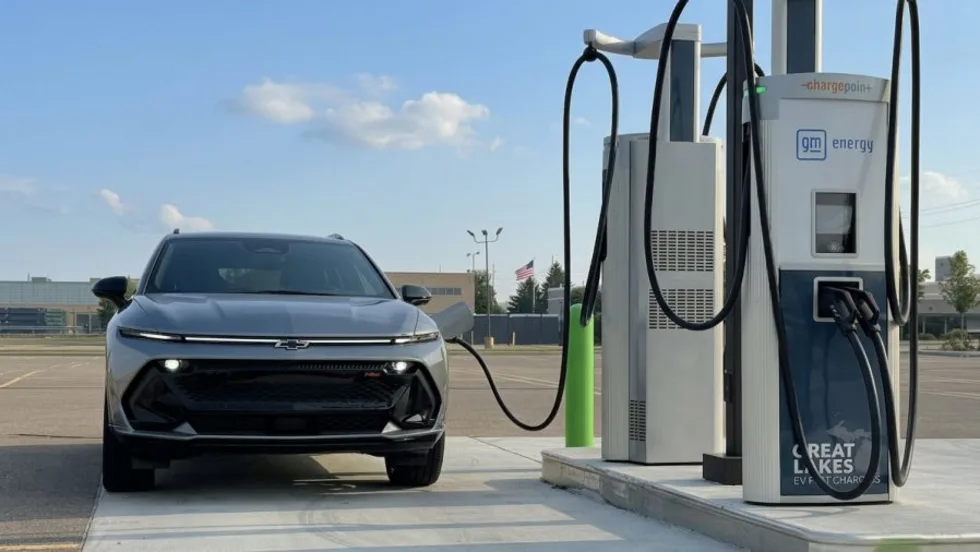
ChargePoint Now Available in Energy Pass
ChargePoint and additional planned charging network integrations were added to GM's Energy Pass.
Read More →

First Look: Slate Auto's Electric Fleet Pickup
Could an affordable, modular EV pickup make electrification more practical for fleets?
Read More →
Slate Debuts Colorful, Unique EV Models
A recent media and client event, studded with electric vehicles dressed up on platforms, planted a new position for the manufacturer in the wider EV market. Fleets will find cost-saving advantages.
Read More →
Slate Electric SUV, Pickup Switchable Model Aims For Light-Duty Fleets
Everything about this EV is counterintuitive and understated, making it stand out from the crowd.
Read More →
Inspiration Mobility Acquires Key Electrada Assets
Inspiration Mobility Group has acquired select assets of Electrada, adding the fleet electrification provider's team, technology, and charging infrastructure development capabilities to its energy management business.
Read More →