





Related: Video: Compact SUV Headlights Draw Poor Safety Ratings
How LED Headlights Illuminate the Road Ahead
LED headlights can provide fleet vehicles with a number of performance improvements, including increased nighttime visibility and longer battery life.
September 2, 2016
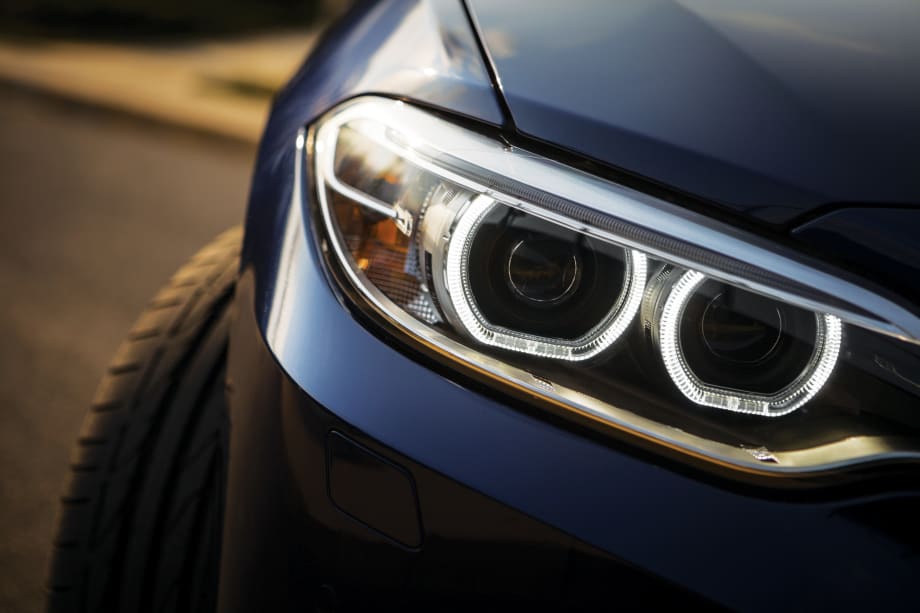
Photo courtesy of iStockphoto.com
3 min to read
Photo courtesy of iStockphoto.com
LED headlights have gradually become a commonplace addition to new vehicle models across the United States and Canada, largely replacing traditional halogen headlights. But this transition is more than just a technological evolution. It has had benefits for the way drivers are driving during and after business hours in low-light environments. Improvements include better illumination and beam focus.
Improved illumination is the most apparent difference from halogen lights. LED headlights—which use semiconductor devices known as light-emitting diodes to emit bright light—can illuminate dark roadways 25% farther than their halogen counterparts, and high-beam settings on LEDs offer a significant improvement over low-beam settings, according to a study from AAA.
How an LED headlight projects the beam illustrates its superiority over halogen headlights, according to Greg Brannon, director of automotive engineering and industry relations for AAA.
“LED lights are much better at their ability to project the beam where it needs to go and deal with light scatter, where halogen reflector lights don’t have as clear a cutoff in terms of the way they distribute the light,” said Brannon.
Whether an LED headlight—which consists of multiple LEDs—is set to low beam or high beam is dependent on the number of lights that are shining. When set to low beam, the individual lights of the LED will adjust to create a defined line so there is no light coming out above the beam.
Using High Beams
However, despite the technological improvements they bring to the table, LED lights still face shortcomings common with automotive headlights in general, such as not being able to light the road to an optimal distance ahead and a susceptibility to wear and tear.
Despite the brightness improvement over halogen lights, LED headlights failed to fully illuminate roadways while traveling at highway speeds.
“The LED lights absolutely do a much better job of illuminating the roadway, particularly in the low-beam application versus a halogen reflector at 150 feet more in our testing. But, still, that brings the max vehicle speed to about 52 miles an hour, so it's still falling short of highway speeds,” said Brannon.
To compensate for this limitation of headlights in general, Brannon said that high beams should be used more regularly.
“In general, our advice to other drivers is that if you are on an unlit roadway and there is no oncoming traffic within a reasonable distance you should really be driving with your high beams on. If you have an auto high-beam setting on your vehicle make sure that it is activated. Because, really, at highway speeds on unlit roadways the light systems are really not able to pick up non-reflective objects,” said Brannon.
Getting the Most Out of LED Units
Brannon noted drivers transitioning from halogen headlamps to LED headlights will immediately notice a difference in how much they can see. However, this does not necessarily mean that everything in the light’s beam is immediately observable. What the driver is seeing more of with the LED light are the reflective objects in the road.
As with any headlamp, an LED headlamp that is on a vehicle operating in areas with hotter temperatures will face a gradual deterioration of its UV shield. This results in a cloudy headlamp, which reduces light output and increases scatter, which results in glare.
“Whenever that deterioration takes place, light scatter becomes more of a problem. Less light can get out of the lens as well as it's not directed in the place that it needs to go,” said Brannon. “We’ve found that lens restoration can actually result in about 60% less light scatter.”
Restoration is highly encouraged as well as proper cleaning of the headlamp for safe operation of the vehicle.
“The headlamp should be cleaned regularly, and a UV protectant is a good idea for any lamp assembly,” said Brannon.
Subscribe to Our Newsletter
More Safety

What’s Next for Fleet? Safety, AI & Industry Recognition | AF News Recap
Could your company's culture be encouraging distracted driving? This week, we're exploring how workplace expectations affect driver safety, what AI, EVs, and autonomous vehicles could mean for the future of fleet management, and how fleet professionals can strengthen their award nominations.
Read More →
Does Your Fleet's Culture Encourage Distracted Driving?
What happens when the people responsible for enforcing safety rules are the ones setting the wrong example? The answer may reveal why some of the biggest risks to fleet drivers have little to do with what's written in the employee handbook.
Read More →
Sponsored•October 1, 2026
Fleet Manager’s Ultimate Playbook: Navigating the New Standard in OEM Connectivity
Rising operating costs, driver safety concerns, and unplanned downtime are putting unprecedented pressure on modern fleets. Discover how fleet managers use embedded OEM connectivity and real-time vehicle data to cut TCO, prevent downtime, and protect drivers without aftermarket telematics hardware.
Read More →
From Driver Well-Being to EV Charging | AF News Recap
Mental health belongs in the fleet safety conversation. This week, we’re looking at five ways fleets can support employee well-being before a crisis, plus Holman’s expansion in Mexico, new one-day Fleet Forward passes, and why EV charging demand is outpacing infrastructure growth.
Read More →
Nexar-Nauto Merger Aims to Give Fleets Better Safety Intelligence Through Larger Driving Dataset
Stefan Heck tells Automotive Fleet that combining more than 10 billion miles of driving history with Nexar's AI models will give fleets deeper insights into driver risk and roadway conditions than either company could provide independently.
Read More →
Don't Wait for a Crisis: 5 Ways to Build Mental Health Into Your Fleet Safety Program
For Suicide Prevention Month, fleet and safety leaders have an opportunity to put mental health where it belongs: at the center of workplace safety.
Read More →
How Camera Data Can Strengthen a Fleet’s Insurance Renewal
Insights from a commercial insurance carrier and a broker show how fleets can turn video telematic data, driver coaching, and improved claims results into a stronger case at insurance renewal.
Read More →
The Safest Fleets Aren’t the Ones with the Most Technology
You’ve made the telematics investment. Here’s how to capture the other half of its value and build the safest fleet on the road.
Read More →
Sponsored•August 7, 2026
Hidden in Plain Sight: Fleet Compliance Risks
Fleet compliance isn't just about having policies — it's about consistently enforcing them. This practical guide reveals six hidden compliance risks common in public sector and shared fleet operations and outlines proven strategies to improve visibility, accountability, and audit readiness
Read More →
NETS Sets 2026 Fleet Safety Benchmark Conference for Indianapolis
The Sept. 15–17 program will feature fleet benchmarking data, case studies, emerging technologies, and implementation strategies while running alongside the NSC Safety Congress & Expo.
Read More →