




How Ford's FSP Works for Fleets
This exclusive report discusses the strategy behind Ford's Fleet Service Plan and Extended Service Plans and ways for fleets to support repair and maintenance needs through the manufacturer's nationwide dealer network.
The Ford Fleet Service Plan (FSP) is a system designed to assist fleet managers with the maintenance and repair of fleet vehicles. Developed expressly for fleet customers, FSP also offers the benefits of Ford's Extended Service Plans (ESP). FSP monitors and provides maintenance and repair histories for any Ford product serviced through approximately 5,200 Ford or Lincoln-Mercury dealerships throughout the U.S. Collectively, there are over 40,000 vehicles currently enrolled in FSP. At present, about 96 percent of Ford dealerships participate in the FSP program.
Ford's Fleet Service Plan protects a vehicle fleet by combining administrative systems with warranty and extended component coverage through a card program that features one itemized monthly statement and computer-generated backup invoices that show what work was done. It also indicates what was covered under the manufacturer's warranty, recalls, and Extended Service Plan coverage.
To participate in FSP, a fleet must have a minimum of five vehicles, according to John M. McEachern, fleet sales manager for the Extended Service Plan Department of the Ford Parts and Service Division. "The vehicles could be of competitive makes, so long as one vehicle is a Ford, and that Ford product is enrolled in ESP," McEachern explains. "To participate in FSP, you must have ESP."
There are three ESP plans available: ESP Base, ESP Plus, and ESP Total. The ESP Base program covers 81 components and provides towing and loaner car protection with a $50 deductible. ESP Plus covers 113 components, provides five-day loaner car assistance up to $25 a day, and offers towing up to $45 per occurrence with a $25 deductible. ESP Total, with a short list of exceptions, covers essentially the complete car and provides a five-day loaner car and towing with a $25 deductible.
"With these plans, you can also add a maintenance and wear option that will cover all scheduled maintenance and several selected wear items, such as brake pads and linings, clutch lining, spark plugs, engine belt and hoses, and wiper blades." McEachern says. "This option can be added to any of the three plans and eliminates the normal $25 or $50 deductible charges per repair visit. The option covers all manufacturer-scheduled maintenance.'' How does FSP save the fleet money? First, there is no enrollment or monthly fee for FSP. And ESP plans reduce the cost of covered repairs to low deductibles. For repairs not covered by an ESP plan, special warranty pricing on parts and labor is available. The FSP system ensures that fleet administrators are never charged for recalls, warranty repairs or ESP-covered repairs. This eliminates the need for the fleet administrator to investigate every repair, because each has already been checked. The monthly FSP billing statement is supported by repair records of each service performed. Individual line items are arranged by vehicle unit number. And the billing statements can be sent to individual cost control centers instead of a home office.
Once ESP is acquired by a fleet manager, there is no cost to enroll Ford-built vehicles in FSP, and there is no fixed monthly charge. Once the application has been completed and approved, each fleet driver receives a membership card. Driver packets are also available for each FSP-covered driver, providing instructions on how to obtain service. Since the established line of credit is in effect throughout the Ford and Lincoln-Mercury dealer network participating in FSP, no cash is exchanged when service is required.
"Let's say a fleet driver goes into a dealership and has warranty and ESP repairs performed along with an oil and filter change, and the cost is $30. That calls for a 90-cent administration fee. The fleet administrator would then get a complete printout of what was done to that vehicle," says McEachern.
"The Ford FSP program has been attractive to many private companies, municipalities, and utilities," says McEachern.
"We expect FSP to keep building. We are always making improvements, and we are constantly growing. We anticipate that 1988 will be significantly better than 1987, as more and more fleets realize that FSP controls their costs, keeps vehicles on the road, and takes a lot of the hassle out of a difficult part of doing business."
McEachern adds, "FSP is just another way Ford's Parts and Service Division is providing quality care for quality cars."
FSP in Action
A major user of Ford's ESP/FSP program is The Hartford Insurance Group of Hartford, CT. The Hartford operates a nationally-dispersed, airbag-equipped fleet of Ford Tempo and Topaz cars used primarily by field personnel. The fleet is managed by Diane Brit tell, fleet administrator for Hartford's Auto Fleet Department.
"Administratively, the FSP program is a real blessing." Brit-tell says. "For one thing, the paperwork we handle on vehicles is considerably reduced. Our vehicles are enrolled in the top level of the program. ESP Total, which means that we are only billed for charges that are incurred for repairs not covered under the plan, and that eliminates a huge monthly bill. Items not covered aren't many." she adds.
Another major benefit from a fleet professional's viewpoint, is the acceptance of FSP among drivers. "Our field people really like it," she notes. "They literally work out of their car, so it's a major problem if they have to be without a vehicle. The loaner car part of ESP Total takes care of that situation."
Prior to participating in the FSP program. Hartford's fleet maintenance requirement were the responsibility of individual drivers through a national account program. "That was very costly and complicated," Brittell admits, "and, while we haven't been involved in the Ford program long enough to fully estimate saving, we're confident that ESP/FSP is costing less." According to Brittell. The Hartford started the Ford program with their 1987-model year acquisitions and continued with 1988s.
"FSP hotline employees are knowledgeable and helpful." Brittell says. "We depend on the prompt service, because we can't afford to have our drivers waiting for someone to decide what to do with a vehicle needing repair. This program is a real plus for Ford."
More Maintenance

Fleet Manager’s Ultimate Playbook: Navigating the New Standard in OEM Connectivity
Rising operating costs, driver safety concerns, and unplanned downtime are putting unprecedented pressure on modern fleets. Discover how fleet managers use embedded OEM connectivity and real-time vehicle data to cut TCO, prevent downtime, and protect drivers without aftermarket telematics hardware.
Read More →
How Can Fleet Managers Tell Which Repairs Require Closer Review?
Fleetio’s Brianna Perry demonstrates how Service Advisor evaluates maintenance requests, identifies pricing anomalies, and provides the context fleet managers need to focus their attention on potential problems.
Read More →
Why Roadside Assistance Belongs in a Fleet Risk Strategy
Roadside assistance is more than a tow. See how the right partner can protect drivers, uncover fleet trends, and strengthen your risk strategy.
Read More →
Hidden in Plain Sight: Fleet Compliance Risks
Fleet compliance isn't just about having policies — it's about consistently enforcing them. This practical guide reveals six hidden compliance risks common in public sector and shared fleet operations and outlines proven strategies to improve visibility, accountability, and audit readiness
Read More →
How Maintenance Costs Compare Across 27 Fleet Vehicles
Vincentric’s three-year, 60,000-mile projections reveal wide differences for both scheduled and unscheduled maintenance among selected vehicle categories. Projected maintenance visits also play a factor.
Read More →
The EV Breakdown Nobody's Talking About: Why Most Electric Vehicle Roadside Calls Aren't Mechanical Failures
Here's why EV breakdowns are widely misunderstood.
Read More →
How Stellantis Plans to Get Ahead of Fleet Downtime
Keeping fleet vehicles on the road has become as important as buying them. Darren Bradshaw of Mopar North America explains how connected vehicle data, AI, and proactive service strategies are helping Stellantis reduce downtime and move closer to predictive maintenance.
Read More →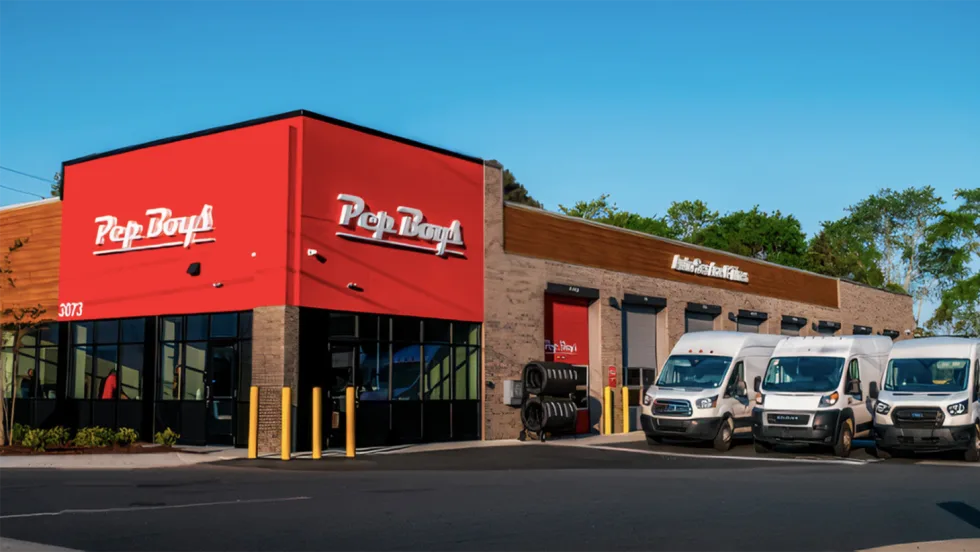
Merchants Fleet Expands Maintenance Network with Pep Boys
Merchants Fleet has expanded its relationship with Pep Boys, increasing the service provider's role within its national maintenance network. The move is intended to enhance maintenance coordination and support commercial fleets through Pep Boys' nationwide footprint.
Read More →
The Two Biggest Summer Downtime Threats for Fleets
A conversation with a maintenance expert reveals the two most common summer maintenance pains and how to prevent them.
Read More →
From Marine Corps Motor Pool to Managing 460 Fleet Vehicles
Cesar Ayala of O’Connell Landscape Maintenance shares how he transitioned from the Marine Corps to managing a 460-vehicle fleet—and the real-world challenges of maintenance, compliance, and driver management in California.
Read More →