




How Fleets Handle DUI-Cited Drivers
Fleet policy may not cover what happens to a driver in the period between a DUI citation and conviction or dismissal. It’s an issue to address and clarify.
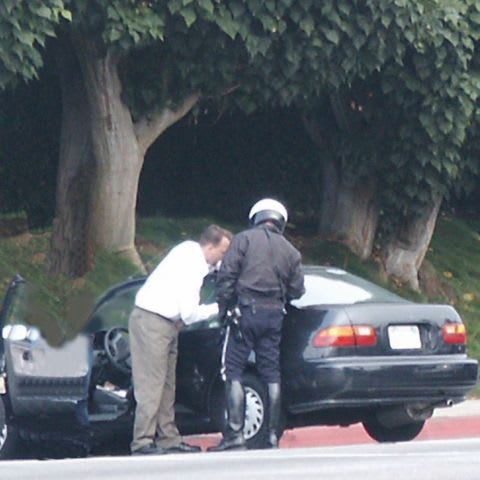
A fleet driver charged with driving under the influence poses a number of management challenges, not the least is determining what to do with the driver until his or her case is decided.
This situation isn’t always spelled out in a specific policy, some fleet managers said. However, motor vehicle record checks (MVRs) and a step as simple as regularly asking to see an employee’s driver’s license can be effective in helping limit risk.
There are many variables — does the driver have a regular or commercial license, what are the applicable state laws, etc. — that affect how the situation can be handled, fleet managers said.
A University of Colorado at Boulder employee who carries a regular driver’s license rather than a commercial license isn’t required to report a DUI citation, said Bryan Flansburg, CAFM, director of transportation services for the university. If a driver with a commercial driver’s license receives a DUI citation, Flansburg said, that person is put on administrative leave or prohibited from driving and given other duties.
Employees have lost their jobs because they lost their CDL, he said. "Those are people who are required to drive for their jobs."
The university also follows strict rules to ensure that employees don’t drive motor pool vehicles when their driving privileges have been restricted, suspended, or revoked.
"When they come to the motor pool, they must present a driver’s license each time," Flansburg said. "Many times people tell us, ‘Well, you saw it yesterday.’ "
They get the same response every time: "We don’t know if something happened last night and an officer took it from you."
"That’s what we tell them," Flansburg said. "They get upset with us, too, but they don’t get a car."
A company that operates in many states must take into account the state in which the citation was issued.
"If a tech comes in and says, ‘I got busted for DUI this weekend,’ typically, we’ll immediately revoke driving privileges while we investigate it," said Nathan Zautcke, fleet, purchasing and asset manager for Advanced Communications, Inc., a cable installation company in Canton, Mich. Advanced Communications often has crews working in many states at once.
When a driver is charged with DUI or DWI, the company investigates to determine the exact infraction and whether the employee’s license is still active.
In some states, Zautcke said, if a driver refuses a breathalyzer test, his or her license is revoked immediately.
"It varies state to state," he explained. "That’s why it’s hard for us to have a flat policy." If the employee’s license is still active, there might be restrictions, he said.
A ticket for DUI or operating a vehicle "under the influence of liquor" is recorded as an infraction on the person’s driving record, Zautcke said. "That would disqualify them from driving for us."
An employee convicted of DUI cannot drive for the company for three years. That includes driving a personal vehicle on company time, Zautcke said. However, the employee may not be fired from the job.
"If a manager has a position for them that doesn’t require driving, fine," Zautcke said. A warehouse position might be open, which that person could fill. Installation crews usually number four or five people, he added, and not all of them must be able to drive. If a non-driving opening is unavailable, the person would be dismissed, Zautcke said.
[PAGEBREAK]
In California, the motor vehicle department’s Employer Pull Notice (EPN) program provides employers with the means for ongoing review of driver records. Employers can enroll in the program, which maintains updated electronic records on employee licenses. If an action such as a DUI charge is recorded, the program automatically generates a printed record for mailing to the employer.
In the case of some fleet operators, that notification combines with a second point of leverage: written job classifications.
For example, the work force at California Polytechnic State University in San Luis Obispo is unionized, and written job classifications specify whether the ability to drive is necessary to perform a particular job. Technicians are required to drive commercial vehicles, said James Cullins, Cal Poly’s fleet supervisor. "They sign a waiver saying they recognize the fact that they’re in the [EPN program]," and that waiver is filed with Cal Poly’s risk management department.
Mechanics and drivers are required to keep a clean driving record, Cullins added. If they’re pulled over while operating any vehicle and their license is revoked, they cannot return to work.
Diageo North America, Norwalk, Conn., is in an especially sensitive position when managing such cases, said Patricia Smith, specialist, national accounts/fleet administration. Diageo is one of the world’s leading beer, wine, and spirits companies, and owner and marketer of such brands as Guinness, Johnnie Walker, and Smirnoff.
An employee convicted of one DWI or DUI offense "may be subject to disciplinary action up to and including termination," Smith said, quoting the company’s policy.
The policy also addresses the interim period between the time a driver is charged and when a case is decided. Smith noted the policy states, "If your license is lost, revoked, suspended, or in any way affected, including by issuance of a temporary license pending further proceedings due to a drinking and driving arrest or other serious violation, you must notify your manager immediately. Failure to report any of the above will result in immediate termination."
Diageo puts a premium on responsible drinking, Smith emphasized, and spends millions of dollars annually on public service announcements to discourage consumers from drinking before driving. "We take that very seriously," Smith said.
The company’s policy on DUI and DWI convictions extends to those seeking employment. "If someone has one on their driving record, they will not get hired," Smith said. "We are extremely diligent about it."
There are alternatives, she noted. "And we encourage all our employees to designate a driver or take a taxi" when they drink.
More Safety

Fleet Manager’s Ultimate Playbook: Navigating the New Standard in OEM Connectivity
Rising operating costs, driver safety concerns, and unplanned downtime are putting unprecedented pressure on modern fleets. Discover how fleet managers use embedded OEM connectivity and real-time vehicle data to cut TCO, prevent downtime, and protect drivers without aftermarket telematics hardware.
Read More →
From Driver Well-Being to EV Charging | AF News Recap
Mental health belongs in the fleet safety conversation. This week, we’re looking at five ways fleets can support employee well-being before a crisis, plus Holman’s expansion in Mexico, new one-day Fleet Forward passes, and why EV charging demand is outpacing infrastructure growth.
Read More →
Nexar-Nauto Merger Aims to Give Fleets Better Safety Intelligence Through Larger Driving Dataset
Stefan Heck tells Automotive Fleet that combining more than 10 billion miles of driving history with Nexar's AI models will give fleets deeper insights into driver risk and roadway conditions than either company could provide independently.
Read More →
Don't Wait for a Crisis: 5 Ways to Build Mental Health Into Your Fleet Safety Program
For Suicide Prevention Month, fleet and safety leaders have an opportunity to put mental health where it belongs: at the center of workplace safety.
Read More →
How Camera Data Can Strengthen a Fleet’s Insurance Renewal
Insights from a commercial insurance carrier and a broker show how fleets can turn video telematic data, driver coaching, and improved claims results into a stronger case at insurance renewal.
Read More →
The Safest Fleets Aren’t the Ones with the Most Technology
You’ve made the telematics investment. Here’s how to capture the other half of its value and build the safest fleet on the road.
Read More →
Hidden in Plain Sight: Fleet Compliance Risks
Fleet compliance isn't just about having policies — it's about consistently enforcing them. This practical guide reveals six hidden compliance risks common in public sector and shared fleet operations and outlines proven strategies to improve visibility, accountability, and audit readiness
Read More →
NETS Sets 2026 Fleet Safety Benchmark Conference for Indianapolis
The Sept. 15–17 program will feature fleet benchmarking data, case studies, emerging technologies, and implementation strategies while running alongside the NSC Safety Congress & Expo.
Read More →
Off-the-Job Crashes Account for 43% of Employers’ $61.7 Billion Crash Burden
NETS quantifies costs dispersed across fleet, risk, HR, and other departments while providing new per-crash benchmarks for employers.
Read More →
Ram Recalls More Than 1.27 Million 1500 Pickups for Seat Belt Anchor Issue
The recall affects certain 2019-2026 Ram 1500 pickups that may have improperly attached second-row seat belt buckle anchors.
Read More →