




Underperformance:The Hidden Threat to Fleet Maintenance
How ASE Certifications Empower Technicians
Fleets that invest in ASE certification benefit from higher-quality work, fewer repeat repairs, and greater workforce stability.
by Rachael Plant, Fleetio
May 1, 2025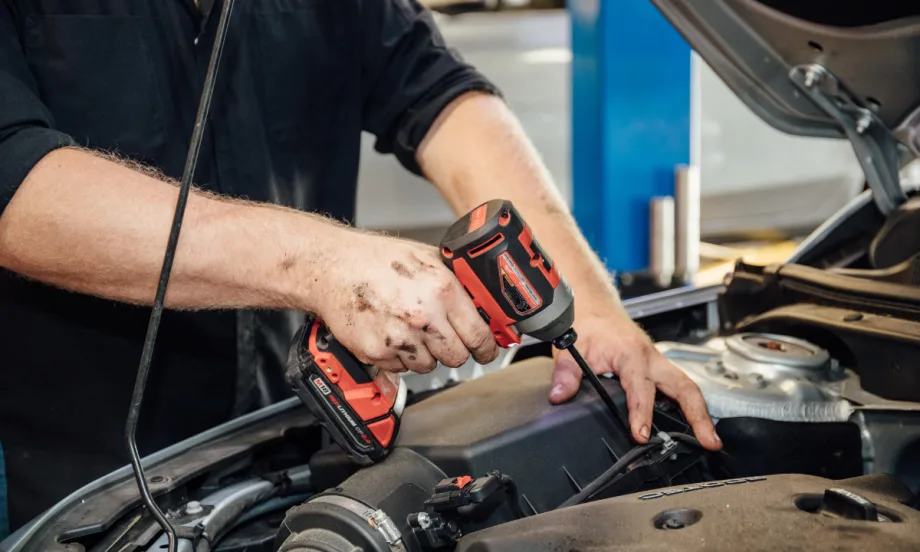
Dave Johnson, president and CEO of the National Institute for Automotive Service Excellence, highlights that certification requires not only passing rigorous tests but also two years of verifiable shop experience
Photo: Fleetio
4 min to read
In a recent episode of The Fleet Code podcast, host and Fleetio’s own Director of Fleet Content, Zach Searcy, had a conversation with Dave Johnson, president and CEO of the National Institute for Automotive Service Excellence (ASE), to discuss the transformative impact of ASE certifications on technicians and fleet operations.

Dave Johnson, president and CEO of the National Institute for Automotive Service Excellence (ASE).
Photo: Fleetio
Johnson’s roots in fleet trace back to his childhood in Burlington, Wyoming, where he grew up on a family farm with a small trucking operation. This hands-on experience fueled his passion for diesel mechanics, leading him to study automotive engineering technology at Weber State University.
Though he initially planned to work in mining, he landed at Ford in 1990, where he rose to head of Technical Support Operations Global, overseeing everything from technician training to warranty administration. After retiring from Ford in 2022, Johnson was drawn to ASE’s mission of credentialing service professionals.
“I saw that [ASE was] this fantastic thing. I call it a righteous cause. And the reason I say that is ASE was formed in essence to provide credentialing for service technicians, whether it’s automotive, heavy truck, military, you name it,” Johnson said, noting ASE’s industry-driven approach to creating standards that benefit technicians, fleets, and the broader industry.
The Value of ASE Certification
For technicians, ASE certification is more than a badge — it’s a path to career advancement. Johnson highlights that certification requires not only passing rigorous tests but also two years of verifiable shop experience, ensuring that certified technicians are both knowledgeable and work-ready.
“This is the real deal. This isn’t three guys off in a corner making up silly questions for you to answer in multiple-choice format,” Johnson said. “No, these are people that take it very seriously [and have] workshops multiple times a year where they continue to create and refine all of these things and make sure that they’re real and that they reflect the competencies that you need to have.”
Johnson discussed that a 2024 ASE survey of more than 30,000 technicians revealed a compelling incentive: certified technicians earn approximately 20% more than their non-certified counterparts across early, mid, and late career stages.
However, financial rewards aren’t the only benefit ASE certifications provide. Certification can instill pride and confidence in technicians, signaling to employers that they are committed to excellence. For technicians hesitant about testing, ASE is working to reduce barriers, offering remote proctoring to make the process more accessible.
Fleets can also reap benefits from employing ASE-certified technicians.
While certified technicians are getting more pay, Johnson notes that along with that comes a “40% productivity [increase and] 60% fewer comebacks. So think about that in terms of fixing it right the first time and the quality of the repair. Doing it faster [with] better quality outcome. So everybody’s happy, right? And then another bonus on top of that [was] a 30% [decrease in] attrition of employees that were certified versus non-certified.”
For fleets, these metrics translate to reduced downtime, higher-quality repairs, and a more stable workforce.
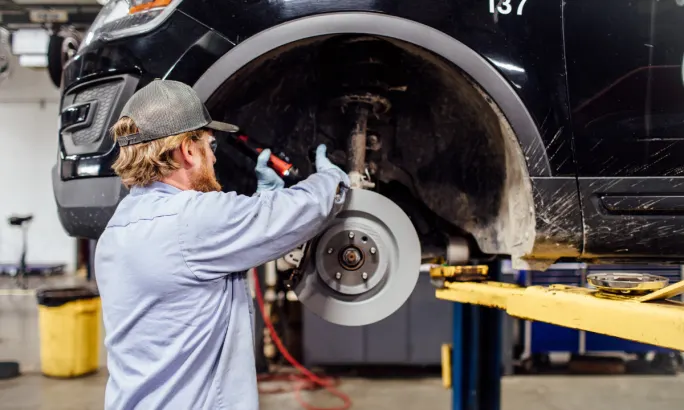
Photo: Fleetio
Building a Pipeline for the Future
The technician shortage has been a popular topic of late, and for good reason. Johnson emphasized the role of the ASE Education Foundation in accrediting training programs to ensure they meet industry standards and align curricula with industry needs, producing job-ready graduates excited to enter the workforce.
Johnson urged fleet managers to engage with local schools, serving on advisory boards or offering shop tours to inspire and train the next generation.
“When you have that combination of a program that cares, that has that accreditation — [and] you bring in the local industry, who cares — what you find is you’re no longer worrying about a technician shortage issue in your area. You have created a pipeline, and you keep growing your own, and that just continues.”
Certifications can present a financial barrier, especially for new technicians still trying to drum up the funds for tools. The podcast episode covered Fleetio’s newly announced ASE scholarship, which allows fleets to nominate technicians for up to $3,000 of sponsored training, upskilling, and/or re-skilling. Johnson praised the initiative, noting that covering test costs can lead technicians to success.
“They have that opportunity for the certification. They’re on this path. And even if they don’t have the experience yet — maybe they haven’t had the two years of experience — they still have the proof that they passed the test,” Johnson said. “And that opens doors.”
ASE certifications empower technicians with skills, confidence, and earning potential while delivering fleets measurable returns in productivity, quality work, and retention. Fleets can invest in certifications, engage with local training programs, and take advantage of initiatives like Fleetio’s ASE scholarship program to help transform their shops into centers of excellence.
As Johnson put it, it’s “win, win, wins for everybody.” For fleets looking to elevate their operations and contribute to a safer, more efficient industry, ASE offers a proven path forward.
Subscribe to Our Newsletter
More Operations
Here's When You Should Make an Exception to Fleet Policy
Fleet policies are designed to create consistency, but not every driver or situation fits neatly within standard rules.
Read More →
AI-Native or AI-Acquired: What Should Fleet Managers Look for in an AI Platform?
Six questions can help fleet managers look beyond AI marketing claims to evaluate integration, data access, and real-world operational performance.
Read More →
Sponsored•October 14, 2026
A buyer's guide to fleet management software in 2027
Buying fleet management software in 2027 means looking beyond features and price. As fleet operations, technology and expectations evolve, this guide explores what today’s fleet professionals should consider when choosing a system that can deliver value now and adapt to what comes next.
Read More →

What Will Shape the Next Era of Fleet Management?
EVs, AI, and autonomous vehicles are reshaping fleet management. Discover what’s ahead—and how fleet leaders can prepare for the next era.
Read More →
How Fleets Can Recruit and Train Veterans for Technician Roles
Here's how the technician shortage has affected uptime for fleets, and what to do about it.
Read More →
Avis Budget Group Deploys Neology Toll Management Technology Across Major Brands
Neology’s neoFleet platform will manage toll transactions and toll-authority operations for vehicles across Avis, Budget, Payless, Budget Truck and Zipcar.
Read More →
Fleet Personal-Use Charges Edge Higher in 2026
Nearly eight in 10 surveyed fleets allow personal use of company vehicles, while just over half of respondents report charging employees for the privilege.
Read More →
The Future of Fleet + What’s Changing Right Now | AF News Recap
Could developments overseas offer a preview of what’s coming for U.S. fleets? This week, we’re looking at the future of AI, autonomy, and electrification, plus Ford Pro’s new certified pre-owned program, smarter vehicle offboarding, and a new way for fleets to manage toll expenses.
Read More →
How to Handle Vehicle Offboarding
What do fleet managers need to do when a driver leaves?
Read More →
Sponsored•October 1, 2026
Fleet Manager’s Ultimate Playbook: Navigating the New Standard in OEM Connectivity
Rising operating costs, driver safety concerns, and unplanned downtime are putting unprecedented pressure on modern fleets. Discover how fleet managers use embedded OEM connectivity and real-time vehicle data to cut TCO, prevent downtime, and protect drivers without aftermarket telematics hardware.
Read More →