




Helping Fleets Run Green in Long Island
Greater Long Island Clean Cities Coordinator Rita Ebert is supporting fleet efforts to leave petroleum behind.
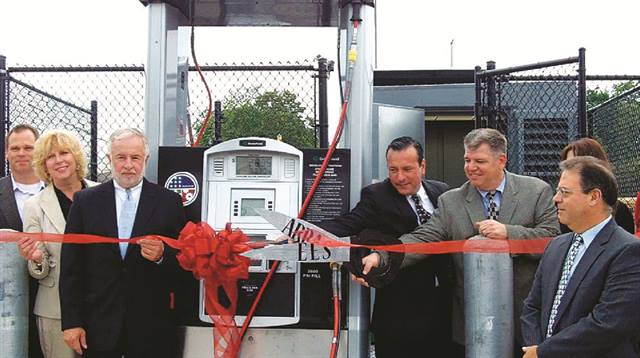
Community leaders gather for the grand opening of a compressed natural gas fueling station at Middle Country School District in Long Island in May. (L-R) Scott Zepp, Greenfield Compression; Councilwoman Kathleen Walsh, Town of Brookhaven, N.Y.; Congressman Tim Bishop; Frank Morgigno and Pat McClave, Engineered Energy Solutions; and Herb Chessler, Middle Country School District.
For hundreds of school buses, refuse haulers, dump trucks, and other fleet vehicles in Long Island, N.Y., gasoline and diesel are visible only through the rearview mirror. With the help of Clean Cities Coordinator Rita Ebert, public and private fleets throughout the region are transitioning to run on compressed natural gas (CNG) and other alternative fuels.
Ebert has led the work of the Greater Long Island Clean Cities Coalition (GLICCC) since 2007. GLICCC counts more than 400 stakeholders in its membership, making it one of the largest Clean Cities coalitions in the nation. Under Ebert’s leadership, GLICCC projects saved 11 million gallons of petroleum in 2010 alone.
“Moving the transportation sector away from gasoline and diesel fuel is obviously an enormous undertaking,” Ebert said. “But when you consider all the public health benefits and the economic payoffs, it’s well worth our effort.”
The Middle Country School District in Selden, Long Island, is just one of the organizations benefiting from Ebert’s dedication to alternative fuels. She helped secure more than $2 million in state and federal funding so the district could build a CNG fueling station and convert its fleet of more than 70 diesel buses to run on natural gas. The project is on pace to be completed by 2014, eliminating the need for 165,000 gallons of diesel per year.
“We just had the fueling station’s grand opening, and the district is very happy with the project. They’re saving money on fuel and reducing their students’ exposure to diesel exhaust. It’s a win-win,” Ebert said.
Get Involved With Clean Cities
For more information about GLICCC, e-mail Ebert at rebert@gliccc.org.
Through the work of nearly 100 local coalitions, Clean Cities advances the nation’s economic, environmental, and energy security by reducing petroleum use in transportation. Clean Cities is an initiative of the U.S. Department of Energy. Find out more at www.cleancities.energy.gov.
About the Author
Julie Sutor is a writer and editor for the National Renewable Energy Laboratory (NREL).
More Green Fleet
EV Charging Use Is Outpacing Infrastructure Growth
ChargePoint’s 2026 Charging Forward Report points to rising charger use, higher-powered charging, commercial vehicle electrification, and energy-management technology. Here’s what fleets should know.
Read More →
Merchants Fleet Reports 290M EV Miles as Fleets Navigate Changing Electrification Market
From millions in operating savings to hundreds of millions of EV miles, Merchants Fleet’s latest report reveals what’s working and what’s changing in fleet electrification.
Read More →
The EV Breakdown Nobody's Talking About: Why Most Electric Vehicle Roadside Calls Aren't Mechanical Failures
Here's why EV breakdowns are widely misunderstood.
Read More →
ChargePoint Now Available in Energy Pass
ChargePoint and additional planned charging network integrations were added to GM's Energy Pass.
Read More →

First Look: Slate Auto's Electric Fleet Pickup
Could an affordable, modular EV pickup make electrification more practical for fleets?
Read More →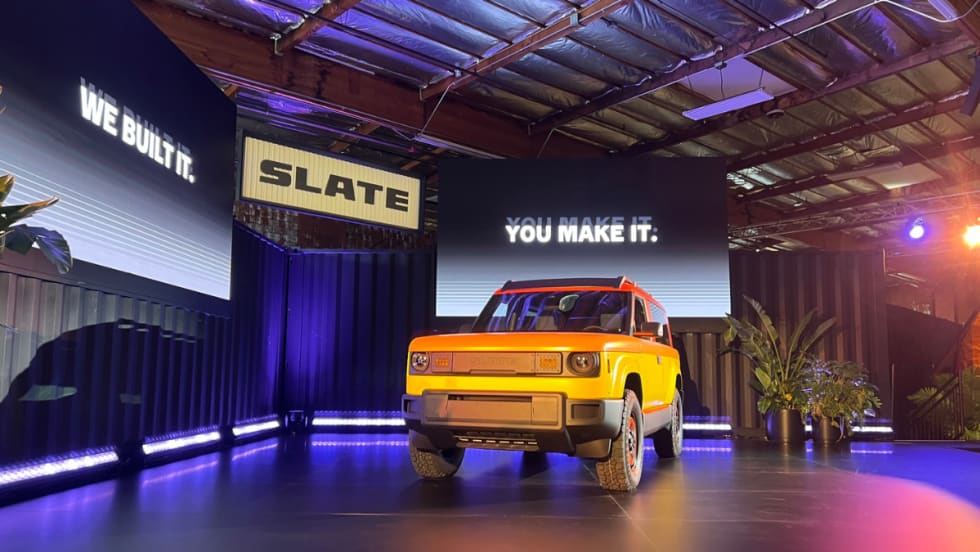
Slate Debuts Colorful, Unique EV Models
A recent media and client event, studded with electric vehicles dressed up on platforms, planted a new position for the manufacturer in the wider EV market. Fleets will find cost-saving advantages.
Read More →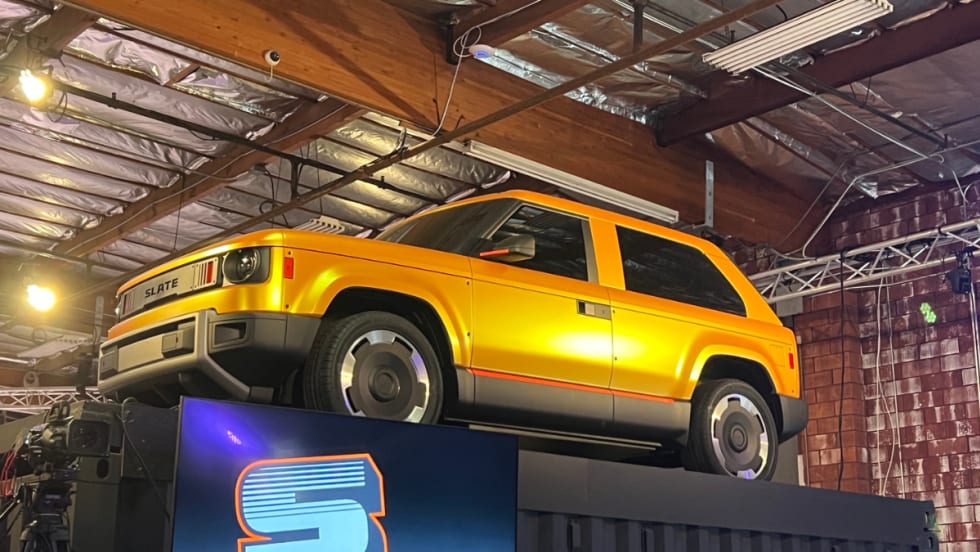
Slate Electric SUV, Pickup Switchable Model Aims For Light-Duty Fleets
Everything about this EV is counterintuitive and understated, making it stand out from the crowd.
Read More →
Inspiration Mobility Acquires Key Electrada Assets
Inspiration Mobility Group has acquired select assets of Electrada, adding the fleet electrification provider's team, technology, and charging infrastructure development capabilities to its energy management business.
Read More →
Turning Connected Vehicle Data Into Decisions That Matter
Fleet leaders have more data than ever, but turning that data into clear, actionable decisions remains a challenge. This white paper shows how leading organizations are using connected vehicle data to improve safety, reduce costs, and optimize fleet performance. Learn how to turn insight into action across your fleet.
Read More →