




HD Supply: Data Integration in the Overwhelming Information Age
Increasingly, fleets rely on data to streamline their fleet management approach. But, when data becomes overwhelming, what can fleets do? HD Supply offers a picture of how data integration can solve the problem — and make for more efficient fleet management. By Shelley Mika

There's a reason today's era is referred to as "the information age." More and more, people, businesses, and governments rely on information as the driving force behind their actions. It's no different for fleets. From tracking simple data, such as vehicle mpg, to tracking detailed metrics and inventory, fleets rely more on information - most often in the form of fleet data - to make daily decisions and refine this fleet management approach.
However, therein lays a problem: Once we amass so much of this information, it can become overwhelming, particularly if it's not centralized. And, sometimes too much of a good thing becomes more of a hindrance than a help.
That's where data integration comes in. By finding smart ways to pull data from various locations together, fleets can truly make the most of it, no matter how much information there is or in how many places it resides.
Managing the Data from 7,000 Units
Finding smart ways to pull data from various locations is exactly what HD Supply has done. As a company that employs roughly 7,000 fleet units, it not only has a lot of units to manage - it has a lot of data to manage, too.
A leading wholesale distribution company, HD Supply provides a broad range of products and services to professional customers in the infrastructure and energy, maintenance, repair and improvement, and specialty construction markets. With a diverse portfolio of industry-leading businesses and approximately 770 locations, it is one of the largest diversified wholesale distributors in North America.
"HD Supply is a company that grew from many different acquisitions. Because of that, we have relationships with many different fleet lessors," said Rhonda Rodeffer, fleet director for HD Supply. "There was a clear need for a centralized database that would store data from many sources."
As such, HD Supply sent out a request for proposal (RFP) for a software vendor that fit its particular requirements. The company chose FleetWave from Chevin Fleet Solutions to gain visibility of all fleet data from every vendor and location, including inventory, spec data, lease spend, maintenance spend, fuel spend, driver data, as well as compliance information needed for California Air Resources Board (CARB) and other emissions requirements.
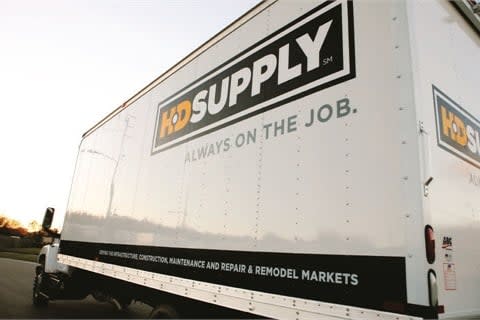
HD Supply employs approximately 7,000 fleet units across 770 locations. Due to the vast amount of data the wholesale distribution must manage, it needed a single database to manage all fleet data.
Now, a single database stores all its fleet data. This is a vast improvement from the former system, where fleet inventory was managed using vendor websites and Microsoft Excel spreadsheets.
"In the past, providing a fleet inventory to a branch or one of our '10 Lines of Business' was a challenge. We had to pull the inventory from each vendor database and our spreadsheets - and then combine them all together. Needless to say, this was very cumbersome. Not having all the data in one place made managing and reporting difficult," Rodeffer said. "Now, we have a comprehensive view of each fleet unit and can provide information and make decisions much quicker than we did before the fleet management system. What used to be a very time consuming task now takes only seconds. Now that we have been using a fleet management system (FMS) for several years, it's hard to imagine trying to get by without it because it's become such a valuable tool for the fleet department."
Upon implementation of the fleet management system, HD Supply also uploaded all fleet paperwork and eliminated the majority of the fleet filing cabinet.
"We did not even realize how much time we spent walking back and forth to the filing cabinets, filing paperwork, looking for paperwork, etc., until we stopped doing it," Rodeffer added.
[PAGEBREAK]
What Data Integration Means for the Fleet
As HD Supply began its quest to integrate data, the path had its bumps.
"Each fleet vendor that HD Supply uses has its own unique way of storing data in databases," Rodeffer recalled. "As we created interfaces with each of these vendors, there were challenges on how to receive consistent data from each, but fit it into the FMS database. We had to work with each vendor to structure the data feeds as we needed."
However, this challenge was small in comparison to the benefits of implementing fleet management software to integrate the data.
Rodeffer said HD Supply has seen many benefits. On the people side of the equation, HD Supply experienced increased customer service and increased productivity within the fleet department. In terms of data, it has improved the quality, timeliness, and utilization of information. The company has also increased accessibility to and the analysis of information. And, they've eliminated redundant data and tasks.
"Because we have a much clearer, more accurate view of the fleet, we have been able to identify excess vehicles and equipment. Right-sizing the fleet has led to savings in all fleet categories - rent, maintenance, and fuel," Rodeffer said. "We have also been able to more effectively plan for future fleet needs. We have been much more effective at transferring units from branch to branch and even across our lines of business. It just goes to show a complicated fleet can be effectively managed once you have all the data in one database."
More Operations

How Fleets Can Recruit and Train Veterans for Technician Roles
Here's how the technician shortage has affected uptime for fleets, and what to do about it.
Read More →
Avis Budget Group Deploys Neology Toll Management Technology Across Major Brands
Neology’s neoFleet platform will manage toll transactions and toll-authority operations for vehicles across Avis, Budget, Payless, Budget Truck and Zipcar.
Read More →
Fleet Personal-Use Charges Edge Higher in 2026
Nearly eight in 10 surveyed fleets allow personal use of company vehicles, while just over half of respondents report charging employees for the privilege.
Read More →
The Future of Fleet + What’s Changing Right Now | AF News Recap
Could developments overseas offer a preview of what’s coming for U.S. fleets? This week, we’re looking at the future of AI, autonomy, and electrification, plus Ford Pro’s new certified pre-owned program, smarter vehicle offboarding, and a new way for fleets to manage toll expenses.
Read More →
How to Handle Vehicle Offboarding
What do fleet managers need to do when a driver leaves?
Read More →
Fleet Manager’s Ultimate Playbook: Navigating the New Standard in OEM Connectivity
Rising operating costs, driver safety concerns, and unplanned downtime are putting unprecedented pressure on modern fleets. Discover how fleet managers use embedded OEM connectivity and real-time vehicle data to cut TCO, prevent downtime, and protect drivers without aftermarket telematics hardware.
Read More →
U.S. Bank Adds Verra Mobility Toll Management to Voyager Fleet Platform
The integration allows U.S. Bank Voyager fleet customers to manage toll payments and violations alongside fuel, EV charging and maintenance expenses.
Read More →
ADAS Prevents Crashes. But Repairs Cost More | AF News Recap
ADAS-equipped vehicles may crash less often, but they can cost more when they do. This week, we’re breaking down what that tradeoff means for fleets, plus Subaru’s first Forester Wilderness Hybrid, Nissan’s new e-POWER Rogue, and why Calstart has become Catalyst Mobility.
Read More →
Moventum Fleet Management Names Mark Iorillo Head of Sales
Iorillo brings nearly 20 years of fleet management and sales experience to the role, including previous positions at Element Fleet Management, CEI, Donlen and Ryder.
Read More →
Fleet Has a Talent Pipeline Problem. What Comes Next? | AF News Recap
Where will fleet’s next generation of leaders come from? This week, we’re looking at the industry’s talent pipeline, what certification can add to a fleet career, how to build an award-worthy track record, and the return of Automotive Fleet’s Personal Use Survey.
Read More →