





Read More: Why Are Used Vehicle Prices So High?
Granular Deep Dive on Why Parts Prices are Increasing
No one predicted the spike in replacement parts prices over the past several years nor the delays in getting out-of-stock parts. This assessment explains how these numerous price increases add up to big expenditures raising TCO.
September 13, 2023

No one predicted the spike in replacement parts prices over the past several years nor the delays in getting out-of-stock parts.
Credit: Canva
7 min to read
As part of an ongoing series, Automotive Fleet magazine interviews subject-matter experts around the industry to get a pulse on the state of the commercial fleet market.
In an earlier conversation with Bob Martines, CEO of Corporate Claims Management (CCM), we discussed the ongoing upward pressures in fleet maintenance costs. To understand why these market dynamics are occurring and their impact on the fleet industry, AF Associate Publisher Mike Antich had a follow-up discussion with Martines to identify the root causes for the increased prices for replacement parts.
AF: Let’s get granular and identify the reasons why parts prices are increasing.
MARTINES: The reality is the business is changing and fleet managers need to know what they are facing. Let me first start with a simple example as to why parts prices are increasing.
For instance, a very minor increase of $20 or $25 dollar to the price of a grille, bumper cover, headlamp, molding, hood, or any part that is easily damaged multiple times during a vehicle’s lifecycle will add to a vehicle’s total cost of ownership (TCO).
These may seem like minor price increases, but when five, 10, or more body parts all have increased in price, almost every calendar quarter, the increase adds up to a couple of hundred dollars more per vehicle each quarter and it never ends.
A smaller fleet of 100 vehicles may have 20 to 25 incidents in a year; those margins of $25 increases on several parts will add several thousands of dollars in expenses. I’d like to add that the $20-$25 increase is ultra-conservative.
As an example, a simple part like a rocker molding that could have been purchased for under $170 just a couple of years ago, today costs over $446. A standard grille that was $225, now costs $565. How about an engine fan? An engine fan could have been purchased and installed for less than $500 a couple of years back. Today, the engine fan alone costs over $2,200, then you add the labor, and the cost increases by four-and-a-half-times.
Another replacement part that drives repair shops to the brink is a windshield. A basic windshield versus a windshield with a sensor versus a windshield with a heads-up display, all have different pricing. However, the windshield with a sensor and the heads-up display both need to be recalibrated. Depending on the geographic location that affects labor costs and the vehicle type, recalibration can cost $400 to $750.
Here's another example: if a driver breaks a side view mirror that has lane-changing sensors, recalibration is also required once the mirror is replaced since some manufacturers have changed mirror sizing. So when the glass segment breaks, previously you could replace just the glass, but not now. With the new mirror size, the entire assembly has to be replaced and recalibrated.
One other headache for repair shops is that there are more parts components, with varying prices, which also drive up costs on the items I addressed separately; most fleet managers will accept a minor increase.
However, no one ever thinks of all the parts and incidentals (bumpers, headlamps, moldings, radiators, fans, etc.) plus labor, which together, all have increased, adding up to thousands more in expenses.
An additional cost increase is that every manufacturer is introducing aluminum parts in many of their vehicles. Replacing an aluminum part is more costly as there is additional labor plus the shop must use rivets, glue, and sealer versus welding a part and using some Bondo to simply smooth the surface for painting.
A steel door jamb for a Ford pickup truck, pre-COVID, cost approximately $1,300. The same door jamb made of aluminum costs over $2,200 to purchase and install.
I do not think there is one fleet manager who had a “crystal ball” that could have predicted costs like the ones I am citing.

A 47-year industry veteran, Bob Martines is CEO of Corporate Claims Management (CCM).
Credit: Corporate Claims Management
AF: What is causing the delays in receiving many out-of-stock replacement parts?
MARTINES: The next major headache to go along with the never-ending price increases is the wait time for parts. Not too long ago a shop could put a parts order together for the dealer or parts supplier and have the needed parts at the shop in two to three days.
Now it could take two to three weeks as most parts are not readily available at the dealerships as they no longer inventory parts due to extra costs. Warehouses and parts suppliers also keep their inventory low to keep their cash flow positive.
The lack of parts clearly adds to unnecessary downtime. Heaven forbid there is a special order for parts that are rarely damaged or there is a national back order – now we are adding months of downtime. If a vehicle is safe and drivable, the fleet manager does not have to be so concerned.
However, when the vehicle is not drivable, the fleet manager and their service provider are at a serious disadvantage.
AF: What is the current status of turnaround time for new-vehicle warranty work for fleet vehicles?
MARTINES: We have had to engage factory reps at an increasingly higher rate due to the fact many dealers across the country are pushing warranty work to the “back burner.”
Adding insult to injury, some dealers are not willing to provide loaner vehicles for disabled vehicles. The common excuse is too much work, not a very good testament to the quality of the vehicles being produced, not enough skilled personnel, or, for whatever reason, they do not want to wait for factory reimbursements.
We contacted the factory reps for help. We contact the reps who have influence and can cut the lead time a bit or at least help with a loaner vehicle.
If there is no cooperation, we engage the client’s lessor when possible, which does work at times. In the event there is no cooperation from any party, we treat the manufacturer/dealer as a hostile party and attempt recovery, similar to subrogation.
Detailed records are necessary when attempting collection. When a dealer or factory rep denies help, in writing, it opens a door to the manufacturer for some recovery. A key to our success is we do have good records.
AF: What are the differences in component repair costs for EV versus ICE repairs?
MARTINES: I read a lot about electric vehicles, as well as speak to people who have opinions on both sides. I also speak with body shop owners/managers for their opinions comparing repairing EVs to ICE vehicles. I find it amazing to hear the differences.
Most shops are indifferent. Removing a bumper off a Tesla versus removing a bumper off an ICE SUV is not brain surgery, nor is most of the bodywork.
The major problem is the manufacturers are doing everything in their power to hinder the repairs outside their dealer network by not supplying parts to independent shops, demanding to see written certification that the independent shop can repair the Tesla, Audi, etc. Tesla makes it impossible as they do not have a parts department to call.
In addition to proving the shop is indeed qualified to repair the vehicle, the shop needs to go online to order the necessary parts. If the part number is wrong, the shop owns it anyway.
Audi wants certification for each model they offer, both electric and ICE. Each certification costs an annual fee per vehicle model. If the shop does not have the certification, they cannot get the parts.
With fewer shops able to repair the specific manufacturers' vehicles the longer the lead time, plus the more the shops can charge since it is deemed specialty work.
Think about the effect this will have on fleets; fewer choices, higher costs.
AF: What is the impact on the cost of replacement parts and labor for insured versus self-insured fleets?
MARTINES: An insured fleet will be under more scrutiny than a self-insured fleet. If the insured fleet pays more per vehicle per repair, naturally their rates will continue to rise.
If the client increases the deductible to help offset the policy increase, they are still stuck with a limited shop selection and are now paying more out of pocket for the repair – a very vicious cycle.
My suggestion to fleet managers is to really do your research on all vehicles that could suit your needs. If senior management is taking a path that you are uncomfortable with, speak up but show them the data to support your position.
A VP or the senior purchasing manager may make the decision to buy certain vehicles and force them on the fleet manager. However, when the realization sinks in that a mistake was made, it is the fleet manager who pays the price.
Subscribe to Our Newsletter
More Maintenance

Sponsored•October 1, 2026
Fleet Manager’s Ultimate Playbook: Navigating the New Standard in OEM Connectivity
Rising operating costs, driver safety concerns, and unplanned downtime are putting unprecedented pressure on modern fleets. Discover how fleet managers use embedded OEM connectivity and real-time vehicle data to cut TCO, prevent downtime, and protect drivers without aftermarket telematics hardware.
Read More →
How Can Fleet Managers Tell Which Repairs Require Closer Review?
Fleetio’s Brianna Perry demonstrates how Service Advisor evaluates maintenance requests, identifies pricing anomalies, and provides the context fleet managers need to focus their attention on potential problems.
Read More →
Why Roadside Assistance Belongs in a Fleet Risk Strategy
Roadside assistance is more than a tow. See how the right partner can protect drivers, uncover fleet trends, and strengthen your risk strategy.
Read More →
Sponsored•August 7, 2026
Hidden in Plain Sight: Fleet Compliance Risks
Fleet compliance isn't just about having policies — it's about consistently enforcing them. This practical guide reveals six hidden compliance risks common in public sector and shared fleet operations and outlines proven strategies to improve visibility, accountability, and audit readiness
Read More →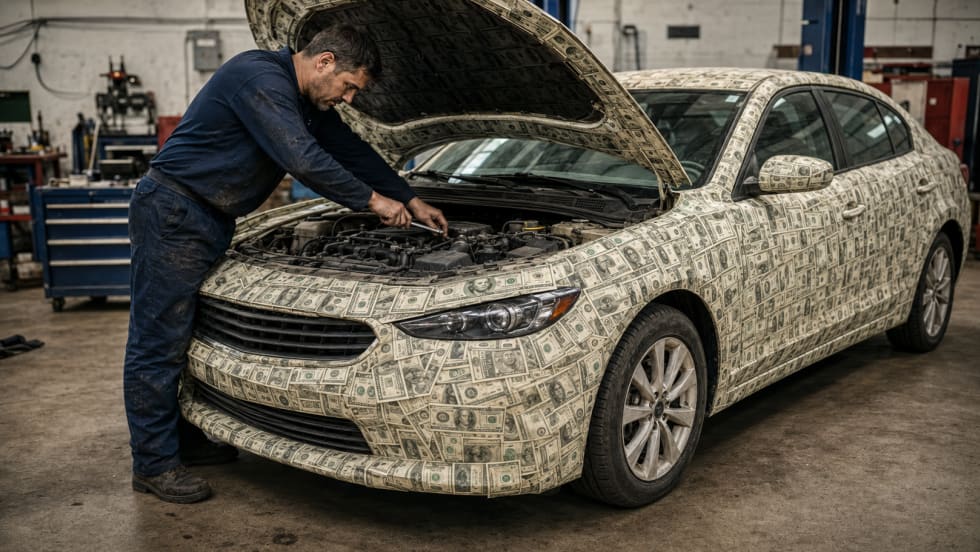
How Maintenance Costs Compare Across 27 Fleet Vehicles
Vincentric’s three-year, 60,000-mile projections reveal wide differences for both scheduled and unscheduled maintenance among selected vehicle categories. Projected maintenance visits also play a factor.
Read More →
The EV Breakdown Nobody's Talking About: Why Most Electric Vehicle Roadside Calls Aren't Mechanical Failures
Here's why EV breakdowns are widely misunderstood.
Read More →
How Stellantis Plans to Get Ahead of Fleet Downtime
Keeping fleet vehicles on the road has become as important as buying them. Darren Bradshaw of Mopar North America explains how connected vehicle data, AI, and proactive service strategies are helping Stellantis reduce downtime and move closer to predictive maintenance.
Read More →
Merchants Fleet Expands Maintenance Network with Pep Boys
Merchants Fleet has expanded its relationship with Pep Boys, increasing the service provider's role within its national maintenance network. The move is intended to enhance maintenance coordination and support commercial fleets through Pep Boys' nationwide footprint.
Read More →
The Two Biggest Summer Downtime Threats for Fleets
A conversation with a maintenance expert reveals the two most common summer maintenance pains and how to prevent them.
Read More →
From Marine Corps Motor Pool to Managing 460 Fleet Vehicles
Cesar Ayala of O’Connell Landscape Maintenance shares how he transitioned from the Marine Corps to managing a 460-vehicle fleet—and the real-world challenges of maintenance, compliance, and driver management in California.
Read More →