




GM Seeks to Revitalize Mid-Size Pickup Market
After largely disappearing for several years, GM hopes to connect fleets with its mid-size truck offerings. The Colorado Work Truck trim is specifically designed with fleets in mind.

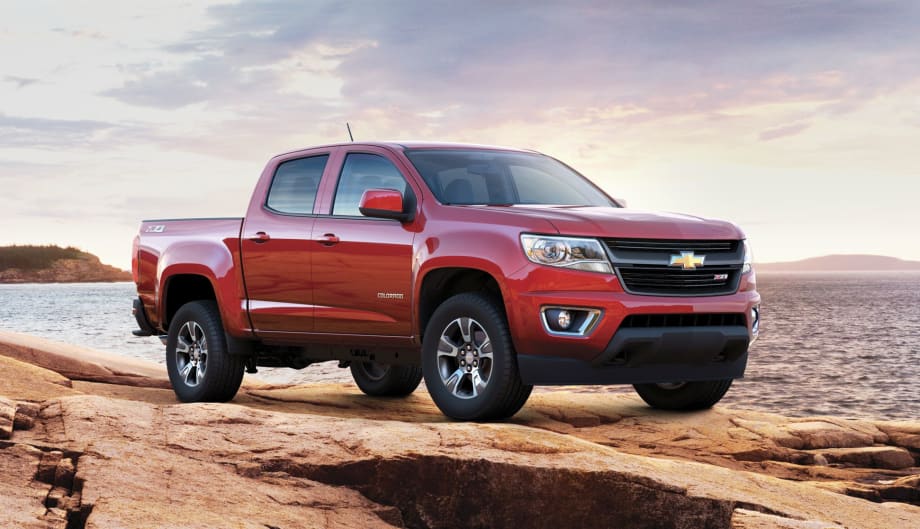
While the Chevrolet Colorado has sportier exterior styling, its Work Truck trim level is specifically designed for fleets, featuring a rear seat delete (on extended cab only) and vinyl seats. The Colorado’s extended cab configuration is also available with a box delete, making it easier to upfit.
While the Chevrolet Colorado has sportier exterior styling, its Work Truck trim level is specifically designed for fleets, featuring a rear seat delete (on extended cab only) and vinyl seats. The Colorado’s extended cab configuration is also available with a box delete, making it easier to upfit.
Nearly a year after they were unveiled, the Chevrolet Colorado and GMC Canyon have rolled onto the scene and are available for fleets.
Automotive media had the opportunity to put the new vehicles through their paces in a variety of conditions in Southern California. The automaker sees the mid-size pickups as resonating with fleets.
“I think fleets are really excited because they see a huge opportunity here. There’s been a hole in the segment for about two years where there has been no domestic mid-size pickup available at all,” said Mike Jones, fleet and commercial product manager for the mid-size pickup. “When there was nothing available, a lot of commercial customers may have gone to a full-size pickup or a crossover. So, we’re feeling that there’s a lot of pent-up demand.”
Equipped for Performance
The third leg in GM’s three-truck strategy, the Colorado and Canyon are equipped with a 2.5L DOHC I-4 engine, which produces 200 hp and 191 lb.-ft. of torque. The optional 3.6L V-6 produces 305 hp and 269 lb.-ft. of torque.
The 2.5L engine has been U.S. Environmental Protection Agency (EPA) rated at 27 mpg highway while the 3.6L achieves 26 mpg highway. Both ratings are for the 2WD models with automatic transmission.
A 6-speed automatic transmission is standard on the Work Truck 4WT, LT, and Z71 trims and available on the Work Truck 2WT trim. A 6-speed manual transmission is standard on the base and Work Truck 2WT trims.
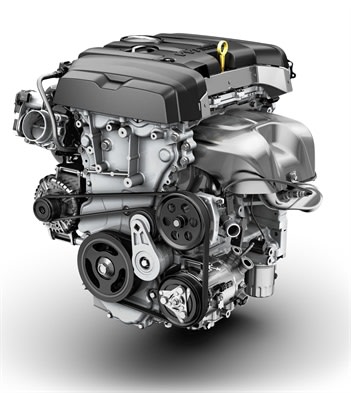
The Colorado and Canyon are equipped with a 2.5L DOHC I-4 engine, which produces 200 hp and 191 lb.-ft. of torque. The 2.5L engine has been U.S. Environmental Protection Agency rated at 27 mpg highway.
During the ride-and-drive portion of the event, both engines performed well, with the 2.5L effortlessly climbing the steep grades of the proscribed routes. The Colorado has a short turning radius of 41.3 feet.
Even with its high mpg, during the media event, the inevitable question about an available diesel engine came up.
While a diesel is available on its global Colorado, the automaker plans to introduce this option on the 2016 model, according to Jones.
Although the Colorado and Canyon both have some of the handling characteristics of a GM sedan, they also benefit from being the siblings of the Silverado and Sierra. They feature the rear bumper Corner Steps that were recently added to the full-size and heavy-duty pickups, and are standard with either a 5-foot, 2-inch box or a 6-foot, 2-inch box, giving it plenty of room for transporting supplies and material.
Set for Safety
It isn’t just what’s under the hood that allows drivers to do their jobs. Inside the cab, the Colorado and Canyon can both be equipped with an OnStar 4G LTE Wi-Fi hotspot, which could be of particular benefit for field supervisors and others who may need to be keeping contact or monitoring drivers in the field, according to company officials. OnStar with 4G LTE is standard on Colorado’s LT and Z71 trims and available on the Work Truck trim. It is standard on Canyon’s SLE and SLT trim and available on the Canyon trim. It is not available on the Colorado base and Canyon SL trims.
No matter the trim, certain safety features are standard on both the Colorado and Canyon. This includes the dual-stage frontal and side-impact driver and front passenger and head-curtain and seat-mounted side-impact air bags. The rear vision camera with dynamic guidelines is also standard on all models, along with the immobilizer theft deterrent system. The unauthorized entry theft-deterrent system is standard on the Colorado’s LT and Z71 trims and the Canyon’s SLE and SLT trims, and available on the Colorado Work Truck and Canyon trims. The locking tailgate is standard on all trims.
Four-wheel anti-lock brakes, StabiliTrak, tire pressure monitor system, traction control, and power four way driver seat are standard on all models, as is daytime running lights.
Carry and Tow Power Available
The Colorado and Canyon have been designed to have the appearance of being both different yet related, the Colorado is sportier and sleeker, while the Canyon has more of a traditional truck-like appearance — heavier, more solid. They both deliver capabilities akin to a full-size truck.
The Colorado and Canyon offer a GVWR of 5,400-6,000 pounds, depending on the model and engine configuration. The Colorado has a payload rating of 1,410-1,590 pounds. The Canyon’s payload rating is 1,450 to 1,620 pounds.
The Colorado and Canyon have a maximum trailer rating of 7,000 pounds when equipped with the available V-6 engine and heavy-duty towing package.
“There’s a ton of capability with this truck,” Jones said. “It has a really nice base payload capability of 1,450 pounds on the Chevrolet and 1,490 on the GMC, and that’s a good bit more than what our competitors offer by anywhere from 250 to 500 pounds. It’s a very capable truck. It’s a smaller truck, but with a lot of capability.”
The Colorado Ready for Fleet
While either vehicle could have a fleet function, the Colorado’s Work Truck trim has been designed with fleets in mind.
Jones said that the two fleet types in which the Colorado could be best fit are pest control and auto parts supply. Security, courier services, and utilities are other fleet types for which the Colorado could be a good fit.
Since the Colorado is only available in a crew-cab configuration, there is a seat delete option available for the Work Truck model, allowing the space to be used for secure storage. Seats are made of vinyl for easier cleaning and maintenance. And, while there is a backup camera as standard, the 3.5-inch color screen is smaller than those found on other Colorado trims.
The company is working with upfitters to develop packages that will be of use to fleets, and has made available a variety of commercial-grade accessories when ordering.
These accessories include utility rack systems, tool boxes, tonneau covers, bed protection and accessories, trailering equipment, and interior accessories (e.g., mats and under-seat storage).
Fleets that need more than a standard piece of equipment have a choice of numerous upfitters to work with.
“We’ve had about three measurement sessions with members of NTEA and SEMA to allow them to come in and take measurements of the vehicles,” Jones said. “We’ve provided the math data for the trucks, so they can go back to their shops and start putting together various upfits that they think will work out on the market. We think there’s a lot of interest in doing a number of different things with these trucks.”
The Colorado is also available with a box delete option on the extended cab configuration, giving fleets maximum upfit flexibility. The box delete is only available with the extended cab model equipped with the 3.6L V-6.
“There are a number of different things that upfitters may want to do with the box delete, such as the utility body or a flatbed arrangement,” Jones said. “A truck with a utility body that’s maneuverable and gets good fuel economy, we think there’s an opportunity there.”
Related:
More Operations

Avis Budget Group Deploys Neology Toll Management Technology Across Major Brands
Neology’s neoFleet platform will manage toll transactions and toll-authority operations for vehicles across Avis, Budget, Payless, Budget Truck and Zipcar.
Read More →
Fleet Personal-Use Charges Edge Higher in 2026
Nearly eight in 10 surveyed fleets allow personal use of company vehicles, while just over half of respondents report charging employees for the privilege.
Read More →
The Future of Fleet + What’s Changing Right Now | AF News Recap
Could developments overseas offer a preview of what’s coming for U.S. fleets? This week, we’re looking at the future of AI, autonomy, and electrification, plus Ford Pro’s new certified pre-owned program, smarter vehicle offboarding, and a new way for fleets to manage toll expenses.
Read More →
How to Handle Vehicle Offboarding
What do fleet managers need to do when a driver leaves?
Read More →
Fleet Manager’s Ultimate Playbook: Navigating the New Standard in OEM Connectivity
Rising operating costs, driver safety concerns, and unplanned downtime are putting unprecedented pressure on modern fleets. Discover how fleet managers use embedded OEM connectivity and real-time vehicle data to cut TCO, prevent downtime, and protect drivers without aftermarket telematics hardware.
Read More →
U.S. Bank Adds Verra Mobility Toll Management to Voyager Fleet Platform
The integration allows U.S. Bank Voyager fleet customers to manage toll payments and violations alongside fuel, EV charging and maintenance expenses.
Read More →
ADAS Prevents Crashes. But Repairs Cost More | AF News Recap
ADAS-equipped vehicles may crash less often, but they can cost more when they do. This week, we’re breaking down what that tradeoff means for fleets, plus Subaru’s first Forester Wilderness Hybrid, Nissan’s new e-POWER Rogue, and why Calstart has become Catalyst Mobility.
Read More →
Moventum Fleet Management Names Mark Iorillo Head of Sales
Iorillo brings nearly 20 years of fleet management and sales experience to the role, including previous positions at Element Fleet Management, CEI, Donlen and Ryder.
Read More →
Fleet Has a Talent Pipeline Problem. What Comes Next? | AF News Recap
Where will fleet’s next generation of leaders come from? This week, we’re looking at the industry’s talent pipeline, what certification can add to a fleet career, how to build an award-worthy track record, and the return of Automotive Fleet’s Personal Use Survey.
Read More →
Smith System Launches Driver Risk Management Program
Fleets have more driver data than ever, but identifying risky behavior doesn't necessarily correct it. Smith System's new Driver Risk Management program combines monitoring, training, and follow-up coaching to help fleets connect risk signals with driver intervention.
Read More →