





More on Tech: Tips for Navigating the Increase in Available Fleet Technologies
Geotab Connect 2023 Conference Draws Praise
The three-day conference offered attendees more than 90 educational sessions, exploring such developments as intelligent software for vehicles and right-to-repair legislation.
March 30, 2023
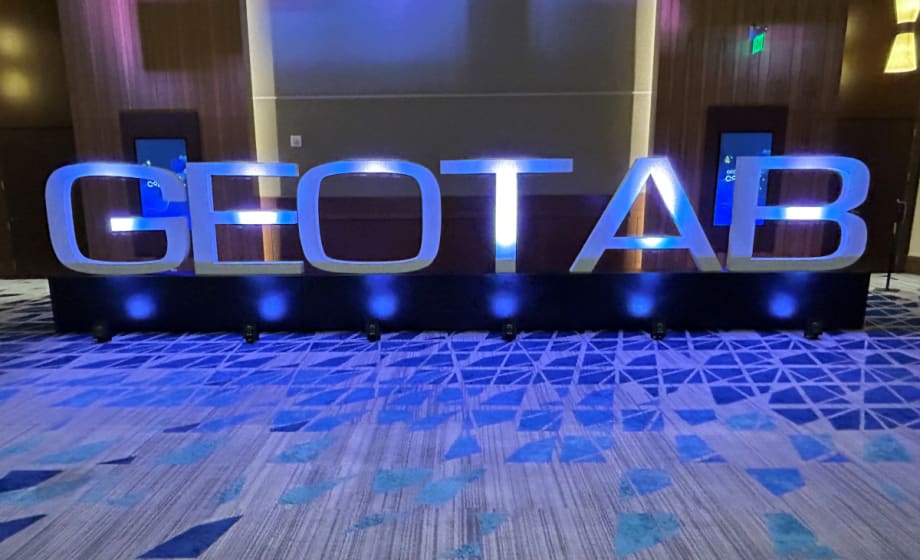
The recent Geotab Connect 2023 Conferencer, which featured presentations by prominent OEM executives, drew a greater number of fleet managers than in years past.
Photo: Bobit
5 min to read
Drawing some 1,700 fleet industry professionals and offering more than 90 educational sessions, the recent Geotab Connect 2023 Conference was a rousing success, according to many of the increased numbers of fleet managers who attended the event this year.
When asked for their conference evaluation, every fleet manager gave the conference a solid “Thumbs up!” suggesting the event is a potential must-attend industry event for the future, like those produced by NTEA, Work Truck, NAFA and Avalon.
OEMs Describe Future Technology
The opening keynote speaker was Geotab founder Neil Cawse, who spoke in detail about the evolution of telematics from dots on a map technology to an indispensable vehicle-centric, driver-centric and operation-centric fleet management tool.
Following Cawse, Sabina Martin, Geotab, associate VP of product development, described Geotab's roadmap to evolve into an artificial intelligence and AI-enabled and hardware-agnostic platform.
Other of the many presenters included prominent OEMs, such as Ed Peper, U.S. VP of General Motors; Brandon Blumer of Rivian; and Gagan Man, VP of digital fleet and services for Stellantis.
Among the topics these OEM representatives explored was software-defined vehicles that can be updated over the air.
Software downloads to a vehicle will accelerate new product introductions into the fleet market and launch new features such as expansion of assisted driving features.
Intelligent software being developed today for tomorrow's vehicles will have self-learning capabilities to adapt to a driver’s needs — a revolutionary advance in so many respects.
Who Owns Vehicle-Generated Data?
Another interesting conference session at the conference dealt with the right to repair legislation at both the state and federal levels.
The presentation was especially relevant since on February 9, the day following the conference, U.S. Representative Neil Dunn (R-Fla) introduced a bipartisan bill to mandate that vehicle owners and independent repair shops have the same access to the tools and data as automakers and their franchise dealers.
While such legislation addresses access to vehicle data, at the heart of the discussion is who owns vehicle-generated data.
The question of who owns vehicle data will profoundly impact the future direction of the automotive repair industry and, by default, the fleet management and maintenance industries.
This issue has been emerging for several years. At a conference years ago, Bob White, president of fleet and mobility at Holman, gave a keynote address. At the conclusion of his presentation, he was asked his opinion on how the question, “Who owns the vehicle data?” would be resolved.
White said he didn't know how it would be resolved but was confident the issue would be settled in the courts.
The vehicle data ownership question — with its far-reaching consequences — encompasses diametrically opposite viewpoints. An entire plausible scenario would see the issue ultimately percolating all the way up to the U.S. Supreme Court for a final deliberation.
Massachusetts Passes Right-to-Repair
Currently, only the Commonwealth of Massachusetts has passed right-to-repair legislation: in 2013 and later in the 2020 general election. More than 70% of the Massachusetts voters approved expanding the state's existing right-to-repair law.
The 2020 measure, known as the Data Access law, automakers who sell vehicles with telematics systems in Massachusetts are required to equip them with a standardized, open-access data system.
An open-access data system has yet to be developed. However, when it becomes available, vehicle owners would have wireless access to real time digital data from their vehicles’ telematics system.
Vehicle owners includes fleets, fleet management companies, participants in national account fleet programs and independent repair shops. All could access the same data available to OEMs and their franchise dealers. A first!
The Massachusetts law is currently being litigated following a lawsuit by the Alliance of Automotive Innovation, the world’s largest consortium of automotive manufacturers.
One reason for the lawsuit, which advocates a more restrictive approach to vehicle data access, is the valid concern of cybersecurity.
According to the lawsuit, an open-access system would increase the risk of criminals gaining access to crucial software controlling an automobile’s critical functions. With access, these criminals can create malicious hacks.
Auto manufacturers who filed the lawsuit argue that the Massachusetts law makes it extremely difficult to secure digital data from these hackers, who potentially would have open access to the system. In addition, scofflaws could easily disconnect functions they didn't like, such as the vehicle emission control system.
Other reasons cited in the lawsuit include risks to vehicle safety, unrealistic compliance requirements and unrealistic deadlines mandated to OEMs.
However, automotive OEMs see a new business model emerging that will allow them to monetize data generated by connected vehicles. Harvesting this vehicle data promises to be a major revenue channel; the research company McKinsey sees monetization of vehicle-generated data reaching $450 billion to $750 billion globally by 2030, with major positive ramifications on the types of services and data offered fleet.
For the Future: Look Outside Fleet
What does the future hold? An executive at a major fleet management company once said to understand the future of fleet, don’t look within fleet, but rather look outside of fleet.
In the context of this discussion, what is happening outside fleet that could influence the fleet market in terms of data access?
An interesting area to watch is the smartphone market, where similar right-to-repair lawsuits are occurring.
For example, in 2008, the U.S. Supreme Court ruled in favor of a class action lawsuit that forced mobile phone operators to unlock cell phones. This decision emboldened right-to-repair advocacy groups who pushed the cell phone manufacturers to allow users to perform self-repairs on their phones.
In April of 2022, Apple launched such a program. The company launched a program called “Cell Service Repair,” allowing users to buy parts online for certain iPhones and certain laptops to conduct their own repairs.
Last December, Apple began letting customers in eight European countries repair their own devices. As part of the program, a customer can rent a repair tool kit for about $63, buy individual parts, and receive how-to online repair tutorials from Apple.
Still another example can be found in the agricultural industry. In January, John Deere reversed its longtime self-repair policy conc and signed a memorandum of understanding with the American Farm Bureau Federation allowing farmers the right to repair their equipment rather than forcing them to use an authorized dealer to perform the work.
Again, look outside of fleet to see how fleet might change. The world around us is changing.
Subscribe to Our Newsletter
More Operations

The Future of Fleet + What’s Changing Right Now | AF News Recap
Could developments overseas offer a preview of what’s coming for U.S. fleets? This week, we’re looking at the future of AI, autonomy, and electrification, plus Ford Pro’s new certified pre-owned program, smarter vehicle offboarding, and a new way for fleets to manage toll expenses.
Read More →
How to Handle Vehicle Offboarding
What do fleet managers need to do when a driver leaves?
Read More →
Sponsored•October 1, 2026
Fleet Manager’s Ultimate Playbook: Navigating the New Standard in OEM Connectivity
Rising operating costs, driver safety concerns, and unplanned downtime are putting unprecedented pressure on modern fleets. Discover how fleet managers use embedded OEM connectivity and real-time vehicle data to cut TCO, prevent downtime, and protect drivers without aftermarket telematics hardware.
Read More →
U.S. Bank Adds Verra Mobility Toll Management to Voyager Fleet Platform
The integration allows U.S. Bank Voyager fleet customers to manage toll payments and violations alongside fuel, EV charging and maintenance expenses.
Read More →
ADAS Prevents Crashes. But Repairs Cost More | AF News Recap
ADAS-equipped vehicles may crash less often, but they can cost more when they do. This week, we’re breaking down what that tradeoff means for fleets, plus Subaru’s first Forester Wilderness Hybrid, Nissan’s new e-POWER Rogue, and why Calstart has become Catalyst Mobility.
Read More →
Moventum Fleet Management Names Mark Iorillo Head of Sales
Iorillo brings nearly 20 years of fleet management and sales experience to the role, including previous positions at Element Fleet Management, CEI, Donlen and Ryder.
Read More →
Fleet Has a Talent Pipeline Problem. What Comes Next? | AF News Recap
Where will fleet’s next generation of leaders come from? This week, we’re looking at the industry’s talent pipeline, what certification can add to a fleet career, how to build an award-worthy track record, and the return of Automotive Fleet’s Personal Use Survey.
Read More →
Smith System Launches Driver Risk Management Program
Fleets have more driver data than ever, but identifying risky behavior doesn't necessarily correct it. Smith System's new Driver Risk Management program combines monitoring, training, and follow-up coaching to help fleets connect risk signals with driver intervention.
Read More →
Automotive Fleet Opens 2026 Personal Use Survey for Commercial Fleet Managers
Less than two weeks left! Commercial and corporate fleet managers are invited to share how their organizations handle company vehicle personal-use policies, charges, and driver eligibility.
Read More →
From AI Prompts to AI-Generated Safety Songs | AF News Recap
Can better prompts make AI more useful for fleet managers? This week, we’re breaking down smarter fleet analysis, an AI-assisted experiment that turned safety training into music, and what happened to fuel prices in August.
Read More →