




GE Capital Fleet Services Foresees a 'Reset' in Fleet Management
GE believes a “reset” has occurred in the macroeconomy that will ultimately transform the fleet industry. That is, the way business was conducted prior to the economic crisis won’t work in today’s new world. GE is taking this reset opportunity to reposition its business.

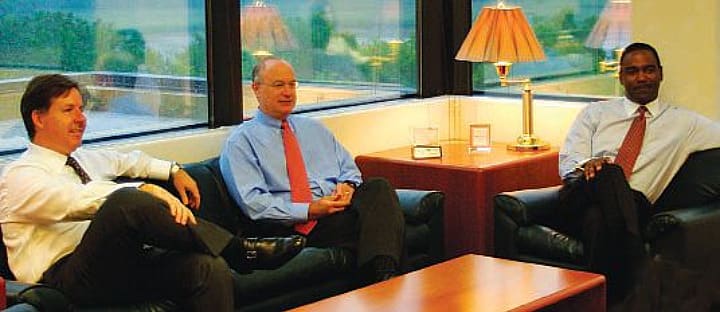
GE Capital Fleet Services executives, (l-r) John Righini, chief marketing officer; Jeff Schlesinger, VP, strategic leadership; and Clarence Nunn, president and CEO, discuss the future of the commercial fleet market.
Clarence Nunn is president and chief executive officer of GE Capital Fleet Services. Previously, Nunn was the chief commercial officer at GE Capital's Commercial Distribution Finance business in Chicago. Since joining GE in 1992, Nunn has held key leadership roles in sales, marketing, product development, and quality within several GE businesses in the U.S. and Canada, including GE Plastics, GE Capital Canada Equipment Financing, GE Vendor Financial Services, and most recently, GE Capital's Commercial Distribution Finance.
AF interviewed Nunn about his perspective on the commercial fleet market and the go-to-market strategy for GE Capital Fleet Services. Joining the conversation were John Righini, chief marketing officer, and Jeff Schlesinger, vice president, strategic leadership.
Here are excerpts from the interview.
AF: How has the economic downturn affected GE's go-to-market strategy?
Nunn: Our go-to-market strategy starts with our chairman, Jeff Immelt. Jeff believes a fundamental "market reset" has occurred. That is, the way business was conducted prior to the economic crisis won't work in today's new world. The old days are gone.
It is then each GE business leader's job to take that direction, apply it to his/her business and run it accordingly.
GE Capital Fleet Services is taking this reset opportunity to reposition our business. As part of the bigger GE, Fleet Services can leverage the resources of other GE businesses, and it is especially important to do so in this new environment. It is my job as CEO to make sure we take advantage of that opportunity and reach out to our colleagues across GE. We've worked with GE Global Research Center, GE Asset Intelligence, and GE Energy to share information, technology, and galvanize strategies related to our telematics product. This is a good example of how we leverage GE resources, yet make the solution our own to fit our customers' needs.
In addition, we are focusing on improving our customers' experience. One of the things we pride ourselves on at GE is trying to anticipate customer needs. We use tools like our client advisory board, which is comprised of strategic customers to give us candid feedback. This involves listening well and responding to what we hear, but the other piece is trying to anticipate those needs and bringing solutions to the table. It is valuable to talk with our customers not only about what's happening in today's market, but what we anticipate happening in the future. At GE, we call it "seeing around corners."
We are also looking for more innovative ways to help our customers tomorrow. GE, as a corporation, is a microcosm of what is happening in the economy. This gives us the ability to understand what's coming and advise our customers. They don't have to react to the information immediately, but they know their relationship with GE gives them access to this type of insight. So, it's going beyond fleet management to helping customers recognize the bigger picture. For example, GE made a recent announcement it was investing $100 million in a new battery venture. At GE Capital Fleet Services, we have access to that information, which we can relay to our fleet customers, or we have the capability to let customers do a deep dive into a topic like auto industry trends, where we have a specialized team at GE Capital we can tap into.
There are a variety of issues fleet managers ought to be thinking about, and they should be holding their fleet management companies accountable to deliver this type of information to them. Working with a company like GE provides the opportunity to help you grow your overall business strategy beyond cars and trucks.
AF: In a prior conversation, you said our industry will transition from fleet management to information management. How so?
Nunn: When you and I talked at this year's NAFA conference, we talked about transitioning from a fleet management company to an information management company. This involves getting all the data we collect and connecting the dots for customers. Our vision is to make our customers more profitable by not only providing them with everything there is to know about their vehicles, but also by improving their ability to manage their own customers, inventory, and, ultimately, their supply chain.
We know that as a fleet management company, if you are just capturing real-world data without performing thoughtful analysis of that information, you can't help customers make decisions that have real impact to their business. That's where information management comes in. We will continually ask ourselves, how do I take this information and package it to make GE Capital Fleet Services a better supplier to our customers, a better customer to the OEMs, and improve relationships with all fleet industry channels? We have a unique opportunity to achieve this and now is the time.
We're not completely there yet, but I think the message on a go-forward basis is that this is where we're headed.
[PAGEBREAK]AF: How will you implement this new strategic focus within GE Capital Fleet Services?
Nunn: GE Capital Fleet Services has a tremendous amount of domain expertise to meet the needs of our customers. However, given the current environment, I thought it was prudent to bring in Jeff Schlesinger as vice president, strategic leadership. Jeff will look strategically at our business, generate new ideas, and turn those ideas into new initiatives that ultimately deliver real value to our business and our customers. When I came to GE Capital Fleet Services, I engaged in a rigorous regimen of meeting with the senior team, every function and subgroup, sometimes in small groups and many times one-on-one. I put Jeff through a very similar regimen, as well as talking to our third-party providers. With that introduction, I would like Jeff to give you his industry perspective as a relative outsider, but also as someone who has a wealth of knowledge and who has a different perspective on our business.
Schlesinger: I spent numerous years in the industrial businesses as the capital market interface within GE. Prior to that, I spent many years in the commercial banking industry. One thing I noticed about the fleet business is that it is an "anomaly" that sits between a capital business and an industrial business. From a capital point of view, it offers the financing that traditionally fits in GE Capital. On the industrial side, it has similar services that GE Aircraft Engines, GE Power Systems, and GE Water & Process Technologies offer through their long-term service contracts. This creates an interesting opportunity for us. It was important, as we started developing a long-term strategy, to keep that in mind. We have been reaching out to GE's industrial side about its long-term service agreements, as well as understanding the other offerings within GE Capital, to leverage all the resources in GE.
AF: What new products and services from GE Capital Fleet Services excite you?
Schlesinger: What excites me about the fleet business is our telematics strategy. It offers an incredible opportunity for our customers to leverage efficiencies. We are looking deeply at how we can provide a wing-to-wing strategy for telematics from the fleet sourcing team all the way to the commercial team, to offer a product to make our customers' mobile assets more efficient.
Righini: At the baseline, we have to deliver on the fundamental fleet management value proposition by enhancing our core products and services.
With respect to our telematics product, we have to improve its functionality and the business analytics. You can get reams of data from a telematics device, but turning that data into actionable information is really the secret sauce. We spend a lot of time looking at the data and the answers this data provides, and then we synthesize the information to provide real cost-savings, productivity, planning, scheduling recommendations, etc., that customers can put into action.
In addition, we are rounding out our truck products portfolio, which dovetails into our core services.
It is a combination of focusing on core services by enhancing them and bringing new functionality, and then moving out into that future space, which we call information management.[PAGEBREAK]
AF: What are your near-term forecasts for the commercial fleet market? What are your long-term forecasts?
Righini: Our analysis is that 2009 will be the year that bottoms out in terms of new-vehicle orders. The 10 million fleet units in operation will stay fairly consistent, plus or minus. This number tends to move with GDP, so you are not going to see any big percentage changes. The big shift during an economic downturn is decreased new-vehicle orders. Companies hold vehicles longer and, as a result, you see new-vehicle orders decline. Our forecast is this will bottom-out in 2009. We should be climbing back to 2008 new-vehicle order levels in 2011 and north of that in 2012 and 2013.
AF: One corporate-wide GE initiative is ecomagination, which focuses on green technologies and services. Does this still resonate with fleet managers in a time of contracting budgets and when their management is demanding greater cost efficiencies?
Righini: The short answer is that it is absolutely as prevalent as it was three or four years ago when you first started to hear about this initiative in our business. I get your point that there is the impression that this costs money; therefore, people may want to shelve it for a period of time. It is important to note, the new perspective on green is as both an ecology play and an economic play. Businesses no longer look at it as two separate functions, where you give one up to get the other. GE is seeking to deliver on both. All of our ecomagination products and services have to have an environmental benefit and an economic benefit. The two ecomagination products we have in GE Capital Fleet Services are our strategic consulting services and telematics product. Each is geared to providing both environmental and economic benefits.
Back to your question; has the bloom come off the rose or the focus shifted given the economic environment? One way to answer this is that I recently had a discussion with a customer who wanted to hear not only what we can do for his fleet, but what we can do to help his company craft a corporate-wide environmental strategy. Fleet managers are coming to us and making those requests. They want us to help them, not only on the fleet-specific level, but also at the corporate level. The environmental focus of companies is still very much in the limelight because it is not disconnected from the economic question.
The needs for efficiency and economy have always confronted fleet managers, and we are now seeing it on steroids in this environment. We are doubling down on products and services that are going to help our customers address the heightened need for efficiency.
Schlesinger: Many people view an ecomagination strategy as simply buying a hybrid. There's much more to it for both GE and our customers. Customers are starting to reach out to GE because we can bring more than just the ecomagination solution to a fleet of vehicles - we can bring it to their corporate base as well.
Nunn: Here's another perspective. An important role at many companies is the chief marketing officer (CMO) role. In some companies, this position was nonexistent or didn't play a prominent role in setting strategy. But you need someone in your business who is not always looking at the short-term tactical, but looking into the out-years to set the strategy for the business. Therefore, CMOs were invited to the table during the planning process. Similarly, when fleet managers are talking about the importance of offering greener products and services, as GE does with its ecomagination programs, it is an opportunity for fleet managers to play a larger role in the strategic planning process within their respective companies.
Righini: Now is the time for fleet managers to play a bigger role in their companies. They can expand their roles by leading on environmental, productivity, and efficiency initiatives. Fleet managers have a big say in those areas and have the ability to influence a company's strategy in ways other departments may not. Following that, they've got to ask themselves, is their fleet management company the right company to help them do that? Do they have the resources, not only at the core fleet level, but also at the macro level to help them play a more active role in their companies?
More Leasing
Martin Kuhn on the Future of Mike Albert Fleet Solutions
The new president and CEO explains how Mike Albert Fleet Solutions plans to invest in technology, data, and people without losing the personal service fleet customers value.
Read More →
Mike Albert Fleet Solutions Names Marty Kuhn CEO, First from Outside the Family
Kuhn has a theory of what sets the company apart from larger FMCs: depth of partnership over breadth of volume.
Read More →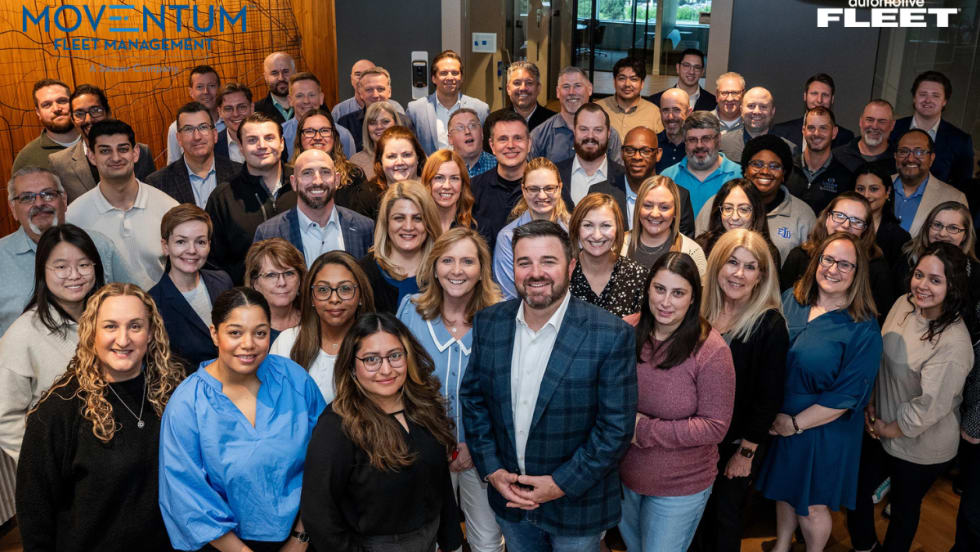
Union Leasing Rebrands as Moventum Fleet Management
The name Moventum reflects the company’s position at the intersection of movement and momentum, with the guiding principle "Keep Work Moving."
Read More →
How Does a Mid-Major FMC Compete? Ask BBL Fleet
This Pittsburgh-based FMC built a technology-first culture, sustained double-digit organic growth, and expanded its Midwest footprint through a recent acquisition. How did it happen?
Read More →
What’s Really Happening in Fleet Supply Right Now
Fleet supply has improved, but not everywhere. Merchants Fleet’s Charles Matthew explains where constraints still exist, what risks are emerging, and why fleets shouldn’t wait to place orders.
Read More →
These Edges Are Measured in Inches — Matt Dyer on Fleet’s New Normal
The Merchants Fleet CEO contends that fleets that drive the business win the inches. In 2026, every one of them counts.
Read More →
Who Gets a Company Car? (In 2026 and Beyond)
As costs rise and scrutiny increases, fleets are refining criteria that govern eligibility for company-owned vehicles.
Read More →
DriveItAway Holdings, Free2move Launch Operations In Nine Cities
The co-branded program with Stellantis’ mobility division scales up leasing and financing options nationwide with more cities to come online in 2026.
Read More →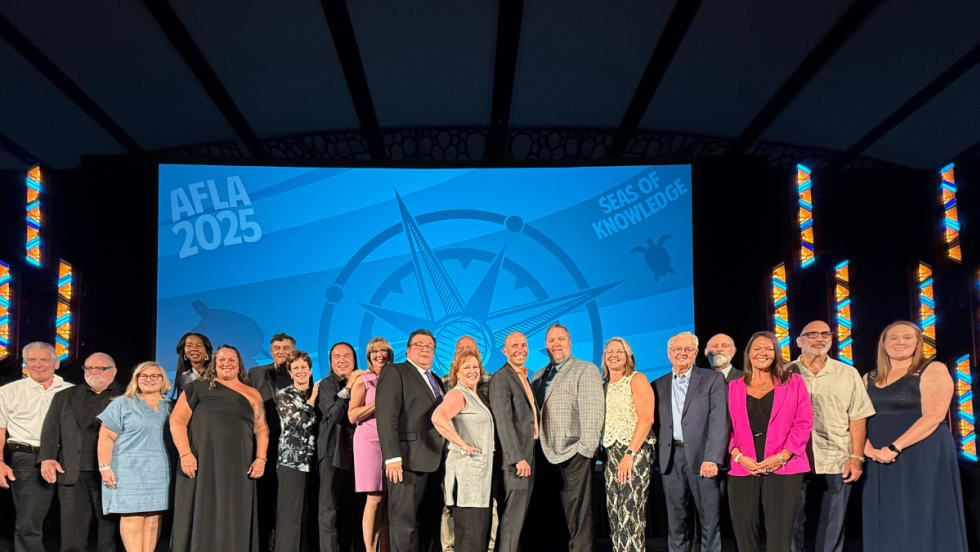
AFLA 2025 Conference in Pictures
Drawing over 640 attendees, the 2025 AFLA Annual Conference was held Sept. 14-17 at the JW Marriott Marco Island Beach Resort in Florida.
Read More →
DriveItAway, Free2move Partner to Expand Vehicle Access for Dealers
The arrangement enables franchise dealers to offer flexible lease-to-own programs with no credit checks, no down payments, and no long-term commitments.
Read More →