




Ford Unveils All-New Transit & Transit Connect
Slated to replace the E-Series Van and Wagon in 2014, the eye-catching Transit makes its debut. The all-new version of the Transit is expected to be lighter and more fuel-efficient than the venerable E-Series.

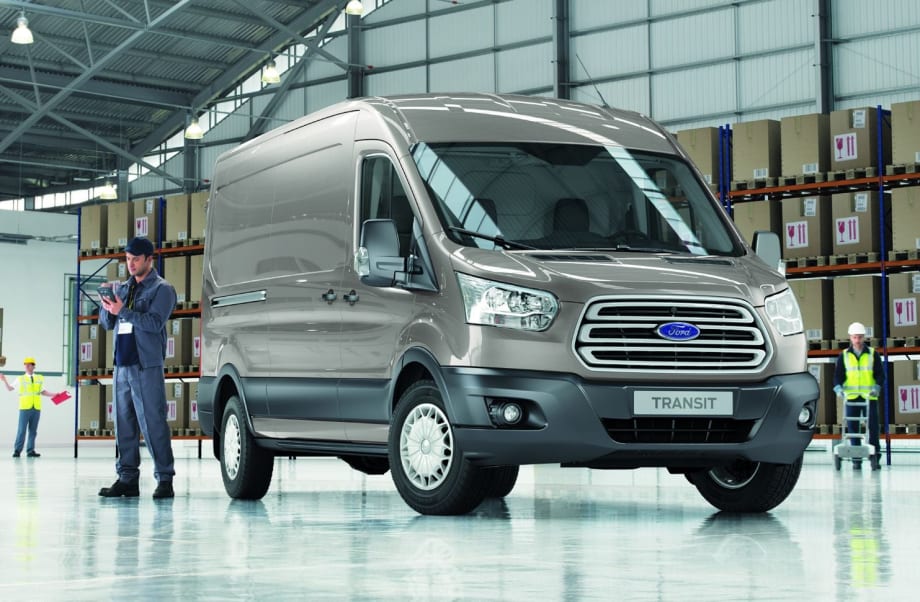
The all-new Transit Connect is expected to go on sale in North America during the fourth quarter of 2013.
Ford Motor Company has ended nearly a year of speculation about the final form of its all-new Transit van, which will eventually replace its long-lived E-Series.
The automaker unveiled the new van, which will be built in the United States starting in 2013, during its “Go Further” event in September in Amsterdam, The Netherlands.
The company also unveiled its new Transit Connect and Transit Connect Wagon during the same event.
‘One Ford’ Approach
The all-new Ford Transit, along with the all-new Ford Transit Connect, was developed under the company’s “One Ford” global product strategy. The vehicles will be sold in Europe, North America, and other worldwide markets with product ranges tailored to the needs of customers in each region.
According to Mike Levine, Ford Motor Company’s truck communications manager, the new Transit and Transit Connect demonstrate “Ford’s renewed commitment to the global van market.”
An American Solution
For North American customers, the Transit offers fleets several advantages over the E-Series van, according to Levine.
“In North America, Transit will have lower operating costs than comparable E-Series vans while featuring new roof heights and wheelbases that promise to help make customers more productive and efficient,” he said.
The North American version of the Transit will offer the choice of several engines, including the 3.5L EcoBoost or a diesel option. Each option features rear-wheel drive and, according to the automaker, at least 25-percent better fuel economy than the comparable E-Series. Levine noted that the North American Transit will be “at least” 300-lbs. lighter than the comparable E-Series that it replaces. The Transit will feature high-strength and ultra-high-strength/boron steels in its unibody construction.
The Transit will also have an all-new interior, including an updated instrument panel that incorporates a range of stowage solutions.
In Europe, a wide range of convenience features and driver assistance technologies featured on Ford’s latest passenger sedans can also be specified, including the Ford SYNC voice-activated, in-car connectivity system with emergency assistance, a rear-view camera, adaptive cruise control, and lane departure warning, according to the automaker.
North American Transit vans will be manufactured in Kansas City, alongside the Ford F-150.
Painless Transition
Even though the E-Series may be headed to the pages of automotive history, it won’t be left in the past — just yet.
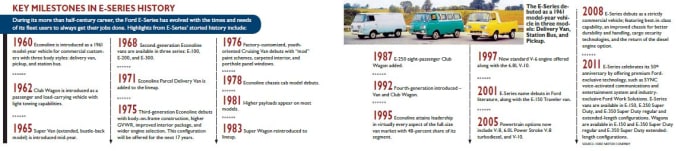
According to Levine, the E-Series Cargo and Passenger vans will continue production and stop “sometime” during the 2014 calendar-year. He added that Ford will continue producing the stripped chassis and cutaway E-series through most of the decade.
This phase-out of the E-Series at the same time of the phase-in of the Transit was designed specifically for Ford’s customers’ benefit, according to Levine. “We’re trying to provide as much flexibility for our customers as we can,” he said.
Making the Transit Connect-ion
The all-new Ford Transit Connect will feature a choice of short and long wheelbase versions and a low-CO2 powertrain. The U.S. version of the Transit Connect will offer a variety of gasoline powertrains tailored to the market.
“Transit Connect, which pioneered the small van segment in the U.S., will be more fuel efficient and will feature new configurations to better tailor the vehicle to meet customer business and personal needs,” Levine said.
The all-new Transit Connect will feature a car-like cockpit, Active City Stop, and Ford SYNC with emergency assistance, according to the company.
Ford is adding to the Transit Connect family with the Transit Connect Wagon, which Levine sees as a “big opportunity” for fleets, particularly in the taxi and people-mover markets.
The all-new Transit Connect is expected to go on sale in North America during the fourth quarter of 2013.
More Operations
Here's When You Should Make an Exception to Fleet Policy
Fleet policies are designed to create consistency, but not every driver or situation fits neatly within standard rules.
Read More →
AI-Native or AI-Acquired: What Should Fleet Managers Look for in an AI Platform?
Six questions can help fleet managers look beyond AI marketing claims to evaluate integration, data access, and real-world operational performance.
Read More →
A buyer's guide to fleet management software in 2027
Buying fleet management software in 2027 means looking beyond features and price. As fleet operations, technology and expectations evolve, this guide explores what today’s fleet professionals should consider when choosing a system that can deliver value now and adapt to what comes next.
Read More →

What Will Shape the Next Era of Fleet Management?
EVs, AI, and autonomous vehicles are reshaping fleet management. Discover what’s ahead—and how fleet leaders can prepare for the next era.
Read More →
How Fleets Can Recruit and Train Veterans for Technician Roles
Here's how the technician shortage has affected uptime for fleets, and what to do about it.
Read More →
Avis Budget Group Deploys Neology Toll Management Technology Across Major Brands
Neology’s neoFleet platform will manage toll transactions and toll-authority operations for vehicles across Avis, Budget, Payless, Budget Truck and Zipcar.
Read More →
Fleet Personal-Use Charges Edge Higher in 2026
Nearly eight in 10 surveyed fleets allow personal use of company vehicles, while just over half of respondents report charging employees for the privilege.
Read More →
The Future of Fleet + What’s Changing Right Now | AF News Recap
Could developments overseas offer a preview of what’s coming for U.S. fleets? This week, we’re looking at the future of AI, autonomy, and electrification, plus Ford Pro’s new certified pre-owned program, smarter vehicle offboarding, and a new way for fleets to manage toll expenses.
Read More →
How to Handle Vehicle Offboarding
What do fleet managers need to do when a driver leaves?
Read More →
Fleet Manager’s Ultimate Playbook: Navigating the New Standard in OEM Connectivity
Rising operating costs, driver safety concerns, and unplanned downtime are putting unprecedented pressure on modern fleets. Discover how fleet managers use embedded OEM connectivity and real-time vehicle data to cut TCO, prevent downtime, and protect drivers without aftermarket telematics hardware.
Read More →