




All-New Transit & Transit Connect Offer Power of Choice
With a variety of roof heights and vehicle lengths, the Transit and Transit Connect will be able to fit the needs of a wide variety of commercial fleets. The new vans will go on sale in 2014.
September 17, 2013

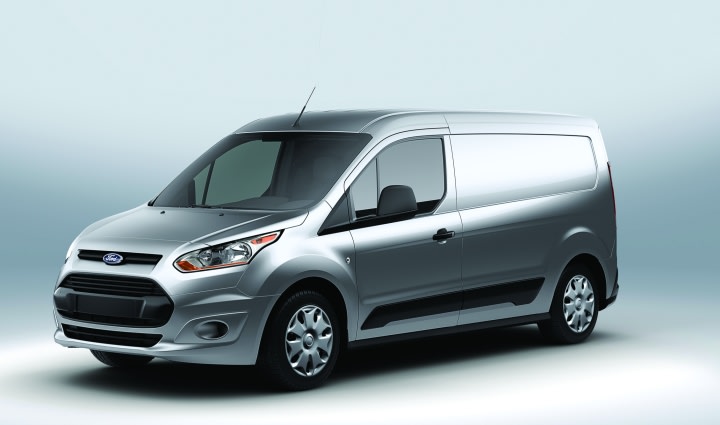
Transit Connect
6 min to read
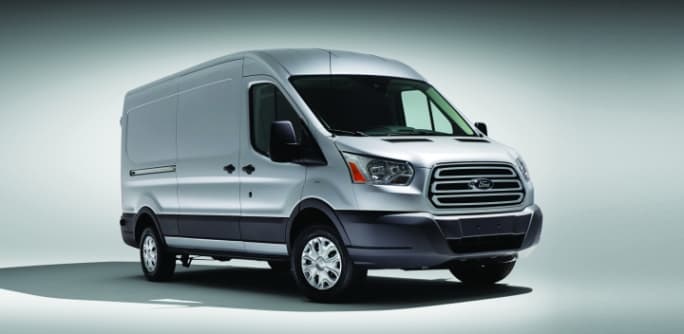
Transit
The long-anticipated Ford Transit will debut in the U.S. market in summer 2014. Already a staple on the European market, the all-new, full-size van will replace the legendary E-Series van, which will be transitioned out of the Ford lineup during the 2014 calendar year.
Joining the Ford Transit is the all-new Ford Transit Connect. The Transit Connect has already established itself in the U.S. market with a variety of fleets, including some of the largest companies in the nation. The all-new Transit Connect will be available in early 2014.
While both vehicles have distinct differences in size and function, they do have one thing in common, according to Minyang Jiang, Transit/Transit Connect marketing manager: “The one word that captures both vehicles is ‘choice.’ ”
Choice is featured at every level for both of the vehicles. For instance, the Transit will be available with a variety of powertrains, including the 3.7L base engine and two optional engines: a 3.5L EcoBoost, and a 3.2L Power Stroke diesel. In addition, the 3.7L will also be available with a compressed natural gas/liquefied petroleum gas (CNG/LPG) gaseous prep package.
For the Transit Connect, the base engine will be a 2.5L I-4; the optional engine will be a 1.6L EcoBoost, which will be available on all variants except the seven-passenger wagon.
The Transit will also come with a choice of three roof heights, three body lengths, and two wheelbases.
The high-roof Transit features 81.5 inches of interior cargo height, enough headroom for a person to stand in.
For the Transit Connect, in addition to featuring European styling, the all-new compact van will feature a lower roof and cargo floor. And, for the first time, it will be available in two body lengths, either 173.9 inches or 189.7 inches; and two wheelbases, either 104.8 inches or 120.6 inches. When properly spec’ed, the Transit Connect can tow up to 2,000 pounds.
In addition to choice, the Transit is designed to be “Ford Tough” with unibody construction composed of lightweight boron steel, according to the company.
Both vehicles include a number of new safety features, according to Jiang.
“For Transit Connect, some of the new features include front and rear parking assist, a rear-view camera, side curtain air bags on all rows, and high-strength boron steel construction,” Jiang said. “For Transit, we have unibody construction and we’re offering a Lane Departure Warning system. Both vehicles will also be available with Mykey, which is important for fleet management, as it can help monitor such items as seat-belt compliance and other driver activities that could impact the vans’ safe operation.”
Built for Upfitting
Although the Transit is yet to roll off its U.S. assembly lines in Kansas City, upfitters Leggett & Platt, Adrian Steel, and Sortimo are already preparing by locating operations in physical proximity to the assembly plant.
“They’re all going to be physically located there, because Transit is such an investment in that plant,” Jiang said. “This is also good because it creates jobs for the local economy.”
Ford has also invested in an upfitting website, transitupfits.com, and will feature both Transit and Transit Connect. The current Transit Connect site will redirect to this portal.
“It’s a whole new tool. Right now, it’s only open to dealers, but it’s a really simple drag-and-drop tool that hosts products from upfitters Leggett & Platt, Adrian Steel, and Sortimo, and the dealer can basically sit down with the customer, understand their needs, and just use that website and place that order,” Jiang explained. “When you look at that website, you can visualize the upfit for Transit and Transit Connect.”
The site is currently fully live for Transit Connect and will be available for Transit customers in January 2014 when the order banks open.
Use of the site is not a requirement when ordering. “Many of our fleets choose to work with customized upfits and work directly with those upfitters, but this tool will be open for them as well,” Jiang said. “If they find what they want on the site, it can become a click and done system and can be all done online.”
The Transit was designed for upfitting with racks, bins, shelving, and other cargo storage and hauling solutions. The largest passenger version can carry up to 15 people.
Transitioning from the E-Series
Perhaps the biggest impact the Transit is making is as the replacement for Ford’s iconic E-Series van, which will continue to be available through 2014, serving to help customers transition to the new full-size Transit.
Jiang and her team have been working to help fleets understand the Transit in advance of the transition from the E-Series.
“One thing we tell our customers, if you like E-Series you’re going to really love Transit. We’ve been talking to customers for a longer time now than we’d typically talk about a new product, knowing that the fleets need that time to understand and test the product for themselves,” Jiang said. “We keep a constant dialog open with our customers as we’ve done that from the very beginning with the design of this product. From a logistical perspective, we’re working very closely with our fleet customers to meet their needs in the last year of E-Series and the first year of Transit, so we can synchronize our production to fit their needs.”
Jiang noted that the power of choice will allow Ford to tap into a number of markets that the automaker has not been able capture with E-Series.
“Talking about one of the key value propositions of Transit is that flexibility and ability to really customize it to what our fleet customers and small business customers would want,” Jiang said.
Robots Used for Testing Ford Transit
Ford was determined that the Transit be built “Ford Tough,” which required punishing, repeated tests to push the new full-size van to its limits and beyond. This posed some serious safety dilemmas for any human test drivers.
Ford engineers found the answer in a robotic test driving program — now in use at the company’s Michigan Proving Grounds in Romeo. The pilot program, which also served as its durability testing regimen, was used on the all-new Transit van.
In addition to protecting human testers from injury, the robotic testing was more precise and could be performed repeatedly, allowing for an accelerated durability testing program, according to the automaker.
The durability technology includes a robotic control module installed in the test vehicle that controls vehicle steering, acceleration, and braking. The module is set to follow a preprogrammed course, and the vehicle’s position is tracked via cameras in a central control room, and the GPS is accurate to plus or minus 1 inch.
Should the vehicle stray from its programmed course, engineers have the ability to stop the vehicle, course correct as necessary, and restart the test. Onboard sensors can command a full stop if a pedestrian or another vehicle strays into the path.
The robotically driven vehicles are expected to repeatedly perform tests on torturous surfaces with names like Silver Creek, Power Hop Hill, and Curb Your Enthusiasm. According to Ford, the tests can compress 10 years of daily driving abuse into courses just a few hundred yards long, with surfaces that include broken concrete, cobblestones, metal grates, rough gravel, mud pits, and oversized speed bumps.
With the success of the pilot program, Ford is considering using robotic durability testing for other vehicles in the future, according to Aaron Miller, Truck Communications coordinator for Ford Motor Company.
Subscribe to Our Newsletter
More Operations

Sponsored•October 14, 2026
A buyer's guide to fleet management software in 2027
Buying fleet management software in 2027 means looking beyond features and price. As fleet operations, technology and expectations evolve, this guide explores what today’s fleet professionals should consider when choosing a system that can deliver value now and adapt to what comes next.
Read More →
What Will Shape the Next Era of Fleet Management?
EVs, AI, and autonomous vehicles are reshaping fleet management. Discover what’s ahead—and how fleet leaders can prepare for the next era.
Read More →
How Fleets Can Recruit and Train Veterans for Technician Roles
Here's how the technician shortage has affected uptime for fleets, and what to do about it.
Read More →

Avis Budget Group Deploys Neology Toll Management Technology Across Major Brands
Neology’s neoFleet platform will manage toll transactions and toll-authority operations for vehicles across Avis, Budget, Payless, Budget Truck and Zipcar.
Read More →
Fleet Personal-Use Charges Edge Higher in 2026
Nearly eight in 10 surveyed fleets allow personal use of company vehicles, while just over half of respondents report charging employees for the privilege.
Read More →
The Future of Fleet + What’s Changing Right Now | AF News Recap
Could developments overseas offer a preview of what’s coming for U.S. fleets? This week, we’re looking at the future of AI, autonomy, and electrification, plus Ford Pro’s new certified pre-owned program, smarter vehicle offboarding, and a new way for fleets to manage toll expenses.
Read More →
How to Handle Vehicle Offboarding
What do fleet managers need to do when a driver leaves?
Read More →
Sponsored•October 1, 2026
Fleet Manager’s Ultimate Playbook: Navigating the New Standard in OEM Connectivity
Rising operating costs, driver safety concerns, and unplanned downtime are putting unprecedented pressure on modern fleets. Discover how fleet managers use embedded OEM connectivity and real-time vehicle data to cut TCO, prevent downtime, and protect drivers without aftermarket telematics hardware.
Read More →
U.S. Bank Adds Verra Mobility Toll Management to Voyager Fleet Platform
The integration allows U.S. Bank Voyager fleet customers to manage toll payments and violations alongside fuel, EV charging and maintenance expenses.
Read More →
ADAS Prevents Crashes. But Repairs Cost More | AF News Recap
ADAS-equipped vehicles may crash less often, but they can cost more when they do. This week, we’re breaking down what that tradeoff means for fleets, plus Subaru’s first Forester Wilderness Hybrid, Nissan’s new e-POWER Rogue, and why Calstart has become Catalyst Mobility.
Read More →