




Ford Optimizes Vehicle Purchases
A group from the Ford Motor Company was recently named one of three finalists for the Innovative Applications in Analytics Award (IAiAA) by The Institute for Operations Research and the Management Sciences (INFORMS).

(from l. to r.) Ford's Winkler, Klampfl, Reich, and Olson

(from l. to r.) Ford's Winkler, Klampfl, Reich, and Olson
A group from the Ford Motor Company was recently named one of three finalists for the Innovative Applications in Analytics Award (IAiAA) by The Institute for Operations Research and the Management Sciences (INFORMS). The award recognizes creative and unique developments, applications, or combinations of analytical techniques.
INFORMS is a society for professionals in the field of operations research, management science, and analytics.
There were 31 submissions for the 2013-14 IAiAA. Judges selected nine semi-finalists to present at the Annual INFORMS Conference in Minneapolis in October. The Ford team's submission, presented by Daniel Reich, operations research analyst, was selected as one of three finalists.
Ford's team, which includes Reich; Sandra Winkler, senior researcher; Erica Klampfl, future mobility manager; and Natalie Olson, fleet communication and events manager, will present "Enabling Greater Sustainability in Vehicle Fleet Sales through Customer Oriented Analytics" for a second time at the upcoming Spring INFORMS Business Analytics and Operations Research Conference in Boston at the end of March 2014.
"The presentation will highlight the Ford Fleet Purchase Planner (FPP), which promotes sustainability as a central purchase consideration for organizations with large vehicle fleets. This decision support system is designed to simplify the purchase process by identifying the most cost effective purchase options that achieve the best CO2 fleet reduction," Reich said.
According to Winkler, "This is the second major recognition we've received for the Fleet Purchase Planner, following the Best Application Paper Award we received in February at the International Conference on Operations Research & Enterprise Systems."
FPP is a suite of tools developed to help fleet customers compare the sustainability benefits of the many vehicle technology and alternative-fuel solutions that are on the market. It's an analytical system that determines the cost and sustainability benefits for the entire fleet, customized to the individual driver level.
"The Ford Fleet Purchase Planner provides fleet managers with the information they need to make the lowest-cost purchase decisions that meet their sustainability goals," Olson said.
The four components of the FPP are the vehicle emissions & fuel cost calculator, the non-EPA emissions and fuel cost calculator, the fleet CO2 emissions footprint status calculator, and the purchase recommender.
The emissions and fuel cost calculator component provides the ability to compare two technologies, such as an EcoBoost engine and a hybrid vehicle; two fuels, gasoline versus compressed natural gas; or battery electric vehicles operating in regions with different electricity carbon footprints, such as California and Ohio. The calculator uses EPA fuel economy (FE) ratings and customer-specified mileage, city driving share, and fuel price to show the difference in the CO2 emissions and fuel cost.
For vehicles that don't receive fuel economy ratings from the EPA, the non-EPA emissions and fuel cost calculator applies the customer's FE data to determine vehicle CO2 emissions and fuel cost.
The fleet CO2 emissions footprint status calculator easily determines the current sustainability status of a fleet with hundreds or thousands of vehicles. The purchase recommender component calculates improvement from this baseline CO2 footprint.
The purchase recommender uses mathematical optimization to provide customized fleet purchase solutions that minimize the cost of ownership while maximizing the CO2 savings, according to the automaker.
"At Ford, delivering sustainable products has been a long-standing priority. With FPP, we're showing our customers that if they can decrease their fuel usage by a small percentage, the environmental benefit is huge — equivalent to planting tens of thousands of trees. And, we're showing them how they can do that and save money too," Klampfl said.
More Green Fleet
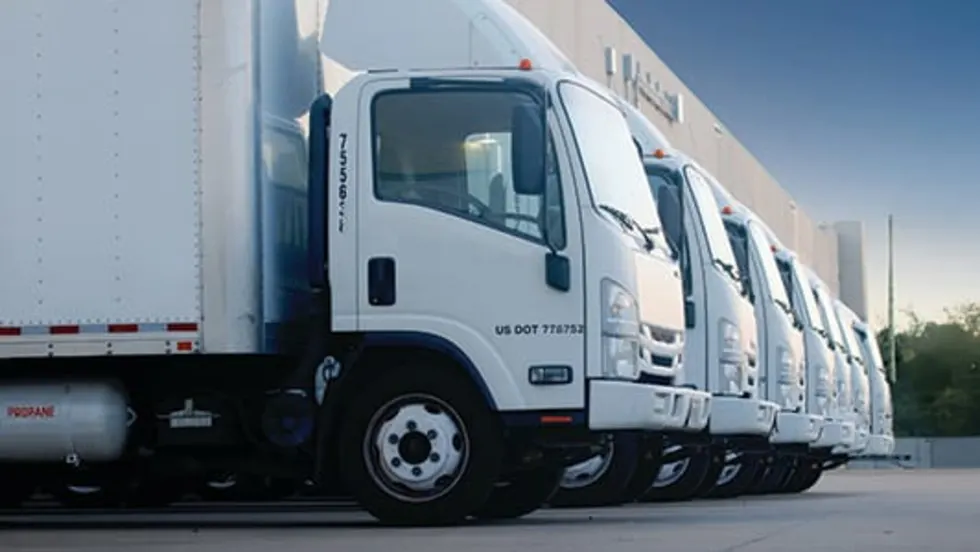
New Propane Autogas Program Offers Fleet Compensation
Qualified commercial fleets can receive $7,500 per eligible propane autogas vehicle and up to $10,000 for new refueling site prep. Learn how the program works and see whether your fleet qualifies.
Read More →
EV Charging Use Is Outpacing Infrastructure Growth
ChargePoint’s 2026 Charging Forward Report points to rising charger use, higher-powered charging, commercial vehicle electrification, and energy-management technology. Here’s what fleets should know.
Read More →
Merchants Fleet Reports 290M EV Miles as Fleets Navigate Changing Electrification Market
From millions in operating savings to hundreds of millions of EV miles, Merchants Fleet’s latest report reveals what’s working and what’s changing in fleet electrification.
Read More →

The EV Breakdown Nobody's Talking About: Why Most Electric Vehicle Roadside Calls Aren't Mechanical Failures
Here's why EV breakdowns are widely misunderstood.
Read More →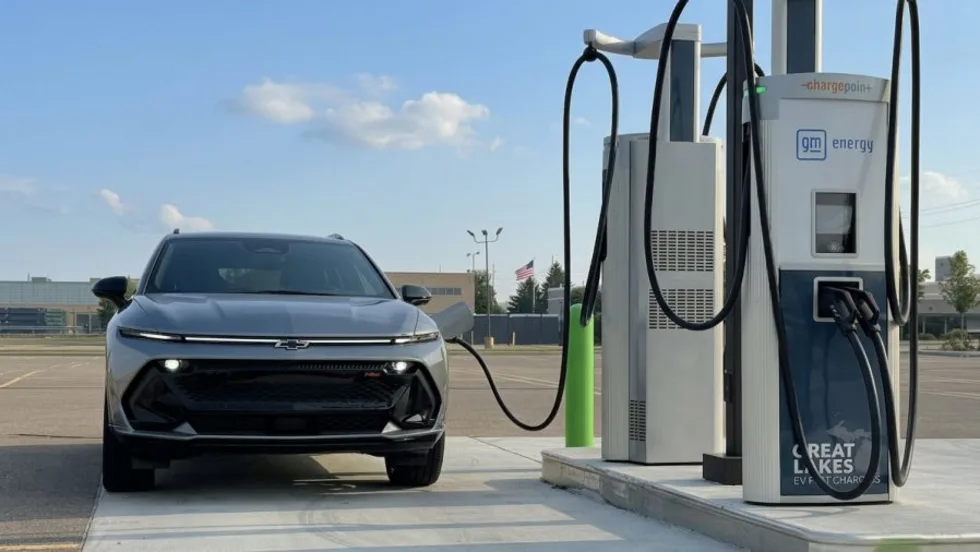
ChargePoint Now Available in Energy Pass
ChargePoint and additional planned charging network integrations were added to GM's Energy Pass.
Read More →

First Look: Slate Auto's Electric Fleet Pickup
Could an affordable, modular EV pickup make electrification more practical for fleets?
Read More →
Slate Debuts Colorful, Unique EV Models
A recent media and client event, studded with electric vehicles dressed up on platforms, planted a new position for the manufacturer in the wider EV market. Fleets will find cost-saving advantages.
Read More →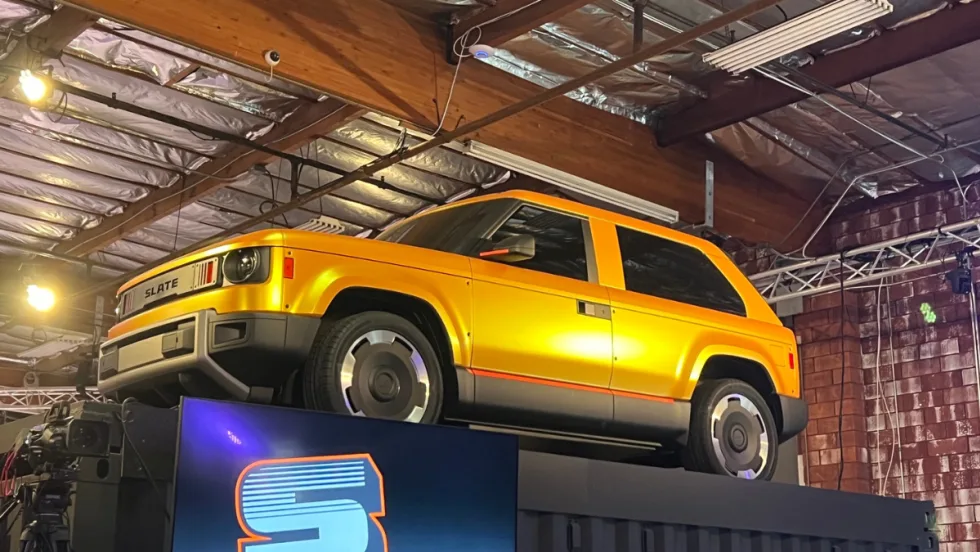
Slate Electric SUV, Pickup Switchable Model Aims For Light-Duty Fleets
Everything about this EV is counterintuitive and understated, making it stand out from the crowd.
Read More →
Inspiration Mobility Acquires Key Electrada Assets
Inspiration Mobility Group has acquired select assets of Electrada, adding the fleet electrification provider's team, technology, and charging infrastructure development capabilities to its energy management business.
Read More →