




Fleets Cautious in Acquiring Alternative-Fuel Vehicles
Corporate fleets are acquiring 1993-model year vehicles equipped with safety equipment and cellular phones, according to a NAFA survey. Eight percent of survey respondents will lease vehicles previously purchased.
With federal and state alternative-fuel mandates soon approaching , survey results show corporate fleets to be taking a cautious, "wait and see" approach to acquiring alternative-fueled vehicles. A recent survey by the National Association of Fleet Administrators (NAFA) revealed that only 16 percent of the corporate fleets surveyed will be acquiring alternative-fueled vehicles in the 1993-model year.
This contrasts with the acquisition plans of utility and government fleets which were also included in the NAFA survey. For 1993 acquisitions, 62 percent of utility fleets and 40 percent of government fleets have plans to acquire alternative-fueled vehicles. (See "Comparing Utility and Government Fleets with Corporate Fleets," page 39.)
The results of the NAFA survey presented in this article have been retabulated by Automotive Fleet to focus on responses from corporate fleets.
Among the other results from the retabulated survey are:
Corporate fleets, on average, will remain stable in terms of fleet composition and vehicle size and type. However, eight percent of the responding corporate fleets plan on leasing vehicles previously purchased.
Safety equipment such as airbags and anti-lock brakes (ABS) are being ordered as standard equipment or as an option, when available, by most of the corporate fleets responding to the survey.
Forty-seven percent of corporate survey respondents provide cellular phones in some fleet vehicles.
For fleets acquiring alternative-fueled vehicles, methanol (including M-85) and compressed natural gas (CNG) are the most popular fuel choices.
Three hundred and fifty two corporate fleets operating 356,971 vehicles responded to the NAFA survey. These fleets will be acquiring 102,177 1993-model year vehicles, 31,825 will be purchased and 70,352 will be leased.
Initial Cost Top Criterion
Initial cost and job suitability remain the Number One and Number Two vehicle selection factors for corporate fleets. Rounding out the other top selection criteria are: safety record, third; a tie for fourth place between repair record and depreciation/resale value; and a tie for fifth place between economy of operation and serviceability.
Most corporate fleets responding to the NAFA survey are ordering 1993 vehicles equipped with airbags and ABS. Thirty-two percent of survey respondents are ordering only vehicles equipped with airbags; 30 percent are ordering airbags as an option when available. Slightly less than half of the survey respondents are acquiring vehicles with ABS. Twenty-one percent of the respondents are ordering only vehicles equipped with ABS; 28 percent are ordering ABS-equipped vehicles when available as an option.
The survey results indicate that cellular phones and anti-theft devices are growing in popularity among corporate fleets. Forty-seven percent of corporate fleet survey respondents provide cellular telephones in some of their fleet vehicles. Twenty-one percent of corporate fleets provide anti-theft devices in vehicles - up from 16 percent of corporate fleets respondents for the 1992-model year.
Although the NAFA survey results indicate solid support for cellular phone usage among corporate fleets, a recent survey indicates that cellular usage will be much higher in the overall retail market. A study conducted by California-based Verity Group profiling 592 potential new-car buyers found that only 10 percent of the respondents do not intend to have a cellular phone in the near future.
Choosing Alternative Fuels
Federal, state, and municipal mandates for acquiring alternative fueled vehicles will soon become effective for some fleets. However, only 16 percent of corporate fleets responding to the survey will acquire 1993-model year vehicles powered by alternative fuels.
Of those fleets acquiring alternative-fueled vehicles, 76 percent will acquire flexible-fuel vehicles - vehicles capable of running on either an alternative fuel, gasoline, or a combination of the two, such as M-85.
For the 16 percent of corporate fleets planning on acquiring alternative-fueled vehicles in the 1993-model year, methanol and CNG are the top fuel choices. Thirty-one percent of these fleets will acquire vehicles powered with methanol or M-85, and 30 percent will acquire vehicles powered by CNG. Of the remaining alternative fuels, 13 percent will acquire liquefied petroleum gas (propane) - powered vehicles; four percent will acquire electric vehicles; and none of the corporate fleets responding to the survey have plans for acquiring ethanol-powered vehicles in the 1993-model year.
Domestic Manufacturers Predominate
Domestic manufacturers continue to dominate fleet new-vehicle acquisitions - making up 98 percent of the total. Ford/Lincoln-Mercury will receive 47.5 percent of corporate fleet new vehicle orders; the General Motors divisions will receive 33.9 percent; Chrysler will receive 16.6 percent of new vehicle orders; and import manufacturers will receive two percent of the orders.
Sixty-five percent of all corporate fleets responding to the survey have a "Buy American" policy for fleet vehicles. Fourteen percent of the survey respondents will acquire foreign nameplate vehicles built in the U.S. Sixty percent of the respondents will acquire foreign-built vehicles bearing the nameplate of a domestic manufacturer.
Twelve percent of the corporate fleet survey respondents comply with written policies prohibiting imports in fleets. Seventy-eight percent of the survey respondents follow an unwritten, but perceived, policy prohibiting imports in fleets.
The NAFA survey also questioned respondents on executive vehicle policy. Sixty-four percent of the responding corporate fleets have a policy for acquiring executive vehicles. Thirty-eight percent of the responding fleets allow executives to choose from a selector list. Sixty-two percent allow executives to choose any vehicle within a predetermined dollar range.
Survey respondents were asked to provide information on the capitalized cost for their 1993-model vehicles. Cap costs break down as follows:
For cars, 47 percent of corporate respondents will acquire cars in the $12,500-$14,999 range; 33 percent will acquire cars in the $15,000-$17,499 range.
For vans, 53 percent of corporate respondents will acquire vehicles in the $15,000-$17,499 range.
For light-duty trucks, 32 percent of the survey respondents will acquire 1993 vehicles in the $12,500-$14,999 range; 35 percent will acquire vehicles in the $15,000-$17,499 range.
These survey results are similar to the results of an industry study published in the November 1992 issue of Automotive Fleet. The AF study revealed that the average capitalized cost for leased intermediate/compact cars is $13,984; for light-duty trucks, the average capitalized cost is $14,352.
What are the Most Important Factors that You Consider When Selecting Vehicles?
1. Initial Cost
2. Job Suitability
3. Safety Record
4. (tie) Depreciation/Resale Value and Repair Record
5. (tie) Economy of Operation and Serviceability
6. Warranty Program
7. Country Where Manufactured
8. (tie) Order/Delivery Time/Distribution and Company Image/Prestige
9. Driver Preference
10. Administrative Ease
11. Insurance Costs
12. Fringe Benefit Value
Comparing Utility and Government Fleets with Corporate Fleets
How do survey results from public utility and government fleets compare with results from corporate fleets? Automotive Fleet has analyzed results from the 51 public utility fleets and 118 government fleets responding to the NAFA survey to see how they compare with corporate fleets.
Two significant trends appear to be on the horizon for utility fleets: leasing more vehicles and reducing the numbers of vehicles in their fleets. Twelve percent of utility fleet survey respondents are planning on leasing vehicles that were previously purchased. This trend is similar to corporate fleets, eight percent of which plan on leasing vehicles previously purchased.
Thirty-seven percent of utility fleets will reduce the number of fleet vehicles. Government fleets also plan on reducing the number of vehicles within their fleets; 22 percent responded affirmatively to this question.
Selection criteria for choosing fleet vehicles were similar for utility, government, and corporate fleets. For utilities, initial cost and job suitability tied for first place; repair record and serviceability tied for second place. For government fleets, job suitability was the top selection criterion; initial cost finished in second place.
Like their corporate fleet counterparts, utility and government fleets are investing in safety equipment and other electronic equipment such as cellular phones. Percentages of utility fleets acquiring vehicles equipped with airbags, ABS, and cellular phones are similar to corporate fleets.
One difference exists between utility/government fleets and corporate fleets: a higher percentage of corporate fleets are equipping vehicles with anti-theft devices. Twenty-one percent of corporate fleets order optional or aftermarket anti-theft devices for fleet vehicles. Twelve percent of utility fleets responding to this question order anti-theft devices, and 13 percent of government fleets acquire these security devices. One factor that may account for this difference is that most government and utility vehicles are centrally garaged and usually not taken to a personal residence.
In the area of alternative fuels some differences exist in the survey results for utility and government fleets planning to acquire alternative-fueled vehicles, and the results from corporate fleets. Utility and government fleets will acquire less flexible-fuel vehicle and more dedicated-fuel vehicles (vehicles solely powered by an alternative fuel). Sixty-one percent of utility fleets and 45 percent of government fleets plan on acquiring dedicated fuel vehicles, as compared to corporate fleets, 15 percent of which plan on obtaining dedicated fuel vehicles.
The types of alternative fuel used by utility and government fleets also differ from corporate fleets. A high percentage of utility and government fleets which are planning on acquiring alternative-fueled vehicles in the 1993-model year will be using CNG; more so than their corporate fleet counterparts. Eighty-eight percent of utility fleets and 72 percent of government fleets will acquire CNG-fueled vehicles; for corporate fleets, 30 percent will acquire CNG-powered vehicles. For utility and government fleets, usage of other alternative fuels - methanol, propane, ethanol, and electricity, is spread out more evenly than for corporate fleets, which will be relying mostly on CNG and methanol.
More Green Fleet
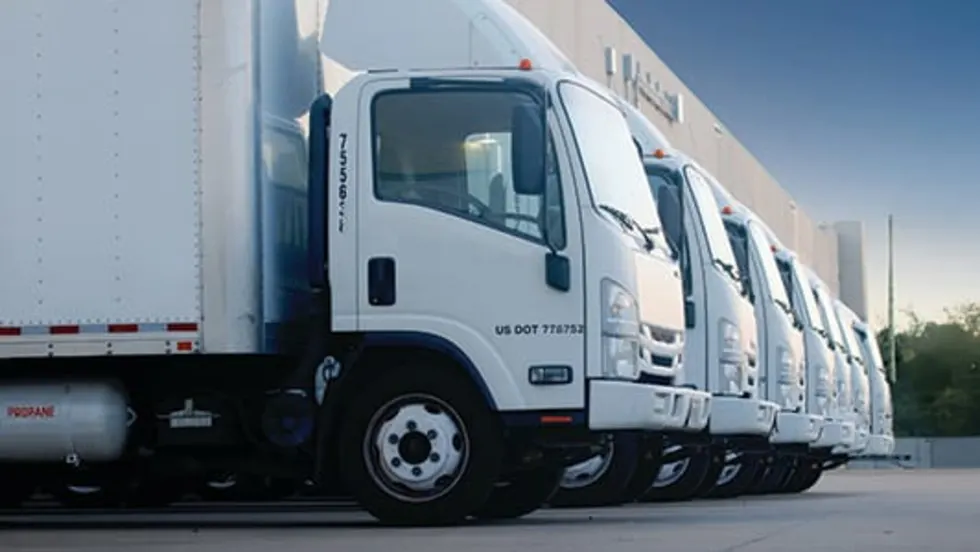
New Propane Autogas Program Offers Fleet Compensation
Qualified commercial fleets can receive $7,500 per eligible propane autogas vehicle and up to $10,000 for new refueling site prep. Learn how the program works and see whether your fleet qualifies.
Read More →
EV Charging Use Is Outpacing Infrastructure Growth
ChargePoint’s 2026 Charging Forward Report points to rising charger use, higher-powered charging, commercial vehicle electrification, and energy-management technology. Here’s what fleets should know.
Read More →
Merchants Fleet Reports 290M EV Miles as Fleets Navigate Changing Electrification Market
From millions in operating savings to hundreds of millions of EV miles, Merchants Fleet’s latest report reveals what’s working and what’s changing in fleet electrification.
Read More →

The EV Breakdown Nobody's Talking About: Why Most Electric Vehicle Roadside Calls Aren't Mechanical Failures
Here's why EV breakdowns are widely misunderstood.
Read More →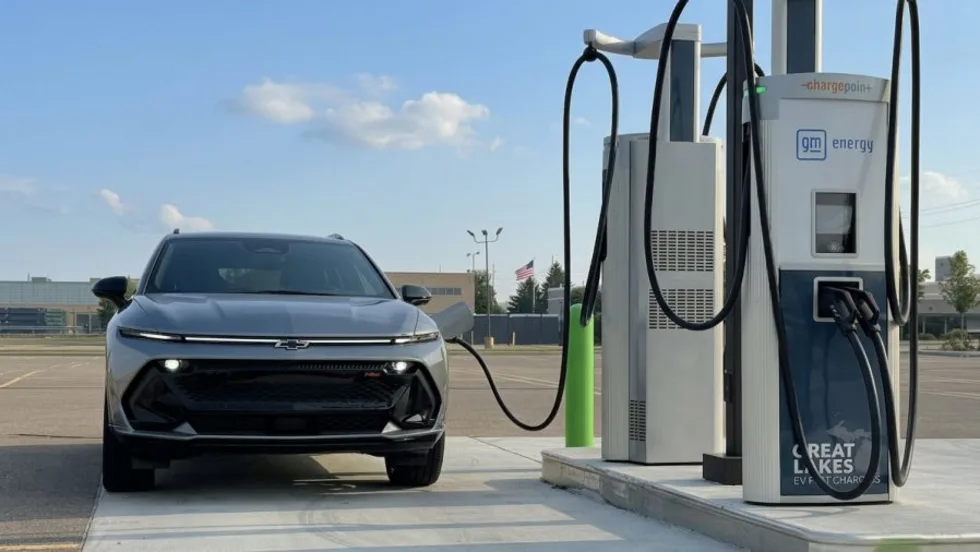
ChargePoint Now Available in Energy Pass
ChargePoint and additional planned charging network integrations were added to GM's Energy Pass.
Read More →

First Look: Slate Auto's Electric Fleet Pickup
Could an affordable, modular EV pickup make electrification more practical for fleets?
Read More →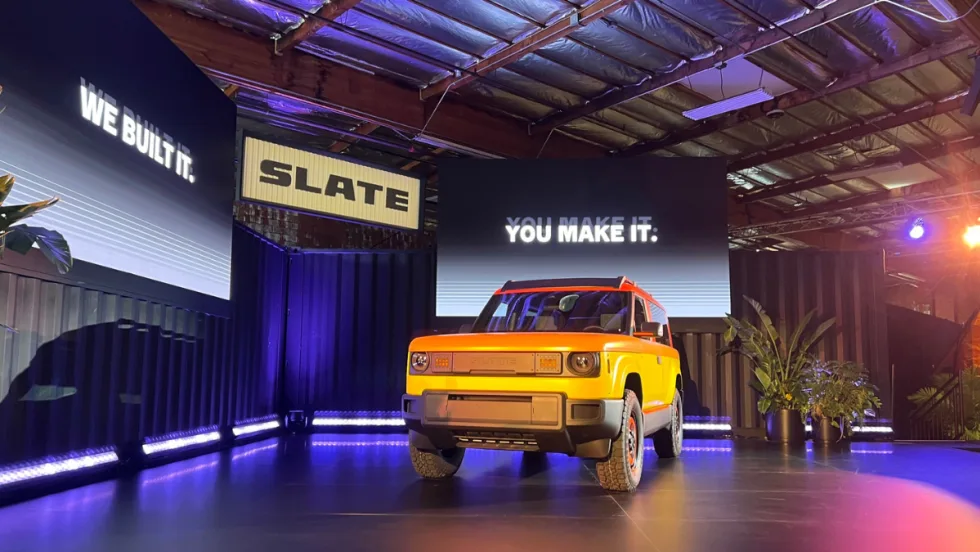
Slate Debuts Colorful, Unique EV Models
A recent media and client event, studded with electric vehicles dressed up on platforms, planted a new position for the manufacturer in the wider EV market. Fleets will find cost-saving advantages.
Read More →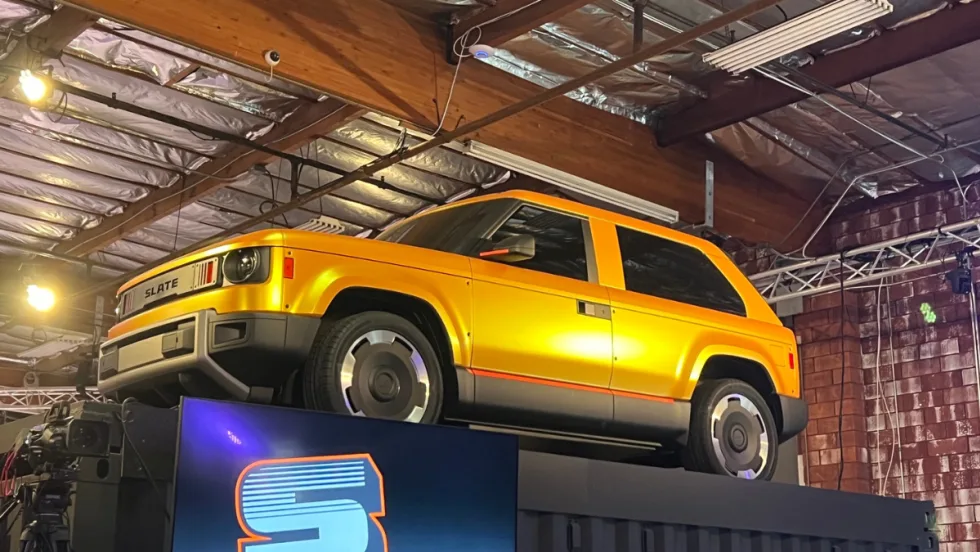
Slate Electric SUV, Pickup Switchable Model Aims For Light-Duty Fleets
Everything about this EV is counterintuitive and understated, making it stand out from the crowd.
Read More →
Inspiration Mobility Acquires Key Electrada Assets
Inspiration Mobility Group has acquired select assets of Electrada, adding the fleet electrification provider's team, technology, and charging infrastructure development capabilities to its energy management business.
Read More →