





Want More? 6 Least Used Benefits of Telematics
Fleet Telematics Becoming a Must-Have
The use of telematics technologies in fleets is expanding rapidly. Currently, more than 2.5 million units are in service with the market expected to expand to 5.8 million units by 2009.
February 1, 2007

GPS is everywhere. Gone are the days of depending on paper maps and cheers to the days of insight and information.
Photo: Bobit
8 min to read
The results are in — fleet telematics is no longer considered a “nice thing to have.” For many fleet operators and enterprises, it’s a “must-have.” Currently, more than 2.5 million units are in service, managing fleet vehicles, mobile workers, trailers, heavy equipment, and other assets.
However, with more than 20 million fleet vehicles, nearly 5 million trailers, and more than 1 million pieces of heavy construction equipment in service in the U.S., most of telematics’ potential remains untapped.
According to a C.J. Driscoll & Associates study, the commercial telematics market, also known as mobile resource management (MRM), is expected to expand to 5.8 million units by 2009, with revenues growing to more than $2 billion. Fleet benefits from telematics include increased productivity, dispatching efficiency, improved customer service, and vehicle, driver, and cargo safety.
What is Telematics?
The term telematics combines “telecommunications” and “informatics.” Literally defined, telematics is the integration of wireless communications, vehicle monitoring systems, and location devices.
Telematics has become a tool to monitor idling time, help reduce bad driving behaviors, and eliminate unauthorized vehicle use. Vehicle telematics systems also are increasingly used to provide remote diagnostics. A vehicle’s built-in system identifies a mechanical or electronic problem, and the telematics package can automatically transmit this information to the vehicle manufacturer, fleet manager, or service organization.
GPS, AVL, MRM, WiFi, and RFID are just a few acronyms representing telematics systems and technologies. The growing list is only one indication of the expanding use and variety of applications telematics offer.
Location Systems Top Use
The largest segment of the U.S. mobile resource management (MRM) market is installed vehicle location systems for local fleets. In 2006, this market segment experienced a 30-percent growth and is expected to continue growing at a healthy rate.
Most MRM suppliers for local fleets are small, privately held companies, resulting in a fragmented market. Some consolidation of local MRM suppliers is expected.
The widespread availability of broadband cellular data networks has been a major factor in the growth of the local fleet telematics/MRM market. These networks provide reliable wireless data communications with broad coverage at a reasonable cost. The Cingular General Packet Radio Service (GPRS) network is widely used for MRM services due to extensive network coverage and the availability of low-cost GPRS modems.
The long-haul MRM market is large (annual revenues of more than $350 million). However, this mature market is growing more slowly than the local fleet market. New system introductions by QUALCOMM, the market leader, and several OEM truck manufacturers should stimulate added growth in this segment.
The private trucking fleet market has been slower to adopt MRM than the truckload market, but this trend is changing as private trucking fleets (local and long-haul) recognize the benefits of MRM. Several MRM suppliers to the private trucking market, such as XATA and PeopleNet, are experiencing strong growth.
Overall, while the number of U.S. fleet vehicles equipped with telematics/MRM systems has grown to more than 1.7 million, the total market penetration remains at only 10 percent, leaving ample opportunities for continued market growth and expansion.
GPS is Everywhere
The first experimental global positioning satellite (GPS) was launched in February 1978. The U.S. Defense Department declared the GPS system operational in the early 1990s. Today, GPS is everywhere, and adopting it in fleets is relatively easy and inexpensive. In-vehicle GPS/cellular devices are available for about $500, and monthly service fees average $35-$40 per month.
As a low-cost alternative to installed MRM systems, some fleet operators opt for GPS-equipped cell phones. Sprint Nextel has spearheaded the cell phone-based MRM market. Sprint Nextel launched the first cellphone-based MRM applications in 2003. The company established partnerships with selected MRM providers under which they sell and bill for the services, making it easy for Nextel customers to add GPS tracking and other functionality for managing mobile workers.
This approach has enabled Sprint Nextel and its MRM partners to hold about 80 percent of the market for cellphone-based MRM applications. Verizon Wireless and Sprint (CDMA) also offer handset-based MRM services, with Cingular expected to launch its program later this year.
“The use of telematics in fleet applications today is primarily focused on basic programs that increase productivity and safety, lower risk factors, and improve performance,” says David Coleman, VP of telematics strategy for PHH Arval, a fleet leasing and management company.
As corporate America increasingly accepts telematics as a tool, “we can offer sophisticated applications for the data provided by the vehicle. For example, collision prevention through predictive driver activity modeling and proactive maintenance through diagnostic alert handling,” said Coleman. “Our core service offerings are now enhanced by data captured by these devices.”
An early leader in telematics-based fleet programs, PHH Arval completed successful beta-tests of PHH Onboard in 2004. PHH Onboard integrates vehicle location and engine diagnostic data into core fleet management services offered by PHH Arval. The data, collected by an onboard computer, is transmitted via a cellular antenna to a network operating center, then made available to fleet, risk, and productivity managers through a suite of Internet-based applications and automated exception reporting.
When the onboard computer is also connected to the OBD II engine diagnostic portal, vehicle diagnostic data, such as dynamic sensor data and trouble codes, is collected and can be tracked and analyzed. Suppliers such as Symbol and Intermec now offer “ruggedized” handheld computers that incorporate GPS and cellular technology. These devices provide portable MRM functionality in a form factor suitable for the typically rough-and-tough fleet environment.
Suppliers of transportation/logistics systems are increasingly integrating mobile workforce location information from GPS-equipped handsets into applications for improved time and task management, dispatching efficiency, route optimization, and customer service. Declining prices are also expected to lead to greater adoption of this technology.
RFID Saves Fleets Time
Radio Frequency Identification (RFID) technology relies on storing and remotely retrieving data using devices called RFID tags, or transponders. An RFID tag is an object that can be attached to, or incorporated into, a vehicle for identification purposes using radio waves.
RFID tags have been installed on taxicabs and other commercial vehicles servicing several major airports, such as Los Angeles and Salt Lake City International airports. RFID systems are used to identify taxis picking up fares at the airport, automatically charging taxi operators, thus avoiding delays in manually paying airport-use fees.
Around the country, Wal-Mart has used RFID to track trucks, forklifts, and other mobile devices in Dallas, and the company plans to expand its RFID asset-tracking program to other locations. United Parcel Service (UPS) is testing a mix of active and passive RFID to monitor vehicle movement and location. Walgreens has deployed I.D. Systems’ Wireless Asset Net industrial fleet management system on a fleet of material-handling vehicles at Illinois and South Carolina distribution centers.
The U.S. Transportation Security Administration (TSA) also used the I.D. System program in a successful RFID trial at Newark Liberty International Airport. The test tracked baggage-loaders, fueling trucks, and other maintenance vehicles as they traveled airport roadways and approached airplanes. Each vehicle was equipped with an RFID (interrogator) reader known as a vehicle asset commander (VAC). A vehicle’s ignition would only start if the VAC detected the driver was wearing an active RFID-enabled badge.
Wireless Networks on the Rise
Approximately 70 percent of U.S.subscribers to MRM applications use terrestrial networks, including broadband cellular networks, such as GPRS and 1xRTT. Nearly 30 percent of MRM subscribers, including QUALCOMM’s OmniTRACS customers, access MRM applications over satellite networks. Some MRM systems include wireless fidelity (WiFi) communications capability that transmits vehicle data with no wireless network charges.
WiFi networks typically provide anyone with a wireless laptop computer, cell phone, or other portable Web-enabled device free public access to the Internet in a specific area, known as a hot spot, which can range from one building to an entire city.
Public sector fleets already use WiFi technology for a variety of tasks. In Corpus Christi, Texas, utility employees collect gas and water meter readings simply by driving down the street in a WiFi-equipped city vehicle.
The Milipitas, Calif., police department can monitor real-time video from cameras mounted in high-traffic areas. In-vehicle computers provide police officers in the field incident video feeds and detailed crime databases. The U.S. Department of Transportation considers WiFi a potential means to create a national road safety network.
The Market Expands
Growth of the mobile resource management market is fueled by many factors, including:
The commercial market has begun to recognize the benefits of GPS.
Fleet operators are becoming more aware of MRM benefits in improved productivity, operating efficiency, and customer service.
Low-cost, reliable wireless data communications networks now offer broad coverage.
In-vehicle telematics devices are more affordable.
GPS-enabled cell phones allow fleet operators and enterprises to implement MRM services with little cost or risk.
Web-based monitoring applications eliminate the need for dedicated software and computer terminals.
Increasingly, MRM suppliers are offering customizable vehicle activity reports enabling fleet operator access to exceptions or other critical data.
More MRM applications are now integrated with field force automation and transportation or logistics applications.
What’s Next?
MRM suppliers are adding new fleet-beneficial features and functions, including:
Navigation.
Traffic information.
Local weather conditions.
Remote diagnostics.
C.J. Driscoll & Associates will conduct its 2007 Survey of Fleet Operator Interest in MRM Systems and Services in first quarter 2007. The survey will assess U.S. fleet operator interest in installed and handset-based MRM systems and services, such as navigation assistance, traffic information, and remote diagnostics. The study, scheduled to be published in April, will also cover fleet operator satisfaction with installed and handset-based MRM systems and services.
Subscribe to Our Newsletter
More Telematics
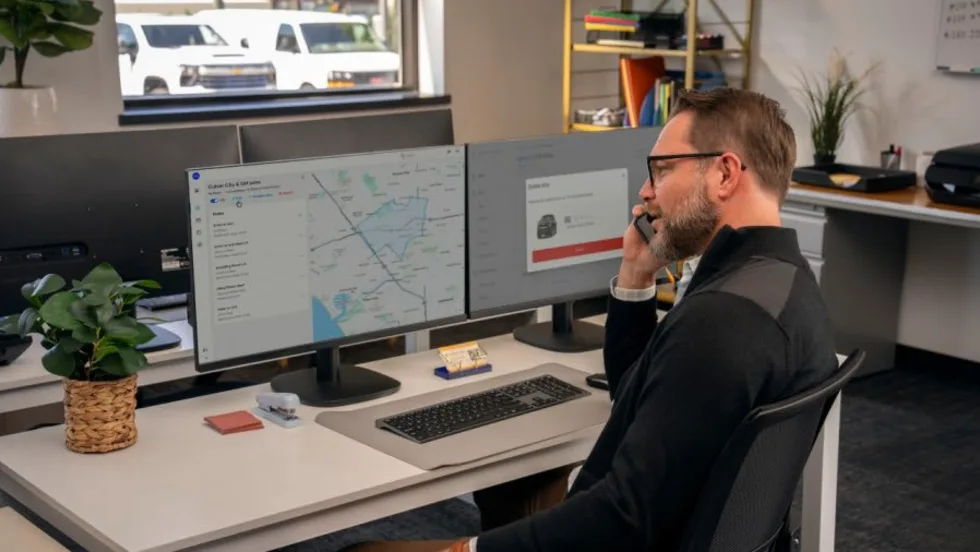
GM Launches OnStar Fleet Intelligence Platform With AI Assistant
The new platform brings vehicle data, order tracking, connected services and fleet analytics into one system, with an AI assistant that can answer fleet questions using natural-language prompts.
Read More →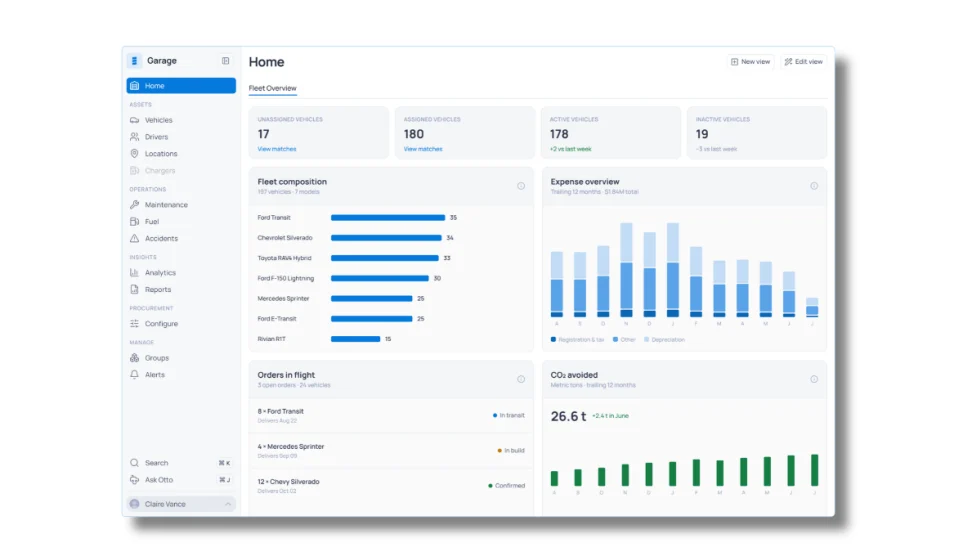
Inspiration Fleet Introduces Garage 2.0 Fleet Intelligence Platform
Fleet managers increasingly have access to data from vehicles, telematics, fuel, charging, and other systems, but those sources don't always communicate with one another. Inspiration Fleet's Garage 2.0 platform brings that information together while letting fleets keep working with different technology and service providers.
Read More →
Inside Inspiration Fleet’s New Platform for Connecting Fleet Data
Inspiration Fleet CTO Chris Getner explains how the new Garage 2.0 platform is designed to connect disparate fleet data and what that could mean for fleet managers in practice.
Read More →
Sponsored•October 1, 2026
Fleet Manager’s Ultimate Playbook: Navigating the New Standard in OEM Connectivity
Rising operating costs, driver safety concerns, and unplanned downtime are putting unprecedented pressure on modern fleets. Discover how fleet managers use embedded OEM connectivity and real-time vehicle data to cut TCO, prevent downtime, and protect drivers without aftermarket telematics hardware.
Read More →
Samsara Driver Perks Adds New Benefit for Corporate Fleet Drivers
The rewards program gives eligible professional drivers access to discounts from more than 50 brands while giving fleets another way to support recruitment, retention, and the driver experience.
Read More →
Inside the Church of Jesus Christ of Latter-day Saints’ Two-Track Telematics Strategy
With 20,000 vehicles and two fundamentally different driver populations, the Church faced a fleet management problem that a single telematics program couldn't solve. How it responded offers a replicable framework for any fleet where one size doesn't fit every driver.
Read More →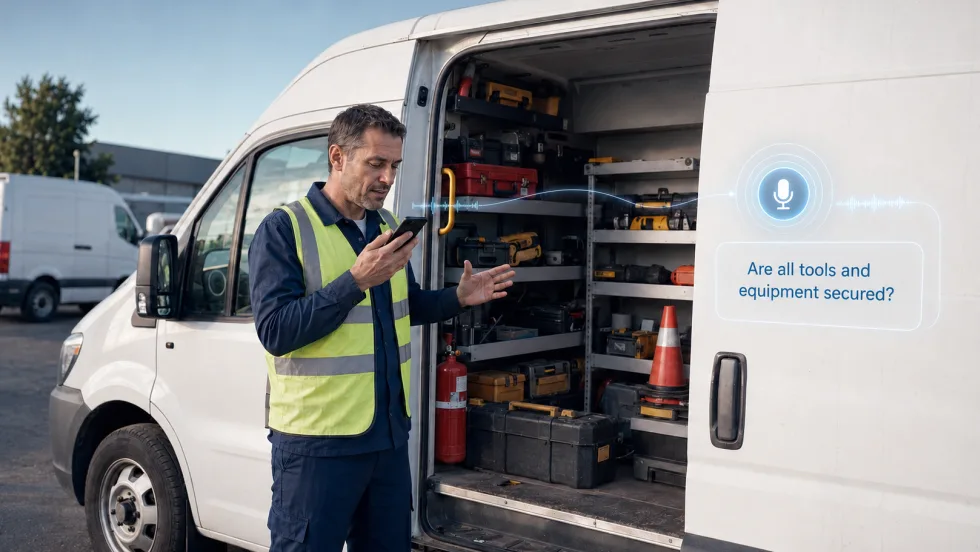
How Conversational AI Can Make Fleet Tasks Easier for Drivers
While most generative AI tools help fleet managers interpret data at their desks, Connex2X is applying voice interaction to tasks behind the wheel.
Read More →
Why Fleets Are Creating Dedicated Fleet Analyst Positions
Are fleet analyst positions the new norm? Listen here to find out.
Read More →
Teletrac Navman Begins Next Chapter as Standalone Private Company
What's new with Teletrac Navman and its new owner?
Read More →
Why Fleets Are Creating Dedicated Fleet Analyst Positions
Telematics, AI, EVs, and connected technologies are generating more fleet data than traditional teams can effectively manage. Reed Jackson explains why dedicated fleet analytics roles are emerging to turn that information into better operational decisions.
Read More →