




Fleet Technology: Measuring the Good, the Bad & the (Really) Ugly
While the best technology is a boon to a fleet manager and the fleet, technology that doesn't measure up can cause more trouble than it's worth, bringing the business of the fleet and the company its serves to a screeching halt.

Photo courtesy of iStockPhoto.com.
Photo courtesy of iStockPhoto.com.
There can be little dispute the fleet profession is among the most technological out there today. From the vehicles to the tools used to measure performance, technology is an integral part of getting the fleet and the fleet manager's job done every day.
While the best technology is a boon to a fleet manager and the fleet, technology that doesn't measure up can cause more trouble than it's worth, bringing the business of the fleet and the company its serves to a screeching halt.
Measuring the Good
For Abe Stephenson, fleet and administration manager for DISH, telematics is among the most effective fleet technologies the communication company is currently using.
The company implemented its telematics solution in 2009 and uses it as part of its workforce management system, which includes routing jobs to the appropriate technician in its 4,750-vehicle fleet.
"It's been really helpful for us to reduce miles per job," Stephenson said. "We've seen a 10-percent reduction."
Along with becoming more efficient in terms of routing, Stephenson noted the system also has a corrective aspect, sending alerts if there's excessive idling or vehicle speeding among its drivers.
For Debbie Struna, fleet manager for Rite-Aid's 1,700-vehicle fleet, having the fleet's data stream through the centralized fleet management program has been a big boon. The company is in the process of beginning a telematics pilot, but it already has a fairly sophisticated fuel card program in place that has been among its biggest technological wins.
"The reporting that we're able to pull from the fuel data has been a real cost saver, because we can see what that driver is doing — and benchmark them."
While having the ability to handle data relatively easily, Stephenson did have a word of caution for fleet managers who blindly adopt telematics technology without planning ahead.
"It can be really overwhelming for a company to start on a telematics solution," Stephenson said. "I don't think companies really understand culturally how much everybody needs to get onboard to manage a program for a national fleet — all the different touch points: first line managers in the field, fleet management cannot do all that themselves. There isn't just a resource consideration with managing it, but culturally what it involves and all the training that goes along with it."
While Stephenson is a big advocate for cell-phone-disabling technology while vehicles are in motion, DISH has also used smartphone technology to increase driver efficiency in other ways.
"We've used smartphones to push out training content, visible content that our technicians can use on the job instead of having to communicate with their first-line manager all the time, so we are changing the way we do things in terms of the way we push out information or what type of content it is, so that eliminates some of the need to drive around or wait until your boss is available — we're trying to give other avenues to get information," he explained.
Likewise, Struna said that Rite-Aid is also using smartphone apps, particularly related to its fuel program to help drivers log their mileage and find fuel at the best price.
Abandoning the Bad
For every good technology out there, there's undoubtedly a "bad" one that just doesn't work for a fleet.
In some cases, as with an experience Stephenson had a few years ago, a technology can be "bad" more because the big picture changes than that the technology itself didn't measure up.
"We were experimenting with some different types of vehicles. They were OEM options that promised to save some fuel here and get some economies of scale, but we ended up getting into a little bit of trouble because our business model ended up changing," he said. "We needed more space. We were offering different products and services, and our business model outgrew us trying to get too tight and efficient, we needed a little elbow room. You need to be careful about vehicle selection, for example, and not over committing to anything — trial, trial, trial, before you do anything."
While corporate priorities changed for DISH, dooming the selection of the new vehicle, Struna related how it was technology itself that once failed the Rite-Aid fleet.
"A manufacturer pushed us to try a vehicle that was a four-cylinder upfit vehicle," she related. "However, the drivers had a lot of issues with it due to the loads they were carrying, and getting up and down the hills of West Virginia. They said it barely moved. The vehicle sounded like a good thing because we were going to save fuel — but it really didn't live up to its promise."
Avoiding the Ugly
While not every technology will fit every fleet, there are those technologies that are just doomed from the very beginning.
Struna said she's been fortunate in not having a really bad experience with a piece of fleet technology because the company does a lot of leg work beforehand.
However, Stephenson related an "ugly" experience DISH had.
"We experimented with [a fuel management] product that was out there a few years ago; a solution that seems that [if it worked] the OEM would be doing," Stephenson said. "Obviously it didn't work."
Managing the Driver
Of course, perhaps the biggest complication about using technology is that it often relies on the user — in this case, a driver — to use it properly.
Stephenson has worked to take the human equation out of the DISH fleet's technology, which has netted some intriguing and positive results.
"There are tons of [driver and safety] programs where the person has to do something to make it successful. You talk about training and different types of personalities and the fact that these programs aren't typically the core business of what people do and turnover and getting new people involved, so one of the things that we've tried to do is switch accountability from the driver to the vehicle," Stephenson explained.
To that end, Stephenson has taken some of the vehicle's technology out of the hands of the driver. "We've calibrated our vehicles to reduce RPMs when idling and have top speed limiters on them and to do different things to the operability of the vehicle to reduce RPMs and to reduce fuel consumption so, again, the vehicle does the job and not the person and there are a lot less resources to support something like that—we're actually saving more money on a calibration program than we would on an aggressive idling program and a lot less resources. When you talk about cultural things and differences in an everyday person, it's really difficult to stay on top of all these driver-specific programs."
Of course, a fear that is probably in the back of the mind of many fleet managers is that there's too much technology, that the driver is becoming too reliant on it.
"One thing I am afraid of with vehicle technology where they do the driving for you, blind spot technology, and stop assist. I think that it's great technology, but I think if you put a driver into a vehicle that has that technology and take him out of that vehicle and put him into one that doesn't have it, you seem to get a dependence on that technology," Struna said.
While Stephenson agreed with Struna's comment and noted that this would require careful vehicle assignment, he sees the march of technology as inevitable.
"I think that's just management of change," he said. "It seems that these are good solutions that have to be part of the equation for the long term and it's just going to be transitioning out of the current state to the future state, and how do you manage through that. But, I couldn't imagine you would want to say 'no' to these things."
Technology is Here to Stay
If there's one point that can be agreed on, technology is here to stay. What do these veteran fleet managers hope to see in future technology?
Struna said she would love to see a world of driverless vehicles and hopes that technology costs continue to fall, allowing her to implement more technologies in the Rite-Aid fleet.
Stephenson said that the technologies that pique his interest most are anything that has to do with improving driver safety and alternative fuel.
But, both of them agree that, in order to be successful — be it good, bad, or ugly — a technology has to be cost effective.
More Telematics
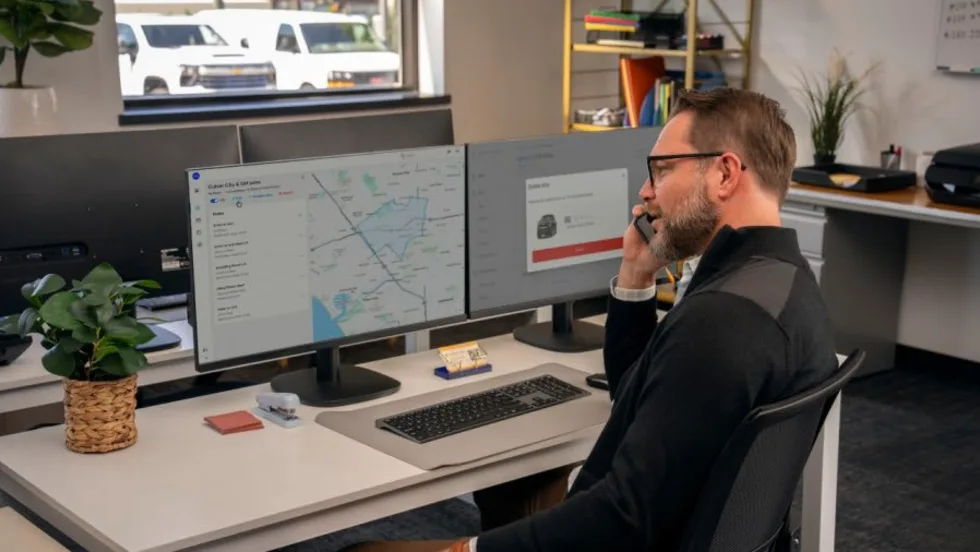
GM Launches OnStar Fleet Intelligence Platform With AI Assistant
The new platform brings vehicle data, order tracking, connected services and fleet analytics into one system, with an AI assistant that can answer fleet questions using natural-language prompts.
Read More →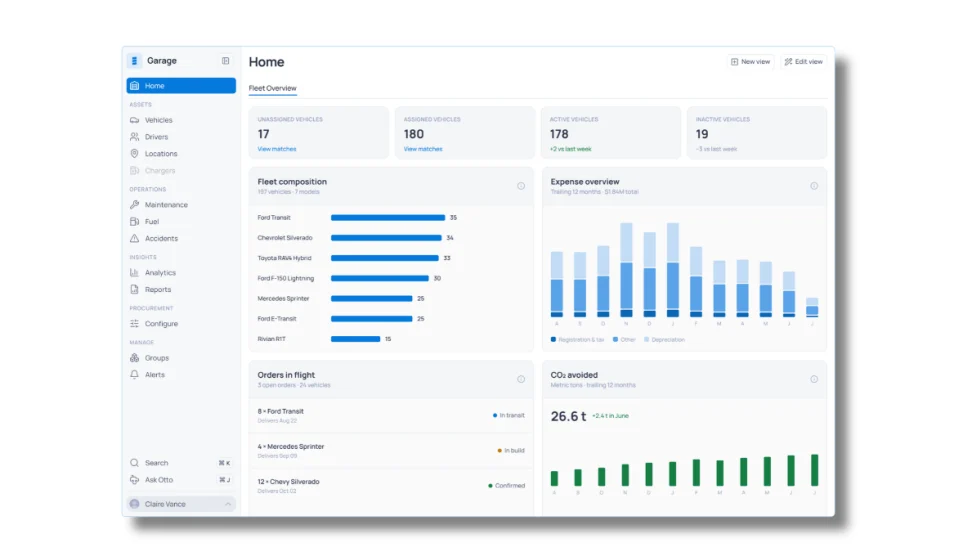
Inspiration Fleet Introduces Garage 2.0 Fleet Intelligence Platform
Fleet managers increasingly have access to data from vehicles, telematics, fuel, charging, and other systems, but those sources don't always communicate with one another. Inspiration Fleet's Garage 2.0 platform brings that information together while letting fleets keep working with different technology and service providers.
Read More →
Inside Inspiration Fleet’s New Platform for Connecting Fleet Data
Inspiration Fleet CTO Chris Getner explains how the new Garage 2.0 platform is designed to connect disparate fleet data and what that could mean for fleet managers in practice.
Read More →
Fleet Manager’s Ultimate Playbook: Navigating the New Standard in OEM Connectivity
Rising operating costs, driver safety concerns, and unplanned downtime are putting unprecedented pressure on modern fleets. Discover how fleet managers use embedded OEM connectivity and real-time vehicle data to cut TCO, prevent downtime, and protect drivers without aftermarket telematics hardware.
Read More →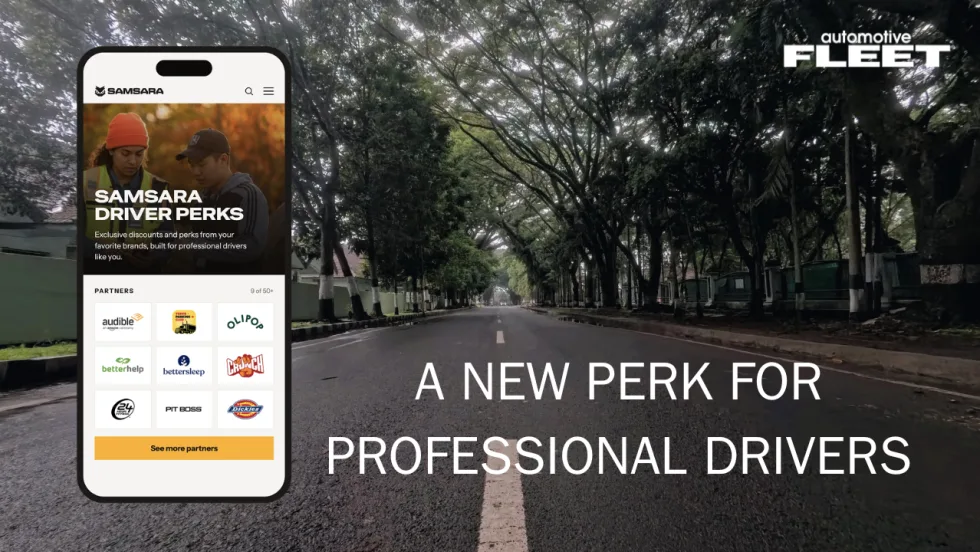
Samsara Driver Perks Adds New Benefit for Corporate Fleet Drivers
The rewards program gives eligible professional drivers access to discounts from more than 50 brands while giving fleets another way to support recruitment, retention, and the driver experience.
Read More →
Inside the Church of Jesus Christ of Latter-day Saints’ Two-Track Telematics Strategy
With 20,000 vehicles and two fundamentally different driver populations, the Church faced a fleet management problem that a single telematics program couldn't solve. How it responded offers a replicable framework for any fleet where one size doesn't fit every driver.
Read More →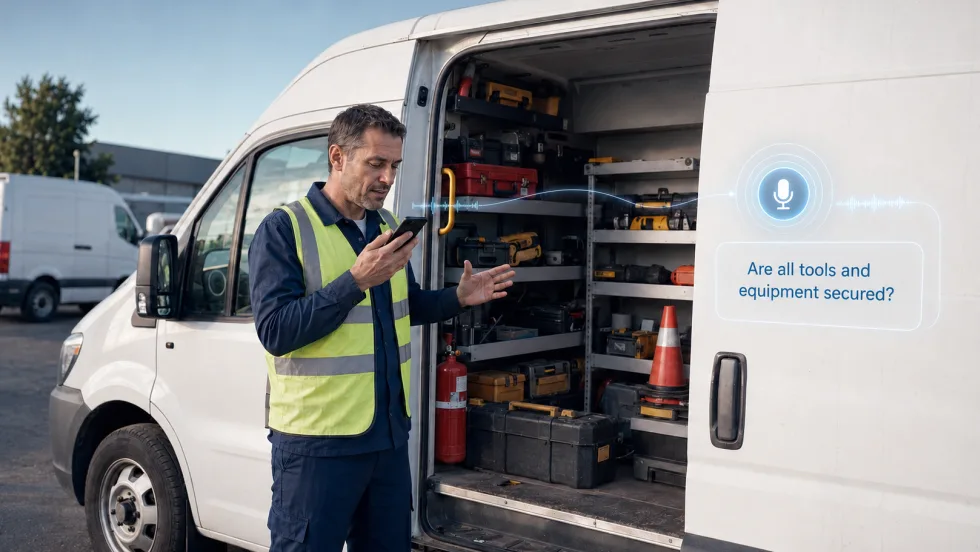
How Conversational AI Can Make Fleet Tasks Easier for Drivers
While most generative AI tools help fleet managers interpret data at their desks, Connex2X is applying voice interaction to tasks behind the wheel.
Read More →
Why Fleets Are Creating Dedicated Fleet Analyst Positions
Are fleet analyst positions the new norm? Listen here to find out.
Read More →
Teletrac Navman Begins Next Chapter as Standalone Private Company
What's new with Teletrac Navman and its new owner?
Read More →
Why Fleets Are Creating Dedicated Fleet Analyst Positions
Telematics, AI, EVs, and connected technologies are generating more fleet data than traditional teams can effectively manage. Reed Jackson explains why dedicated fleet analytics roles are emerging to turn that information into better operational decisions.
Read More →