




Fleet Safety Training Must Fit a Company's Culture
According to ADTS, which celebrates 30 years in the industry this year, driver safety training programs must conform to a fleet’s specific circumstances. One-size-fits-all programs just won’t work.

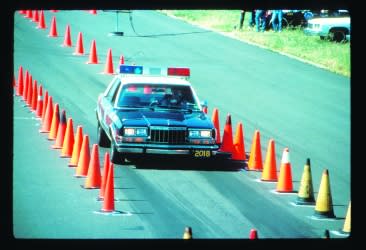
Since 1983, ADTS has been providing fleet safety training programs and services. The company started 30 years ago by providing training for police, ambulance, and fire personnel in the Emergency Vehicle Operations Course (EVOC).
Safety continues to rank at the top of a fleet department’s “priority” list. In fact, many managers turn to outside experts to help effectively reduce accident rates, cut repair costs, lower liability exposure, and decrease a fleet’s time out of service ratio through comprehensive driver training.
Trooper, Pa.-based Advanced Driver Training Services (ADTS) is one such company that fleets turn to for safety expertise. Celebrating its 30-year anniversary this year, the company has successfully implemented a diverse line of fleet driver safety training solutions to organizations in the U.S., Canada, and Puerto Rico.
Phil Moser, vice president of ADTS, recently shared the company’s secret of success. “We have learned that there is no such thing as a one-size-fits-all training program,” he explained. “We have had to diversify what we offer.”
In fact, ADTS’ clients typically reduce their crash rates 30-60 percent or more, resulting in significant savings to the company’s bottom line.
ADTS’ fleet safety training programs and services give fleet departments the tools necessary to have a positive impact on their company’s bottom line — and more important, help keep drivers safe so they return home unharmed at the end of every work day.
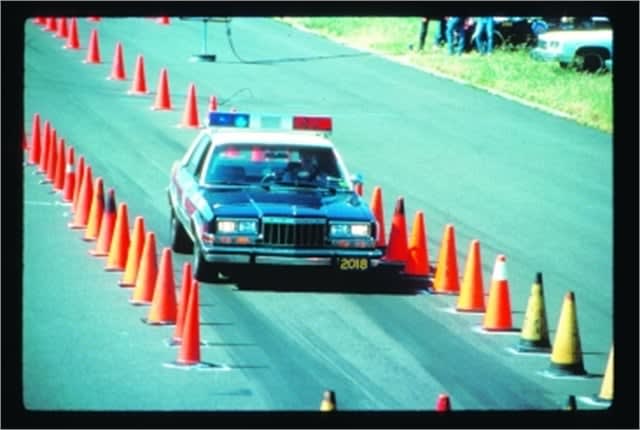
Since 1983, ADTS has been providing fleet safety training programs and services. The company started 30 years ago by providing training for police, ambulance, and fire personnel in the Emergency Vehicle Operations Course (EVOC).
ADTS Builds on 30 Years of Safety Expertise
Moser also pointed out that a training program’s success is only possible because of its developers and instructors.
“We only employ highly experienced driver safety instructors, all of whom are current or former police officers with extensive backgrounds in traffic safety management,” he said.
The company’s network of instructors also includes certified motor vehicle crash investigators and reconstructionists and instructors who specialize in Emergency Vehicle Operations Course (EVOC) instruction. In fact, ADTS originally focused its business on training police, ambulance, and fire personnel in the EVOC program. The company was then contacted by a Fortune 100 pharmaceutical company and asked to develop a training program that would help its sales and service drivers.
ADTS conducted its first corporate program in 1983. Today, it has more than 100 instructors located throughout the U.S. who conduct training at hundreds of locations in the U.S., Canada, and Puerto Rico, as well as in Europe, Asia, and South America.
Over the years, the company has also developed additional programs and resources customized specifically for clients, including variations of classroom, behind-the-wheel instruction, online training, a bimonthly driver safety publication, and driver safety seminars.
Implementing Safety Effectively into a Fleet Operation
How can organizations take immediate action to increase driver safety?
According to Moser, they must identify and train their high-risk drivers.
“[High-risk drivers] are the low-hanging fruit, and they provide an immediate opportunity to reduce vehicle crash rates,” he advised.
In fact, he describes the fundamentals of the most effective driver training programs as addressing both skill and attitude. He pointed out that a driver may be very skilled in the operation of the vehicle they drive, but unless they have an attitude that safe driving is a top priority, they will be more likely to have an accident.
“Also, an effective driver safety initiative needs to use a multipronged approach,” he said. “There are specific areas that need to be addressed for all drivers, new drivers, high-risk drivers, and field managers, as well as ongoing training.”

ADTS provides behind-the-wheel training services to help improve the skills of drivers who spend their workday on the road. A network of 100-plus instructors cover the U.S., Canada, Puerto Rico, as well as Europe, Asia, and South America.
While some fleets possess the tools that allow them to manage driver safety training inhouse, partnering with an outside vendor makes sense for other fleets that don’t possess the expertise necessary to implement one.
“The reason that our clients have brought ADTS into their organizations for driver safety training is because of our experience, resources, and credibility,” Moser said. “With our background in law enforcement, traffic safety, police training, and motor vehicle crash reconstruction, we overcome any of the objections that drivers may have with regard to the relevance and necessity for them to go through driver training.”
When determining what type of driver safety training programs to implement, Moser advises organizations to consider using all types, including online tools.
“Online training provides an effective tool for keeping safety in the forefront or to provide specific training for a particular subject,” he said. “Classroom and behind-the-wheel training provides an opportunity to address the needs of new-hire drivers and those who have not previously received driver safety training. Seminars reinforce safety, and one-to-one training addresses the needs of high-risk drivers.”
The ADTS team takes pride in reaching its 30-year anniversary and continues to be committed to helping fleets remain accident-free.
“We are absolutely passionate about helping drivers get home safely every day,” Moser stated. “We despise motor vehicle crashes and all of the pain and suffering that they cause. For us, a perfect world would be one without these crashes.”
More Safety

Fleet Manager’s Ultimate Playbook: Navigating the New Standard in OEM Connectivity
Rising operating costs, driver safety concerns, and unplanned downtime are putting unprecedented pressure on modern fleets. Discover how fleet managers use embedded OEM connectivity and real-time vehicle data to cut TCO, prevent downtime, and protect drivers without aftermarket telematics hardware.
Read More →
From Driver Well-Being to EV Charging | AF News Recap
Mental health belongs in the fleet safety conversation. This week, we’re looking at five ways fleets can support employee well-being before a crisis, plus Holman’s expansion in Mexico, new one-day Fleet Forward passes, and why EV charging demand is outpacing infrastructure growth.
Read More →
Nexar-Nauto Merger Aims to Give Fleets Better Safety Intelligence Through Larger Driving Dataset
Stefan Heck tells Automotive Fleet that combining more than 10 billion miles of driving history with Nexar's AI models will give fleets deeper insights into driver risk and roadway conditions than either company could provide independently.
Read More →
Don't Wait for a Crisis: 5 Ways to Build Mental Health Into Your Fleet Safety Program
For Suicide Prevention Month, fleet and safety leaders have an opportunity to put mental health where it belongs: at the center of workplace safety.
Read More →
How Camera Data Can Strengthen a Fleet’s Insurance Renewal
Insights from a commercial insurance carrier and a broker show how fleets can turn video telematic data, driver coaching, and improved claims results into a stronger case at insurance renewal.
Read More →
The Safest Fleets Aren’t the Ones with the Most Technology
You’ve made the telematics investment. Here’s how to capture the other half of its value and build the safest fleet on the road.
Read More →
Hidden in Plain Sight: Fleet Compliance Risks
Fleet compliance isn't just about having policies — it's about consistently enforcing them. This practical guide reveals six hidden compliance risks common in public sector and shared fleet operations and outlines proven strategies to improve visibility, accountability, and audit readiness
Read More →
NETS Sets 2026 Fleet Safety Benchmark Conference for Indianapolis
The Sept. 15–17 program will feature fleet benchmarking data, case studies, emerging technologies, and implementation strategies while running alongside the NSC Safety Congress & Expo.
Read More →
Off-the-Job Crashes Account for 43% of Employers’ $61.7 Billion Crash Burden
NETS quantifies costs dispersed across fleet, risk, HR, and other departments while providing new per-crash benchmarks for employers.
Read More →
Ram Recalls More Than 1.27 Million 1500 Pickups for Seat Belt Anchor Issue
The recall affects certain 2019-2026 Ram 1500 pickups that may have improperly attached second-row seat belt buckle anchors.
Read More →