




Fleet Response Hosts Inaugural Safety Summit
Featuring presentations from industry groups, Ford Motor Co., and accident management and training providers, the two-day event was designed to educate fleet risk and safety professionals on how safety issues shape fleet policy and direction.
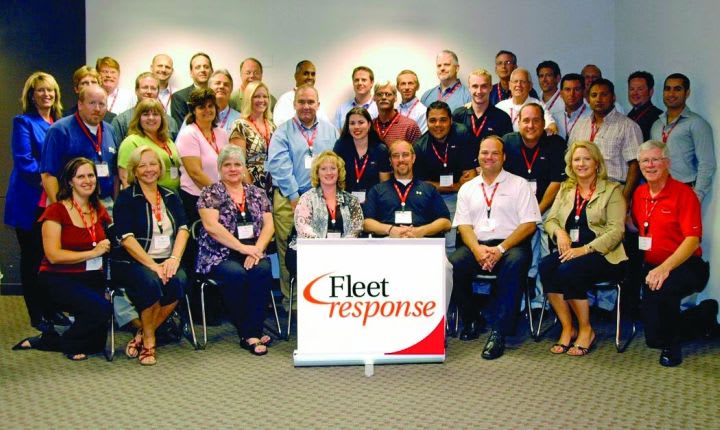
Gathered are attendees of the Fleet Response Safety Summit for group photograph.
Forty risk and safety professionals gathered recently to explore the implications of safety issues in shaping fleet policy and direction. The 40-member group, representing 26 organizations, participated in the Fleet Response Safety Summit, held at the company’s Independence, Ohio headquarters.
The forum was sponsored by AlertDriving, Driving Dynamics, Bobit Business Media (publisher of Automotive Fleet), and Ford Motor Company.
The summit agenda included speakers from AlertDriving, Bobit Business Media, Bridgestone/Firestone, Driving Dynamics, Ford Motor Company, the Insurance Institute for Highway Safety, Millisor & Nobil, and the National Safety Council (NSC).
James Solomon, NSC director of program development and training led the event’s program with a presentation on "Dynamics of Safe Driving." Following his evaluation of popular fleet vehicles, Solomon explored in-depth safety checks fleet managers can perform, such as making sure drivers are qualified to operate the vehicles, having control over accident management operations, and making sure driver training is properly implemented.
Daniel O’Brien, principal for Millisor & Nobil Co., and a specialist in risk and claims management and insurance consulting, explained the implications of negligent entrustment for fleets, presenting case studies of real-world examples.
Ford’s safety strategy and communications manager, Tom Artushin addressed vehicle safety features. Beginning with a colorful presentation of factors that influence accidents, he charted typical crash and injury statistics. Artushin also reviewed current and upcoming safety features on vehicles, including the benefits of electronic stability control (ESC).
Other topics covered during the summit included crash testing, tire safety, risk management system development, and overall tips for safer drivers.
In his opening event remarks, Scott Mawaka, Fleet Response president and COO, described the summit’s intent. "Our hope was to bring together organizations from across the country, not only to learn from industry experts, but also to network and learn from each other. The agenda was intended to provide insight and assist attendees in their organization’s fleet and safety policy development," said Mawaka.
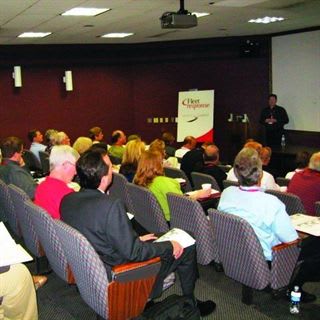
Mike Antich, editor of Automotive Fleet magazine, presented the opening address, discussing why safety should be a fleet’s number one priority.
According to Antich, most fleet managers view fleet safety as their No. 2 concern, right after the cost of fuel. "One reason for the increased concern about fleet safety is driver distraction. More and more fleet managers are reporting an uptick in preventable accidents. The primary cause is driver distraction, which accounts for 25-30 percent of all auto accidents. Driver distraction is increasing because drivers are multitasking while driving," said Antich.
Although cell phone use is the primary cause of driver distraction, texting is becoming a growing (and more dangerous) factor. "Drivers who engage in mobile texting spend 400 percent more time taking their eyes off the road and are 70 percent more likely to swerve out of their lanes," said Antich. "If you’re traveling 65 mph, taking your eyes off the road for three seconds while texting is the equivalent of driving the length of a football field. Texting represents a major liability exposure for fleets."
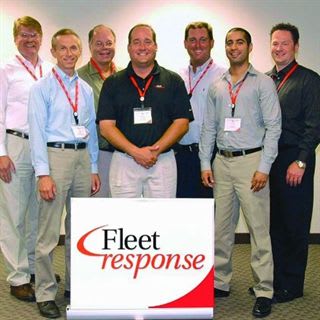
In addition to presentations, the summit featured a four-hour condensed version of Driving Dynamics’ one-day behind-the-wheel" training for attendees to experience and learn new driving strategies.
More Safety

Fleet Manager’s Ultimate Playbook: Navigating the New Standard in OEM Connectivity
Rising operating costs, driver safety concerns, and unplanned downtime are putting unprecedented pressure on modern fleets. Discover how fleet managers use embedded OEM connectivity and real-time vehicle data to cut TCO, prevent downtime, and protect drivers without aftermarket telematics hardware.
Read More →
From Driver Well-Being to EV Charging | AF News Recap
Mental health belongs in the fleet safety conversation. This week, we’re looking at five ways fleets can support employee well-being before a crisis, plus Holman’s expansion in Mexico, new one-day Fleet Forward passes, and why EV charging demand is outpacing infrastructure growth.
Read More →
Nexar-Nauto Merger Aims to Give Fleets Better Safety Intelligence Through Larger Driving Dataset
Stefan Heck tells Automotive Fleet that combining more than 10 billion miles of driving history with Nexar's AI models will give fleets deeper insights into driver risk and roadway conditions than either company could provide independently.
Read More →
Don't Wait for a Crisis: 5 Ways to Build Mental Health Into Your Fleet Safety Program
For Suicide Prevention Month, fleet and safety leaders have an opportunity to put mental health where it belongs: at the center of workplace safety.
Read More →
How Camera Data Can Strengthen a Fleet’s Insurance Renewal
Insights from a commercial insurance carrier and a broker show how fleets can turn video telematic data, driver coaching, and improved claims results into a stronger case at insurance renewal.
Read More →
The Safest Fleets Aren’t the Ones with the Most Technology
You’ve made the telematics investment. Here’s how to capture the other half of its value and build the safest fleet on the road.
Read More →
Hidden in Plain Sight: Fleet Compliance Risks
Fleet compliance isn't just about having policies — it's about consistently enforcing them. This practical guide reveals six hidden compliance risks common in public sector and shared fleet operations and outlines proven strategies to improve visibility, accountability, and audit readiness
Read More →
NETS Sets 2026 Fleet Safety Benchmark Conference for Indianapolis
The Sept. 15–17 program will feature fleet benchmarking data, case studies, emerging technologies, and implementation strategies while running alongside the NSC Safety Congress & Expo.
Read More →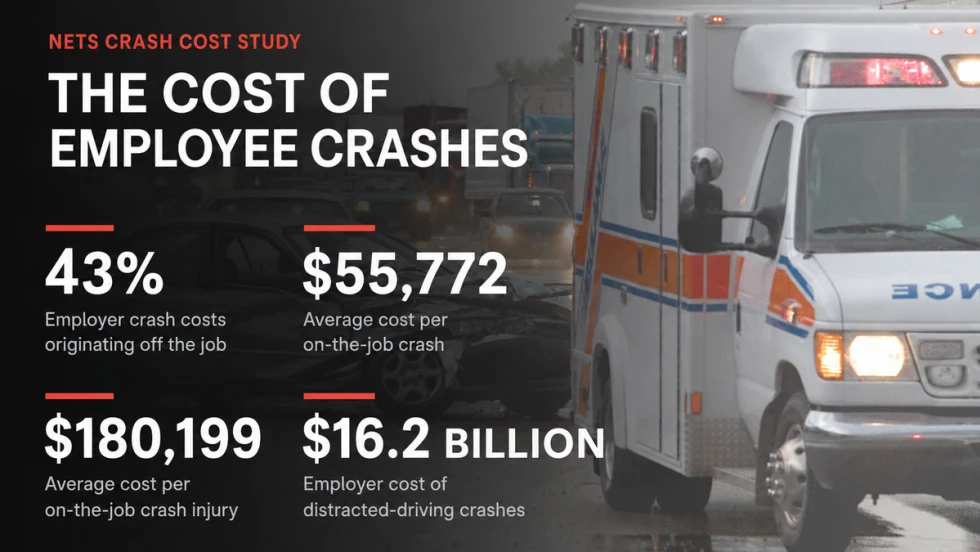
Off-the-Job Crashes Account for 43% of Employers’ $61.7 Billion Crash Burden
NETS quantifies costs dispersed across fleet, risk, HR, and other departments while providing new per-crash benchmarks for employers.
Read More →
Ram Recalls More Than 1.27 Million 1500 Pickups for Seat Belt Anchor Issue
The recall affects certain 2019-2026 Ram 1500 pickups that may have improperly attached second-row seat belt buckle anchors.
Read More →