Extended oil-drain intervals have helped to offset increases in the cost of motor oil because of the expanded use of synthetic oils and cartridge oil filters. Higher labor rates in 2017 exerted upward pressure on preventive maintenance costs.
Preventive maintenance (PM) expenses in calendar-year 2017 were higher when compared to 2016, primarily because of higher labor costs and the increased use of more expensive synthetic motor oils.
Ad Loading...
Most manufacturers have extended oil change intervals and switched to more expensive synthetic oils, which is increasing the cost of each preventive maintenance service. Also, contributing to the industry-wide trend of extended oil drain intervals is onboard oil-life monitoring systems that are installed as standard equipment in some popular fleet models.
“The average cost of an oil change is up 3% from 2016,” said Chad Christensen, senior strategic consultant for Element Fleet Management.
At a Glance
Preventive maintenance (PM) expenses in calendar-year 2017 increased compared to CY-2016.
More OEMs are recommending more stringent motor oil requirements, such as the use of synthetic motor oils, which is increasing the cost of each PM service.
Some vehicles now have larger oil capacities, which increased PM costs.
The forecast is for PM costs to increase 2% in 2018.
Another reason for higher PM costs has been an increase in labor rates. Hourly wages in the U.S. in 2017 were higher, on average, than those in 2016. In addition, the economy is growing stronger in certain regions and there is pressure on employers in labor constrained industries to offer higher salaries to be competitive in a tight labor market. In particular, the ongoing shortage of automotive technicians will exert upward pressure on labor rates, especially in high-cost-of-living metro areas.
One additional factor is that oil capacity has increased for some models necessitating the use of more quarts of oil than what was used in the past.
Another factor adding to the cost of draining oil is new, more expensive oil filters. “Cartridge oil filters have become more common and may cost more than the typical spin-on filter,” said Mark Lange, CAFM, technical services consultant for Element Fleet Management. “More unique oil specifications are also causing an uptick in oil change costs. We expect this to continue and to occur about every three to five years.”
Ad Loading...
An additional factor putting upward pressure on total PM costs has been the increased use of diesel engines in passenger cars. “More diesel cars are being utilized in fleets with an increase in oil change and fuel filter cost,” added Lange.
Increased Use of Synthetic Oil
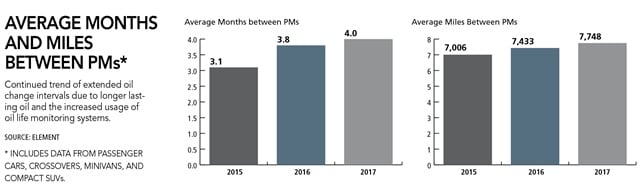
Improvements in engine design and onboard vehicle technology, along with improved oil quality, are allowing fleets to extend oil-drain intervals. In addition, there continues to be enhancements to OEM oil-life monitoring systems, which enable extending oil-drain intervals and reduce driver downtime. The onboard oil-monitoring system of some models, which reflects actual driving patterns, often allows for even longer oil drain intervals.
However, more stringent motor oil requirements by OEMs have put upward pressure on PM costs. With motor oil, the cost of the synthetic oil often offsets the savings of extended service intervals.
On average, oil drain intervals are lengthening and will continue to do so as older fleet models are retired from fleet service.
“The average oil change mileage and time interval have increased because clients are more amenable to following the OEM oil change indicators to extend intervals,” said Christensen.
Ad Loading...
While oil drain intervals have been extended, the proliferation of smaller displacement engines in fleet applications is putting pressure on OEMs and fleet managers to use synthetic oil, which provides 50% better engine protection, to maximize engine life.
Forecast of Preventive Maintenance Costs
Greater time and mileage between oil changes has translated into reduced driver downtime and shop visits.
The higher quality synthetic motor oil allows the intervals between these services to lengthen, which is offsetting some of the additional per-transaction costs.
The ongoing trend of increased costs per service will continue as more and more vehicles requiring conventional oil are taken out of service and replaced with models that require synthetics.
“We should continue to see an increase in the average cost of a PM in the coming years about 2% annually,” said Lange. “Oil will continue to evolve and be improved/enhanced with additives to improve lubricity/fuel economy increasing the cost.”
Ad Loading...
Another variable to future pricing is the trend in crude oil prices, from which conventional motor oil and synthetics are refined.
“Crude oil prices will put additional upward pressure on the cost of motor oil in 2018,” said Christensen.
A more long-term trend that will impact PM costs is the greater availability of electric vehicles marketed by OEMs.
“The significant adoption of electric cars is probably still 10 years off for most clients, but the introduction of electric cars would basically eliminate most of today’s PM cost,” said Christensen.
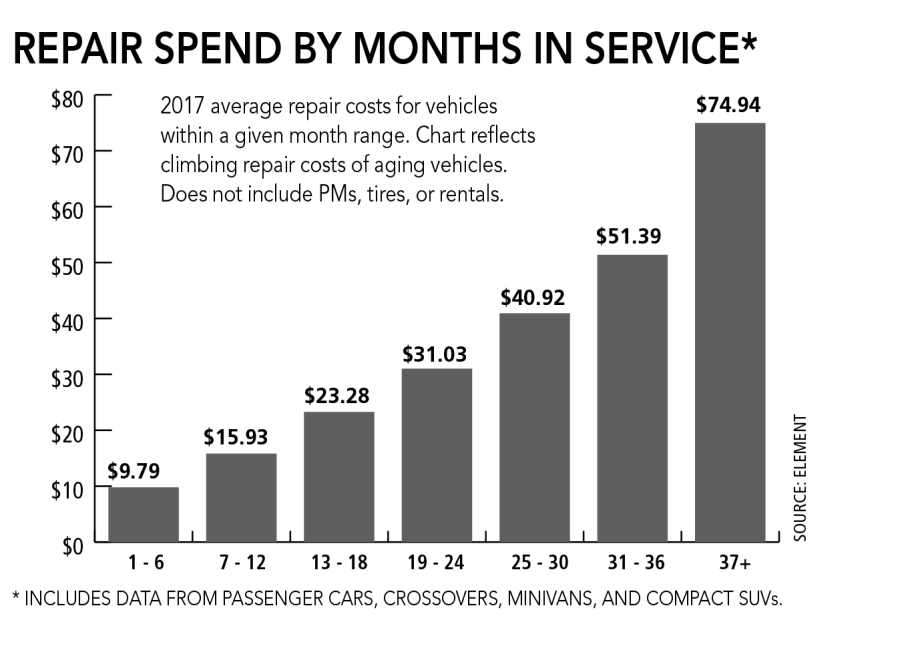
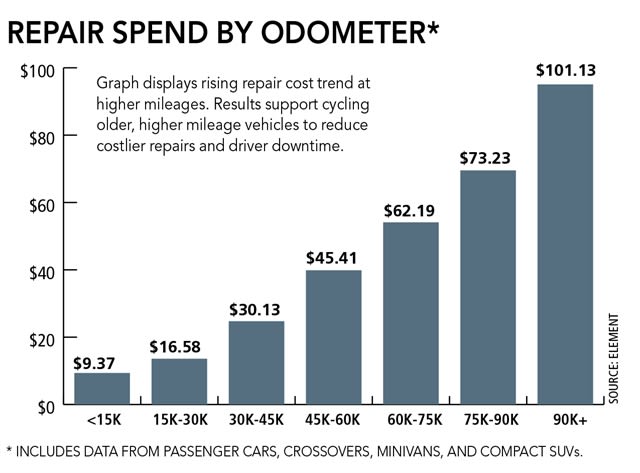
As vehicles are kept in service for longer periods, operating at higher miles, it will impact PMs. “Due to longer vehicle lifecycles, there will be a need for more enhanced PM schedules,” said Christensen. “More PM maintenance will most likely be needed to extend useful vehicle life as fleets are keeping vehicles in service longer at higher miles.”
Ad Loading...
Danger of Longer Drain Intervals
One common misconception by drivers is that PM only involves oil changes. Oil changes aren’t the only PM. Nowadays, tire rotations are often more frequent than oil changes. It is important to have vehicles PM’ed on a schedule. What’s important to remember, especially in the commercial and vocational markets, is that tires may need to be rotated more often than the oil is changed.
“Extended oil drain intervals have the potential to lead to increased maintenance expenses or major repairs if the driver is not ‘in tune’ with their vehicle,” said Lange. “Brakes wearing metal to metal, low oil levels, engine failure, and incorrect tire pressure causing premature tire wear caused by drivers not addressing TPMS light.”
Rising operating costs, driver safety concerns, and unplanned downtime are putting unprecedented pressure on modern fleets. Discover how fleet managers use embedded OEM connectivity and real-time vehicle data to cut TCO, prevent downtime, and protect drivers without aftermarket telematics hardware.
Fleetio’s Brianna Perry demonstrates how Service Advisor evaluates maintenance requests, identifies pricing anomalies, and provides the context fleet managers need to focus their attention on potential problems.
Fleet compliance isn't just about having policies — it's about consistently enforcing them. This practical guide reveals six hidden compliance risks common in public sector and shared fleet operations and outlines proven strategies to improve visibility, accountability, and audit readiness
Vincentric’s three-year, 60,000-mile projections reveal wide differences for both scheduled and unscheduled maintenance among selected vehicle categories. Projected maintenance visits also play a factor.
Keeping fleet vehicles on the road has become as important as buying them. Darren Bradshaw of Mopar North America explains how connected vehicle data, AI, and proactive service strategies are helping Stellantis reduce downtime and move closer to predictive maintenance.
Merchants Fleet has expanded its relationship with Pep Boys, increasing the service provider's role within its national maintenance network. The move is intended to enhance maintenance coordination and support commercial fleets through Pep Boys' nationwide footprint.
Cesar Ayala of O’Connell Landscape Maintenance shares how he transitioned from the Marine Corps to managing a 460-vehicle fleet—and the real-world challenges of maintenance, compliance, and driver management in California.