





Related: Higher Motor Oil Prices Nudge Preventive Maintenance Costs Up
Fleet Oil Drain and PM Costs Increase Again in 2019
More OEMs are adopting more stringent motor oil requirements for new models increasing total PM costs, year-over-year, as more vehicles are required to use synthetic oils, which cost more than mineral-based oils.
October 18, 2019
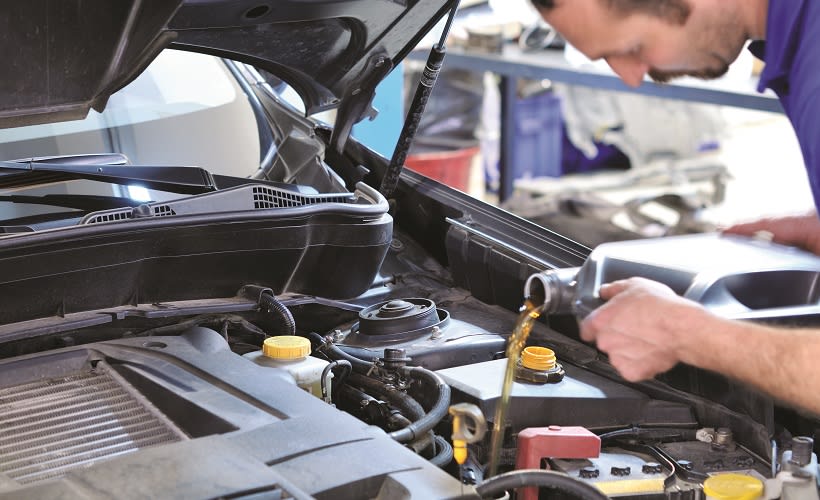
The proliferation of smaller displacement engines in fleet applications is putting pressure on OEMs and fleet managers to use synthetic oil, which provides 50% better engine protection, to maximize engine life.
Photo courtesy of Konuk via Gettyimages.com
8 min to read
Editors note: This article is part of a several-part package dealing with operating costs in 2019. Read related articles that offer and in depth look at tire prices, warranty recovery, and maintenance.
Preventive maintenance (PM) expenses were higher in 2019 because of the increased use of more expensive synthetic motor oil. While there are regional differences in prices, when averaged out on a national basis, PM costs in 2019 have increased.
Likewise, the price of finished lubricants (lubricating oils and greases) increased 6% to 14% in 2019, which was attributed to the rising cost of raw materials, rising freight costs, and overall market fluctuations. All of these factors have impacted the cost to manufacture finished lubricants and the end-user price of these products.
Putting upward pressure on PM costs is the maintenance policies of some OEMs adopting more stringent motor oil requirements for new models. As a result, total oil costs have increased, year-over-year, as more vehicles are utilizing synthetic oils, which cost more than mineral-based oils.
Another factor adding to the cost of draining oil is new cartridge oil filters, which have become more common and cost more than the typical spin-on filter.
“Oil costs increased this year. This increase has caused more fleets to compare oil types and interval changes to find the most cost effective solution for their fleet,” said Mark Donahue, manager of fleet analytics for EMKAY.
The proliferation of smaller displacement engines in fleet applications is putting pressure on OEMs and fleet managers to use synthetic oil, which provides 50% better engine protection, to maximize engine life.
“The shift from use of regular oil to semi-synthetic and synthetic blends noted over the past few years continued in 2019. With synthetics comes increased maintenance intervals but also increased oil change price. As a result, the average cost of oil to fleets has increased,” said John Wuich, vice president of strategic consulting for Donlen.
The increased cost for preventive maintenance was offset by improvements in engine design, onboard oil monitoring technology, and improved oil quality, allowing fleets to extend oil drain intervals. The increased cost of using a synthetic oil is balanced out by the decreased frequency of services, resulting in less downtime for oil services. Oil drain intervals will continue to lengthen as older vehicles are retired from fleet service. This will become greater in the future as older models are retired and the replacement vehicle will transition into the longer interval schedule.
“The use of semi-synthetic and full-synthetic oils continues to grow, increasing the cost of oil changes. In addition, automotive manufacturers continue to utilize turbocharging technology to boost engine performance and lower viscosity oil to boost fuel economy in response to increased corporate average fuel economy (CAFE) requirements,” said Kelley Hatlee, CAFS, national service department technical support supervisor for Enterprise Fleet Management. “Not only do advanced oils provide better lubrication overall, but the increased use of turbochargers and semi-synthetic or full-synthetic oils go hand-in-hand, due to the ability of these modern oils to perform and maintain longevity at higher temperatures.”
Also, contributing to the industry-wide trend of extended oil drain intervals is onboard oil life monitoring systems that are installed as standard equipment in some popular fleet models. Onboard oil monitoring system reflects actual driving patterns, which often allows for longer oil change intervals. More OEMs are using onboard oil life monitors to define PM frequency. From a PM compliance perspective, a defined PM interval is still required in order to properly measure compliance across a vehicle fleet. When using an onboard oil monitoring system, careful consideration to application, usage, terrain, PTO usage, and idle time should be given before a PM interval is defined.
The extended service intervals have increased the importance of regular oil level checks by drivers. What’s important to remember, especially in the commercial and vocational markets, is that tires may need to be rotated more often than the oil is changed.
Raw Materials Cost Drive Price
Oil and oil-related services are increasing in cost at a higher percentage than other non-oil related services over the past year.
“The continued increases of both raw materials and the transportation of oil have led to the escalation in cost. As oil change intervals have increased, we have seen the use of synthetic oils also rise. These factors have greatly driven up the cost of an oil change. To combat this surge in expenses, many fleets are looking closely at changing PM intervals to minimize the impact,” said Donahue of EMKAY.
One additional factor is that the oil capacity for some models has increased, necessitating the use of more quarts of oil than what was used in the past. Engine oil capacities among new model vehicles have trended upward, increasing the average price of oil changes.
It is becoming more prominent for new vehicles to require extra quarts of oil, more oil required than the standard five-quart oil change.
“Many new engines have greater oil capacities than past engine designs, contributing to the increase in oil change costs. Despite higher oil change costs, manufacturers are increasing oil change intervals, meaning a more expensive oil change is required less often,” said Hatlee of Enterprise Fleet Management.
These longer drain intervals are offsetting the higher per-transaction price, helping to offset some of the higher PM costs.
“While the overall increase in oil lifecycles has helped to reduce the impact of the increase in cost, it’s still vital to identify the most cost-effective solution for different fleets,” said Donahue.
The increased use of hybrids is also influencing PM costs. Hybrid and alternative-fuel solution development from a marketing perspective has decreased due to a lesser demand for alternative solutions. “As a result, PM requirements are becoming more and more specific as vehicle manufacturers are expanding their hybrid and electric vehicle offerings each model year,” said Brad Jacobs, director of fleet consulting for Merchants Fleet.
Truck fleets have also seen the introduction of new motor oils. In 2017, the industry saw the introduction of two new oils developed by the American Petroleum Institute (API) designed to help address high temperature issues tied to newer diesel engines (from 2007 and going forward) and those with SCR equipment installed. They were also a response to calls for longer drain intervals, better fuel economy, lower emissions, and increasing horsepower. The new oils are "backward-compatible,” meaning they were designed to work with oils that are currently on the market.
“One factor that has emerged in recent years and continues to gain momentum in the marketplace is the trend of some maintenance vendors opting to reduce the number of engine oil options available for service. For example, we’re seeing a growing number of vendors eliminate the option of a semi-synthetic oil in favor of full synthetic alternatives. This strategy allows maintenance vendors to reduce their overall oil inventory. As a result, we’re seeing a slight increase in the average cost of an oil change service as some vehicles are now forced to opt for a full synthetic service rather than a more economical semi-synthetic option,” said Chris Foster, manager, truck & equipment maintenance for ARI. “As we look toward 2020 and beyond, we anticipate that additional maintenance vendors are poised to follow suit and leverage similar oil inventory control strategies. With that in mind, we are working closely with both our national account vendor partners and our customers to adjust budget forecasts accordingly to help minimize the impact.”
2020 Forecast of Motor Oil Prices
The ongoing trend of increased costs per service will continue as more and more vehicles requiring conventional oil are taken out of service and replaced with models that require synthetics.
In the long-term, the forecasts show moderate price increases generally following the price of crude oil.
The forecast is that oil changes and oil-related services will continue to increase in cost.
Another concern on the horizon is the potential impact of higher labor rates and whether these increased overhead costs will be passed on to fleet customers. The economy is strong in many regions and there is market pressure on employers to offer salaries that would be competitive in a tight labor market.
“Labor and overhead costs have been the driving factors increasing oil costs. The crude oil market in 2019 is down about $10 per barrel (15-20% lower) compared to 2018 but retail motor oil has seen little to no cost impact,” said Mark Lange, CAFM, technical services consultant for Element Fleet Management.
It is expected that pricing will increase slightly due to higher labor rates, but there will be no volatility and incremental pricing will be stable. The increased drain intervals will partially help to offset the higher PM cost of the continued transition to synthetics across more vehicle applications.
Motor oil prices will generally follow the price of crude oil, which is expected to remain somewhat high but stable. External factors such as economic sanctions and increased demand resulting from improved GDP could drive oil prices beyond forecasted levels. The cost to produce motor oil is increasing because of the increased cost of crude oil, which is the foundation of finished lubricant products.
“Motor oil prices are expected to remain fairly consistent over the next year and follow the price of crude oil (major geopolitical events aside),” said Mark Atchley, senior supply chain manager for Enterprise Fleet Management.
A key reason for the increase in crude oil prices is due to events outside the control of fleets. For instance, there have been dramatic disruptions in crude oil production in both Iran and Venezuela. However, some forecast that crude oil prices will remain flat in calendar-year 2020.
“Market forecasts are still pointing to crude oil remaining flat or even falling in the immediate future. This forecast could change based on the geopolitical climate in oil-producing countries. The biggest impact is likely going to be inflation and the continued increase in labor costs,” said Lange of Element Fleet Management.
One significant geopolitical event that resulted in increased oil prices occurred in September 2019 with an attack on Saudi Arabia’s oil refining facilities.
The U.S. is anticipated to continue to dominate oil supply growth into 2020 due to technology improvements and better production in areas of West Texas, North Dakota, and Oklahoma. “Oil prices dipped at the end of 2018. While U.S. oil production continued to surge in 2019, other global oil producers have reduced their supply,” said Jacobs.
Geopolitical issues weigh heavy on the future price of finished lubricants as, ultimately, prices in 2020 will be determined by the strength of the dollar, global GDP, and trade negotiations.
Subscribe to Our Newsletter
More Maintenance

Sponsored•October 1, 2026
Fleet Manager’s Ultimate Playbook: Navigating the New Standard in OEM Connectivity
Rising operating costs, driver safety concerns, and unplanned downtime are putting unprecedented pressure on modern fleets. Discover how fleet managers use embedded OEM connectivity and real-time vehicle data to cut TCO, prevent downtime, and protect drivers without aftermarket telematics hardware.
Read More →
How Can Fleet Managers Tell Which Repairs Require Closer Review?
Fleetio’s Brianna Perry demonstrates how Service Advisor evaluates maintenance requests, identifies pricing anomalies, and provides the context fleet managers need to focus their attention on potential problems.
Read More →
Why Roadside Assistance Belongs in a Fleet Risk Strategy
Roadside assistance is more than a tow. See how the right partner can protect drivers, uncover fleet trends, and strengthen your risk strategy.
Read More →
Sponsored•August 7, 2026
Hidden in Plain Sight: Fleet Compliance Risks
Fleet compliance isn't just about having policies — it's about consistently enforcing them. This practical guide reveals six hidden compliance risks common in public sector and shared fleet operations and outlines proven strategies to improve visibility, accountability, and audit readiness
Read More →
How Maintenance Costs Compare Across 27 Fleet Vehicles
Vincentric’s three-year, 60,000-mile projections reveal wide differences for both scheduled and unscheduled maintenance among selected vehicle categories. Projected maintenance visits also play a factor.
Read More →
The EV Breakdown Nobody's Talking About: Why Most Electric Vehicle Roadside Calls Aren't Mechanical Failures
Here's why EV breakdowns are widely misunderstood.
Read More →
How Stellantis Plans to Get Ahead of Fleet Downtime
Keeping fleet vehicles on the road has become as important as buying them. Darren Bradshaw of Mopar North America explains how connected vehicle data, AI, and proactive service strategies are helping Stellantis reduce downtime and move closer to predictive maintenance.
Read More →
Merchants Fleet Expands Maintenance Network with Pep Boys
Merchants Fleet has expanded its relationship with Pep Boys, increasing the service provider's role within its national maintenance network. The move is intended to enhance maintenance coordination and support commercial fleets through Pep Boys' nationwide footprint.
Read More →
The Two Biggest Summer Downtime Threats for Fleets
A conversation with a maintenance expert reveals the two most common summer maintenance pains and how to prevent them.
Read More →
From Marine Corps Motor Pool to Managing 460 Fleet Vehicles
Cesar Ayala of O’Connell Landscape Maintenance shares how he transitioned from the Marine Corps to managing a 460-vehicle fleet—and the real-world challenges of maintenance, compliance, and driver management in California.
Read More →