




Fleet Manager of the Year Finalists Lead the Charge
Fleet managers must stay versatile in today’s ever-changing and evolving automotive industry. The nominees for the AF Professional Fleet Manager of the Year award showcase this very trait.
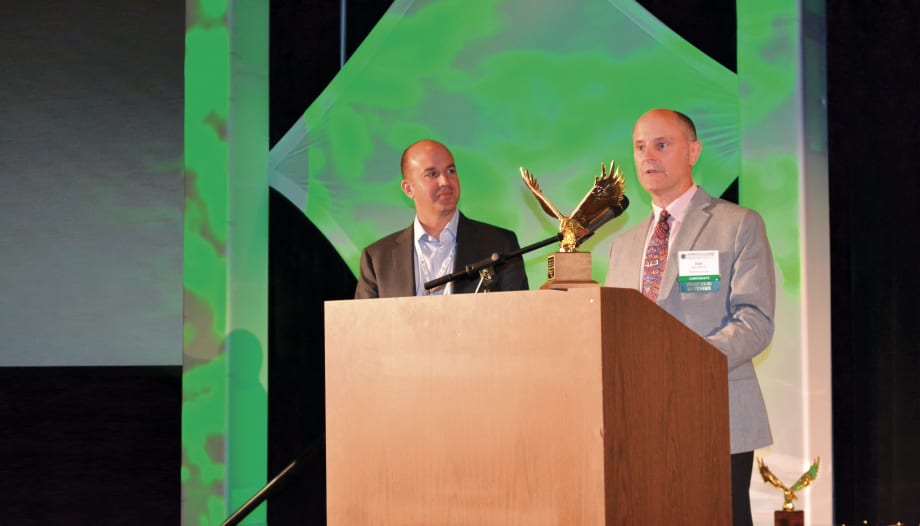
Dan Frank (left) presents the 2014 Professional Fleet Manager of the Year award to Gage Wagoner. Photo by Chris Wolski.
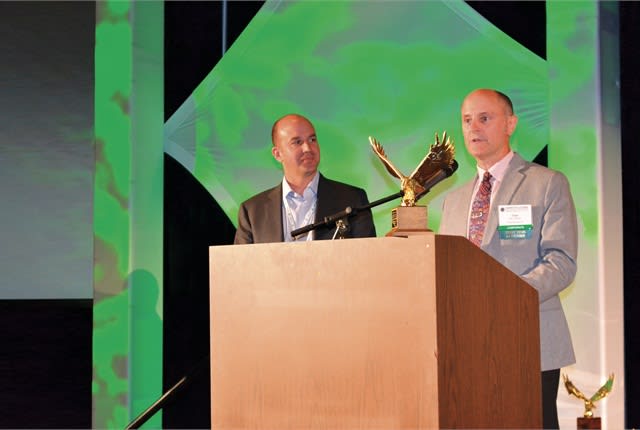
Dan Frank (left) presents the 2014 Professional Fleet Manager of the Year award to Gage Wagoner. Photo by Chris Wolski.
The Automotive Fleet judging committee has always faced a difficult challenge in choosing a single AF Professional Fleet Manager of the Year from a list of the many highly qualified candidates. And, as the role of the fleet manager continues to evolve, the task of identifying a winner has become more complex than ever.
Today's fleet managers must be unbelievably versatile. They are often tasked not only with overseeing the fleet operations, but also with managing procurement and manufacturer negotiations, evaluating the supply chain, overseeing safety, monitoring regulatory changes, and understanding a growing list of automotive technologies. This growing set of responsibilities creates a multitude of moving parts and roles.
But, one unifying sentiment I'm sure all fleet managers share is that it's a very exciting time to be a member of the fleet management industry.
Automakers have rebounded nicely from the economic downturn at the end of the past decade, selling more new vehicles in 2013 than they have in any year since 2007. Manufacturers are offering a host of new technologies to enhance just about every element of the driving experience from fuel efficiency to safety to on-the-go networking.
We've even seen notable progress in "self-driving" automation, a once radical concept that many say is rapidly nearing practicality.
But, a booming automotive economy has meant some challenges, as well. The recent surge of new vehicle sales portends the softening of a resale market that has surged in the wake that weof the recession. The continuing shortage of rail cars to meet increasing capacity demands from auto manufacturers has resulted in vehicle delivery delays (and the particularly harsh winter of 2013-2014 certainly didn't help matters). In addition, as manufacturers have become more diligent about ensuring the quality and safety of their vehicles, the number of recalls has soared.
This combination of challenges has required fleet managers to be flexible and creative in order to meet their drivers' needs and keep them on the road and productive.
Fleet managers have certainly been given a very delicate task of harnessing the benefits of the modern automotive fleet environment while at the same time mitigating its challenges.
The evolution of newly available vehicle models, equipment, and technologies has often challenged fleet managers to step out of their comfort zone and evaluate unique opportunities to drive ongoing value for their fleets.
As we look forward, the emergence of new CAFE standards, alternative fuels, telematics capabilities, vehicle production materials, government regulations, and corporate sustainability mandates will mean that fleet managers will have to continue to enhance their knowledge base, and be more strategic and critical-thinking than ever.
This year's AF Professional Fleet Manager of the Year nominees will certainly be among those who will lead the charge. And, while these fleet managers deserve plenty of recognition for all of their achievements to this point, their most enduring quality will be their ability to stay versatile in an ever-changing fleet environment.
Dan Frank is the president of Wheels, Inc.
More Operations
A buyer's guide to fleet management software in 2027
Buying fleet management software in 2027 means looking beyond features and price. As fleet operations, technology and expectations evolve, this guide explores what today’s fleet professionals should consider when choosing a system that can deliver value now and adapt to what comes next.
Read More →
What Will Shape the Next Era of Fleet Management?
EVs, AI, and autonomous vehicles are reshaping fleet management. Discover what’s ahead—and how fleet leaders can prepare for the next era.
Read More →
How Fleets Can Recruit and Train Veterans for Technician Roles
Here's how the technician shortage has affected uptime for fleets, and what to do about it.
Read More →

Avis Budget Group Deploys Neology Toll Management Technology Across Major Brands
Neology’s neoFleet platform will manage toll transactions and toll-authority operations for vehicles across Avis, Budget, Payless, Budget Truck and Zipcar.
Read More →
Fleet Personal-Use Charges Edge Higher in 2026
Nearly eight in 10 surveyed fleets allow personal use of company vehicles, while just over half of respondents report charging employees for the privilege.
Read More →
The Future of Fleet + What’s Changing Right Now | AF News Recap
Could developments overseas offer a preview of what’s coming for U.S. fleets? This week, we’re looking at the future of AI, autonomy, and electrification, plus Ford Pro’s new certified pre-owned program, smarter vehicle offboarding, and a new way for fleets to manage toll expenses.
Read More →
How to Handle Vehicle Offboarding
What do fleet managers need to do when a driver leaves?
Read More →
Fleet Manager’s Ultimate Playbook: Navigating the New Standard in OEM Connectivity
Rising operating costs, driver safety concerns, and unplanned downtime are putting unprecedented pressure on modern fleets. Discover how fleet managers use embedded OEM connectivity and real-time vehicle data to cut TCO, prevent downtime, and protect drivers without aftermarket telematics hardware.
Read More →
U.S. Bank Adds Verra Mobility Toll Management to Voyager Fleet Platform
The integration allows U.S. Bank Voyager fleet customers to manage toll payments and violations alongside fuel, EV charging and maintenance expenses.
Read More →
ADAS Prevents Crashes. But Repairs Cost More | AF News Recap
ADAS-equipped vehicles may crash less often, but they can cost more when they do. This week, we’re breaking down what that tradeoff means for fleets, plus Subaru’s first Forester Wilderness Hybrid, Nissan’s new e-POWER Rogue, and why Calstart has become Catalyst Mobility.
Read More →