




Want More? No Truck Powertrain Type to Dominate by 2050
Fleet Electrification: How to Avoid a Utility Upgrade
If your initial electrical load calculations indicate a lack of capacity, you may be able to support charging infrastructure with the appropriate load management.
by Bernardo Raymundo
September 30, 2024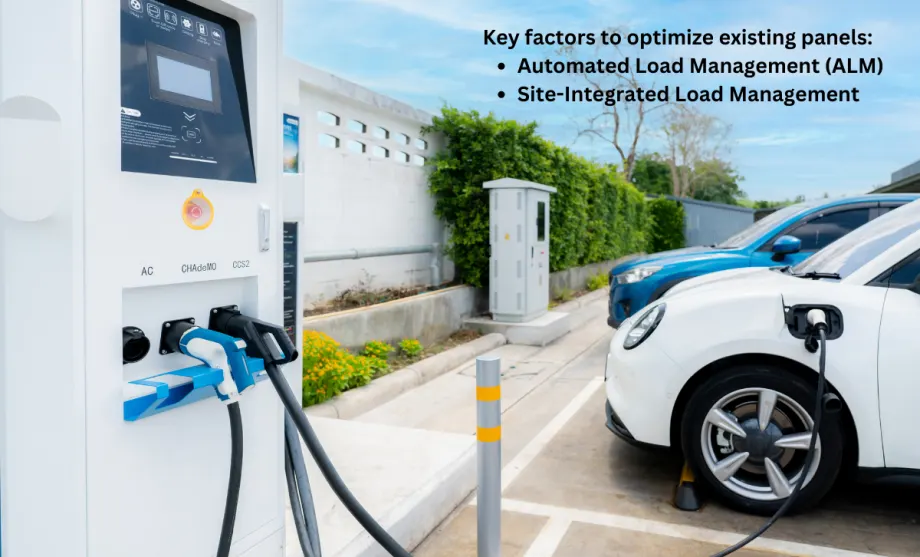
If the total capacity of chargers can be allowed to exceed the panel's rated capacity with ALM, and uncontrolled loads on-site can be monitored by the CMS, then chargers can be installed and managed under a required electrical limit.
Photo: Automotive Fleet
3 min to read
As fleet electrification gains momentum, the timely and cost-effective installation of charging infrastructure continues to be one of the biggest challenges. Fleet managers often ask, “How can we install charging infrastructure more quickly and affordably?”
One increasingly popular solution is to avoid utility upgrade delays and expenses by optimizing the use of the site’s existing electrical infrastructure with the help of a charge management system (CMS).
Why Leverage Existing Infrastructure?
Many fleet operators face tight deadlines to deploy infrastructure quickly to take advantage of expiring grants, or to comply with regulatory deadlines such as the Advanced Clean Fleet rule in California. Others may want to start the electrification journey with a pilot program at a minimal cost to test and learn about the technology.
For these and many other cases, utilizing existing electrical infrastructure can be the difference between an “impossible site” and a “feasible site.”
For fleets aiming to deploy a limited number of vehicles, the time and expense associated with requesting new utility services and constructing those upgrades can be overwhelming and unnecessary. When facing tight deployment schedules, waiting for a dedicated service for EV charging might not be a viable option.
Many sites already have existing 200- to 800-amp panels that can support charging infrastructure when paired with the appropriate load management technology.
Optimizing Your Existing Panel
Two key features of an advanced CMS can help fleets maximize the charger capacity that can be installed on an existing panel:
Automated Load Management (ALM): This technology allows the total capacity of chargers to exceed the panel's rated capacity by enabling the CMS to strategically share available power for charging across multiple charge ports.
Site-Integrated Load Management: The CMS monitors building energy loads (or other loads at a site) and adjusts charging based on real-time available capacity as building loads fluctuate (e.g., when HVAC systems cycle on and off).
If the total capacity of chargers can be allowed to exceed the panel's rated capacity with ALM, and uncontrolled loads on-site can be monitored by the CMS, then chargers can be installed and managed under a required electrical limit, even for sites where building loads occupy the majority of panel capacity at some hours of the day.
This will often allow a fleet depot electrification project manager to install chargers — in compliance with electrical codes — at a site where it might not otherwise be possible.
A Practical Example of Load Management
Consider the following scenario:
A fleet secures a state grant to fund four electric vehicles.
The fleet's garage has an existing 100% rated, 400-amp main panel.
Electrical load calculations indicate that the panel has no available capacity.
However, the actual overnight load is significantly below capacity, approximately 100 amps.
To ensure each vehicle can complete its route, four 19.2 kW 80-amp AC chargers are recommended.
Modeling shows that to meet charging needs for the four routes, the CMS can ensure that the total draw will never exceed 250 amps and that all vehicles will have plenty of time to get a full charge for the day.
By using ALM and site-integrated load management, the fleet is able to safely install four chargers with combined total capacity of 320 amps on the existing panel, and meet its funding deadline.
Without the combined automated and site-integrated load management capabilities of the CMS, this situation would necessitate a service upgrade or a new service to support additional charging.
However, by utilizing both ALM and site-integrated load management, this fleet can present a feasible, safe, and effective plan to their utility and local permitting authority. This approach allows them to install all four chargers immediately, comply with the National Electric Code, proceed with the planned pilot program, and retain their grant funding.
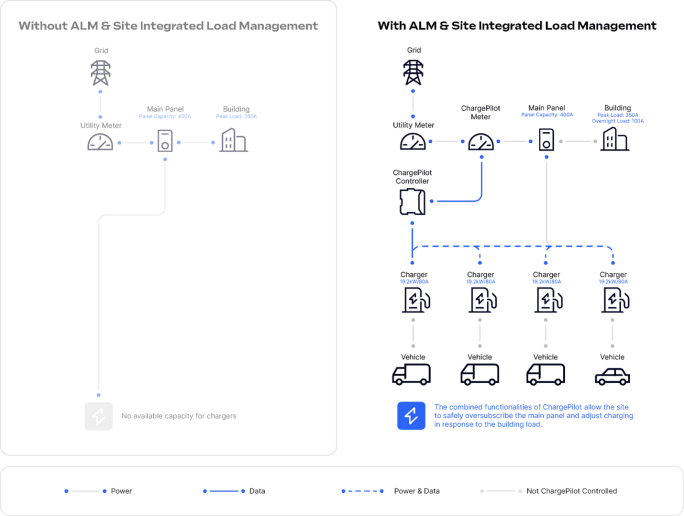
By using ALM and site-integrated load management, a fleet is able to safely install chargers on the existing panel.
Source: Mobility House
Overcoming Infrastructure Challenges
Leveraging existing electrical infrastructure for fleet electrification not only saves time and money but also opens new opportunities for fleet operators to deploy electric vehicles at difficult sites without unnecessary delays.
With the right CMS, fleets can overcome infrastructure challenges and move forward confidently with their electrification plans.
Subscribe to Our Newsletter
More Fleet Forward

Erin Gilchrist Receives Mike Antich Spirit of Fleet Award
Last week at AFLA in Vegas, Erin Gilchrist received the inaugural, brand-new Spirit of Fleet Award.
Read More →
Dominika Leja Named the 2026 Fleet Manager of the Year
The AstraZeneca associate director of fleet was recognized for her leadership in fleet electrification, cost savings, and operational transformation.
Read More →
Jamie McKay Named the 2026 Fleet Visionary Award Winner
The Aptive Pest Control fleet manager was recognized for her approach to operations, data, lifecycle management, and driver needs.
Read More →
Fleet Forward Conference Introduces One-Day Passes for 2026
New one-day registration gives fleet professionals the flexibility to attend Tuesday, Wednesday, or Thursday, with passes available for $199 through Sept. 18.
Read More →
Vibe Coding: When Fleet Managers Become Software Builders
Five fleet professionals — none with programming skills — discuss how they’re using AI to build fleet solutions in-house and in a fraction of the time.
Read More →
Fleet Forward Conference Tackles Fleet Industry’s Growing Leadership Gap
This session will examine succession planning, knowledge transfer, and the skills the next generation of fleet leaders will need as veteran professionals leave the industry.
Read More →
2026 Fleet Manager of the Year Finalists Announced
Who are the 2026 Fleet Manager of the Year finalists?
Read More →
John Rossant to Deliver Opening Keynote at 2026 Fleet Forward Conference
The CoMotion founder will draw on developments across Europe, China, the Middle East, and other international markets to identify trends that could influence how U.S. fleets plan for the coming decade.
Read More →
How to Build Custom Fleet Tools With AI and Vibe Coding [Webinar]
A new Automotive Fleet webinar explores how fleet managers are using AI and vibe coding to automate routine work and create simple operational tools without traditional programming skills.
Read More →