




Fleet Becomes New Adopter of New Technology Applications
Technology's continuing influence in the day-to-day operations of fleet managers was discussed in various forms at the Fleet 2000 Business Conference, which took place in Minneapolis this past August.
The explosion of technology and the Internet have had a real impact on business, and the fleet industry has been an early adopter, said Rick Smith, president and CEO of GE Capital Fleet Services.
Smith made his comments at the third annual Fleet 2000 Business Conference, held Aug. 25-26, 1999, in Minneapolis.
Drawing its largest crowd yet, more than 300 fleet managers, suppliers, manufacturers, and GE Capital Fleet Services executives gathered for the conference. Attendees arrived from 26 states and two countries, representing 18 industries. Speakers, panel discussions, and a quality/productivity fair touched on key fleet issues, all of which focused heavily on technology.
"Three years ago, we established the Fleet 2000 Business Conference to help prepare our customers for technology in the new millennium," Smith said. "It's amazing how quickly technology has evolved and changed since then."
Following are highlights of the conference:
Technology and Today's Business
Chuck Martin, chairman and CEO of New Future Institute in North Hampton, NH, discussed the continuing explosion of e-business applications.
"A new value transformation has emerged, driven completely by the customer, and companies are challenged to work together to meet new customer demands," said Martin. "To do so, they need to start with net strategies, not just websites."
Martin outlined seven "cybertrends" that have emerged from evolving technology:
1. Cyber Economy Goes Main Street. New ways of buying and selling will create a new breed of online consumer who will expect faster delivery and easier transactions.
2. Wired Workforce. Intranets will put more information in employees' hands and create virtual work communities.
3. Open-Book Corporation. Boundaries between corporations and the outside world will be erased. Power will shift away from the providers of products and services direct to the recipients.
4. Products Become Commodities. New interactive dynamics will dramatically change how value is established for products.
5. Customer Becomes Data. New technologies for analyzing and predicting customer behavior in real time will require companies to organize differently in order to become "customer-centric."
6. Experience Communities. People will access instant global communications and be able to compile knowledge in real time.
7. "Real Time" to "All the Time." New means of networking will create a new generation of empowered and independent learners.
Manufacturer Trends
A panel moderated by Automotive Fleet Executive Editor Mike Antich and Associate Publisher Sherb Brown discussed manufacturer trends. Panelists from Ford, General Motors, DaimlerChrysler, and Mitsubishi participated. Discussion points and overriding messages included:
Vehicle trends. Car growth has been somewhat stagnant and retail and fleets will continue to see more growth on the truck side.
Global capacity. Manufacturers have put strategies in place for building global e-commerce to drive productivity.
Fleet allocation. Fleet allocation and order-to-delivery improvement have become top priorities and long-term strategies. This includes moving product lines and encouraging capacity sharing across plants to more effectively meet customer expectations.
Efficiency. Web-based systems will continue to improve internal systems and promote greater efficiency.
Finding Reality in Residuals
Offering a perspective on the used-vehicle market, Tom Kontos, director of Strategic Planning and Market Analysis for ADT Automotive, said that the used-car market remains solid for 1999 and the fleet market shows signs of improvement.
New-car quality has led to improved used-car quality, which helps residual sales.
For commercial fleets, prices for cars and trucks have come out of the doldrums with the average price reaching nearly $8,000 for an average intermediate car.
Certification programs are gaining greater receptivity and adding value to off-lease vehicles.
Other used-vehicle market trends include continuing dealer consolidation and growing Internet referrals for the retail market.
Legislation and Regulatory Issues
Mary Tavenner, executive director of the American Automotive Leasing Association, discussed the major legislative and regulatory issues affecting fleet management. Environmental issues and energy conservation, including the Clean Fuel Fleet Program and Energy Policy Act (EPACT) continue to be hot topics, with the strong possibility that the Department of Energy will expand the EPACT buying mandates to include commercial and municipal fleets.
For up-to-date information on clean fuel fleet legislation, visit www.epa.gov/omswww/cff.htm.
Meeting New Customer Demands
According to Bobby Cameron, principal analyst for Forrester Research in Cambridge, MA, the Internet will redefine how business operates.
"Early electronic commerce shows the traditional supplier-manufacturer-distribution-customer channel as backward," Cameron said. "Now, distribution channels are changing and collaborating to more effectively meet customer demands and serve the growing Internet economy."
Cameron added that the Internet economy is at the cusp of "hyper-growth" and predicts that by 2003, worldwide electronic commerce will reach $3.2 trillion.
Leveraging Technology
In demonstrations led by Ken Schneider, electronic commerce product manager at GE Capital Fleet Services, attending fleet managers got a taste of how technology will affect their day-to-day fleet management. Demonstrating GE Capital Fleet Services' newly launched web application, Your Office @ Fleet, Schneider showed customers how to specify, order, track, and report on vehicles from their own secure, virtual office on the GE Capital Fleet Services' website.
The latest ordering enhancements to Your Office @ Fleet include:
Driver order. Drivers make their vehicle selection .online, per the fleet's specifications.
Batch order. Customers can submit batch orders by simply sending an Excel spreadsheet to GE Capital Fleet Services. The information will be automatically downloaded into the system for the fleet.
Rapid order. Customers now have the option of ordering from just one screen rather than having to page through several screens to place an order.
GE Capital Fleet Services is already doing approximately $2 million in online transactions daily and expects it will triple in the next six months.
Turning Data into Intelligence
David Sherwood, vice president of product management for Micro Strategy Inc., outlined several ways fleet managers will be able to embrace technology in everyday fleet management, including interactive web reporting or "interactive information analysis."
Some innovative web applications to look forward to include:
Instant exception reports. Users can subscribe to online exception reports and receive instant notification when established parameters are violated.
Online auditing. Accounts payable can automatically audit bills online.
Automatic reminders. Drivers can receive automatic, timely notification (time for an oil change or license renewal, for example).
Vehicle Remarketing Trends
Tim Walker, vice president, product development at Autobytel.com Inc. in Irvine, CA, says the remarketers who will survive in the future fleet environment will be those who use the Internet to streamline operations.
"More than 2.5 million searches are tapped into our site per month," Walker said. "The message is clear. Customers want to buy. And they want access to information 24 hours a day, seven days a week."
Fleet managers can expect to see virtual auctions and certified pre-owned cyber stores continue to grow at a rapid pace. In fact, according to a study conducted by J.D. Power & Associates, in the year 2000, 60 percent of all vehicle transactions will be completed online.
"The most critical challenge is to think about your customers' needs and how you can help serve them," Walker concluded. "In the end, the winner will be the company who gets the customer and keeps them."
Many of the Fleet 2000 presentations can be seen on the Internet at www.gefleet.com.
More Operations
How to Manage Conflict for Your Fleet Operations
Conflict management is becoming a core leadership skill. Here are five strategies fleet leaders should know.
Read More →
Turning Connected Vehicle Data Into Decisions That Matter
Fleet leaders have more data than ever, but turning that data into clear, actionable decisions remains a challenge. This white paper shows how leading organizations are using connected vehicle data to improve safety, reduce costs, and optimize fleet performance. Learn how to turn insight into action across your fleet.
Read More →
Cameras, Safety and Insurance: From Reactive Claims to Real-time Prevention
Commercial auto remains one of the most challenging and costly lines of coverage for fleet operators and insurers alike. Learn more about how to effectively address these issues from Onur Aksan, Enterprise Business Development Executive, Geotab.
Read More →

Are You Tracking Your Fleet's True Total Cost of Ownership?
Bobit Business Media surveyed 190 fleet professionals and found that while most fleets are tracking costs, fragmented systems and data gaps are keeping true TCO visibility out of reach. With rising pressure to control spend in an increasingly volatile environment, the gap between what fleets think they know and what the data actually shows is wider than you might expect. See how your peers are managing costs today and where the industry still has room to improve.
Read More →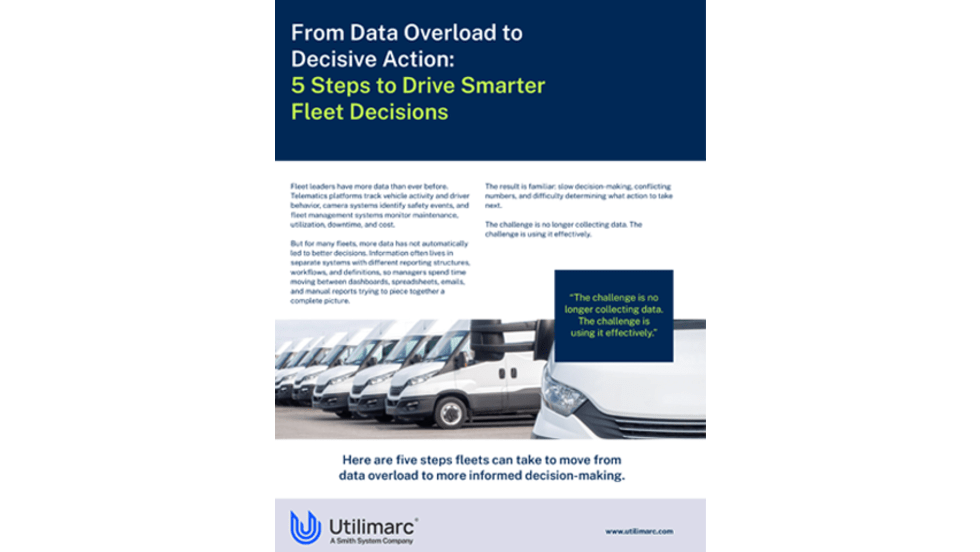
Turn Fleet Data Into Smarter Decisions
Fleet leaders have access to more operational data than ever, but disconnected systems and unclear metrics often slow decision-making instead of improving it. This article outlines five practical steps fleets can take to transform fragmented data into actionable insights that improve planning, safety, utilization, and long-term performance.
Read More →
Hybrids: Electrification Without the Challenges
For fleet managers, fuel is one of the biggest line items in the budget — and it's one hybrids can shrink without changing how your people work. Download the eBook to see the numbers, understand the technology, and get a step-by-step guide to making the switch.
Read More →
How NOV Uses Telematics to Improve Fleet Safety Across 160 Locations
James Victory of NOV discusses how the company manages fleet safety, maintenance, and telematics across more than 150 locations supporting oilfield operations throughout the U.S.
Read More →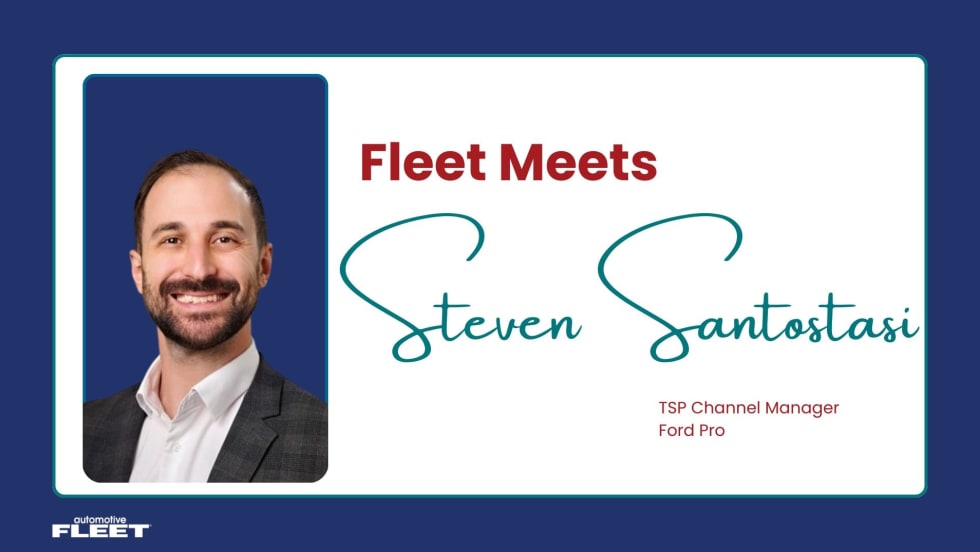
Fleet Meets: Steven Santostasi
This edition of the Fleet Meets series features Steven Santostasi, the current TSP channel manager for Ford Pro.
Read More →
Why Fleet Managers Are Replacing Departmental Vehicles with Shared Motor Pools
Departmentally assigned vehicles often create hidden costs through underutilization, poor visibility, and increased administrative burden. This white paper explores how shared motor pool strategies help fleets reduce costs, improve accountability, and optimize vehicle utilization.
Read More →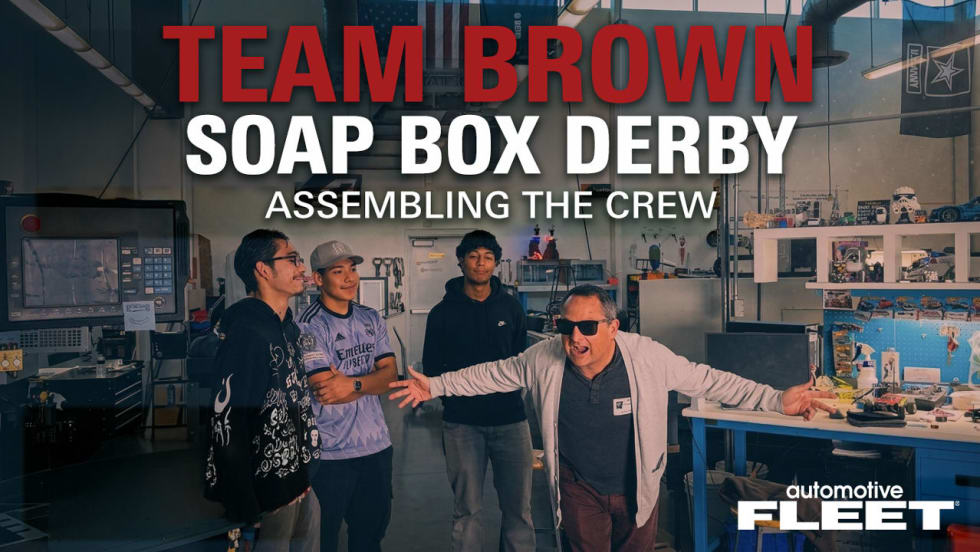
Soap Box Derby Challenge: Assembling the Crew
Meet Gabriel, Matthew, and Angel — the team helping bring this soap box derby build to life.
Read More →