




Flat Tire Safety Tips Every Driver Should Know
Flat tires and blowouts still happen. Here’s how drivers can stay safe, maintain control, and avoid further danger on the roadside.
March 1, 2018

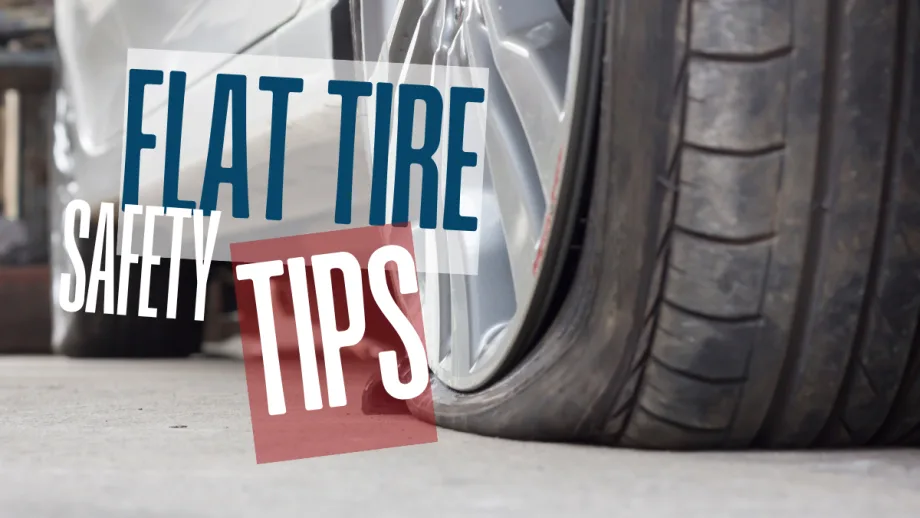
A flat tire can happen anytime. Knowing how to safely slow down, pull over, and assess your surroundings is key to avoiding further danger.
Credit: Automotive Fleet
2 min to read
- Understanding how to handle a flat tire or blowout can help drivers maintain control and prevent accidents.
- Drivers should stay aware of their surroundings on the roadside to ensure their safety during tire emergencies.
- Practicing frequent vehicle maintenance checks can reduce the likelihood of encountering tire-related issues.
*Summarized by AI
Flat tires do not happen as often as they did before steel-belted radials became standard equipment on new vehicles. But flats and blowouts still occur, and they can create serious hazards on the road. Knowing how to respond safely can make the difference between a frustrating inconvenience and a tragic outcome.
Statistics on flat tires and blowouts are not easy to come by, but in 2024 total motor vehicle traffic fatalities were tire-related crashes. And in 2003, the National Highway Traffic Safety Administration said they were responsible for about 78,000 crashes a year, 10,300 non-fatal injuries, and 414 fatalities. The danger comes in two ways: reduced vehicle control and the risk of being struck by passing traffic while changing the tire.
Handling Your Vehicle
Once you realize a tire has lost most or all of its air pressure, it is important to:
- Take your foot off the gas pedal and brake lightly to slow down.
- Grip the steering wheel firmly.
- Steer toward the side of the road.
Do not panic. Overreacting can cause you to lose control of the vehicle.
Your primary goal should be to get completely out of the traffic lanes, whether that means moving onto an exit lane on the freeway or pulling onto the shoulder and coming to a stop. It is even better if you can make it to a parking area, but only if you can do so slowly and safely. The farther you drive, the more damage you may cause to the tire and rim, but it is better to ruin them than risk being hit by another vehicle.
Before you stop, and once you are sure the vehicle is under control, turn on your hazard lights so other drivers can see you.
Once You’ve Stopped
After coming to a stop, determine whether it is safe to exit the vehicle. If it is not, stay inside with your seat belt fastened and call 911 if you have a phone.
If you can safely leave the vehicle, place reflective triangles or traffic cones behind the vehicle if you have them. If you do not, open the trunk and hood and tie a rag to the antenna or hang it outside a closed window to help signal distress.
Only try to replace the damaged tire with the spare if you are well away from fast-moving traffic and stopped on a paved, level surface. Otherwise, call for roadside assistance or wait for law enforcement to help arrange a tow. If necessary, move farther away from traffic and stay outside the vehicle.
The bottom line is simple. Your safety matters far more than getting back on the road as quickly as possible.
Subscribe to Our Newsletter
More Safety

From Driver Well-Being to EV Charging | AF News Recap
Mental health belongs in the fleet safety conversation. This week, we’re looking at five ways fleets can support employee well-being before a crisis, plus Holman’s expansion in Mexico, new one-day Fleet Forward passes, and why EV charging demand is outpacing infrastructure growth.
Read More →
Nexar-Nauto Merger Aims to Give Fleets Better Safety Intelligence Through Larger Driving Dataset
Stefan Heck tells Automotive Fleet that combining more than 10 billion miles of driving history with Nexar's AI models will give fleets deeper insights into driver risk and roadway conditions than either company could provide independently.
Read More →
Don't Wait for a Crisis: 5 Ways to Build Mental Health Into Your Fleet Safety Program
For Suicide Prevention Month, fleet and safety leaders have an opportunity to put mental health where it belongs: at the center of workplace safety.
Read More →
How Camera Data Can Strengthen a Fleet’s Insurance Renewal
Insights from a commercial insurance carrier and a broker show how fleets can turn video telematic data, driver coaching, and improved claims results into a stronger case at insurance renewal.
Read More →
The Safest Fleets Aren’t the Ones with the Most Technology
You’ve made the telematics investment. Here’s how to capture the other half of its value and build the safest fleet on the road.
Read More →
Sponsored•August 7, 2026
Hidden in Plain Sight: Fleet Compliance Risks
Fleet compliance isn't just about having policies — it's about consistently enforcing them. This practical guide reveals six hidden compliance risks common in public sector and shared fleet operations and outlines proven strategies to improve visibility, accountability, and audit readiness
Read More →
NETS Sets 2026 Fleet Safety Benchmark Conference for Indianapolis
The Sept. 15–17 program will feature fleet benchmarking data, case studies, emerging technologies, and implementation strategies while running alongside the NSC Safety Congress & Expo.
Read More →
Off-the-Job Crashes Account for 43% of Employers’ $61.7 Billion Crash Burden
NETS quantifies costs dispersed across fleet, risk, HR, and other departments while providing new per-crash benchmarks for employers.
Read More →
Ram Recalls More Than 1.27 Million 1500 Pickups for Seat Belt Anchor Issue
The recall affects certain 2019-2026 Ram 1500 pickups that may have improperly attached second-row seat belt buckle anchors.
Read More →
Operation Safe Driver Week: Why the Industry's Oldest Safety Campaign Still Matters to Fleets
A look at how a 2007 enforcement initiative became one of the most consequential weeks on the fleet safety calendar, and what it means for your drivers in 2026.
Read More →