




Five Steps to Optimize a Vocational Fleet PM Program
An ideal program tracks maintenance records and performs regular preventive and predictive maintenance to minimize repair costs and downtime.
A solid preventive maintenance program can help vocational fleet managers keep vehicle repair costs and downtime to a minimum. But an inefficient, poorly designed program can cost time and money. Robert Johnson, fleet management liaison for the National Truck Equipment Association (NTEA), says vocational fleet managers should review several areas to evaluate whether their preventive maintenance programs are optimized.
1. Analyze Fleet Maintenance Records.
Are you tracking enough of the right information to make informed maintenance decisions? For example, simply recording that “front-end work” was completed on a vehicle does not provide enough information to detect failure trends for individual front-end components. At a minimum, your records should indicate the make and model of vehicle, date and mileage at time of service, and services performed to specific components. But remember, “All the records in the world won’t do a thing for you if you don’t analyze the data,” Johnson says.
2. Examine Unexplained Maintenance
Look for trends in unexplained incidents of demand maintenance required between scheduled preventive maintenance intervals. If a number of particular failures occur on certain vehicles, determine if it is possible to adjust your preventive maintenance program to eliminate those failures in the future. Some vehicles will be more prone to problems with certain systems than others. You may need to develop a different preventive maintenance schedule for certain fleet vehicle makes and models or for those operating in specific applications. Remember, one generic preventive maintenance program may not work equally well for all fleets, or even for all vehicles within a particular fleet.
3. Minimize Number of ‘Touches’
A good measure of the efficiency of your preventive maintenance program is the number of “touches” technicians have on a vehicle. For example, a vehicle may be scheduled for preventive maintenance three times a year, but you may find that it was actually pulled in for service six times - the three scheduled services, plus another three times for various other services, such as government-required safety and emissions inspections. Proper scheduling would have handled these inspections at the same time as the preventive maintenance. Every time a technician touches a vehicle, it costs money and represents possible downtime. On average, every vehicle “touch” takes a minimum of an hour of labor. Proper planning can minimize these costs.
4. Perform Predictive Maintenance
Determine whether you could be doing a better job of predictive maintenance. Use your records to calculate your fleet’s average service life for various components, so you know when to proactively replace them. For example, you find that Brand X alternators on Brand Y vehicles fail at around 85,000 miles on average.
Your preventive maintenance schedule calls for 8,000-mile service intervals. Your service schedule, then, should include an alternator replacement as part of the first preventive maintenance service after 77,000 miles.
5. Adjust Preventive Maintenance Intervals
It is possible to set preventive maintenance intervals too close together. Intervals should be based on the type of vehicle application, usage (mileage, hours, operating environment, etc.), OEM warranty requirements, and regulatory requirements.
“Far too many companies have one preventive maintenance schedule. But what’s right for one vehicle may be too much for another vehicle and not enough for a third,” Johnson says. “There is no one magic number for every vehicle in your fleet. And just because you’ve always done it, doesn’t mean you have to continue doing it.”
Start your review by going back to the manufacturer’s recommendations for the type of application the vehicle serves. If your preventive maintenance intervals for the vehicle are more frequent than the manufacturer recommends, try conducting a lubricant analysis, primarily of engine oil. Also check to see how much residual lubricant is present in unsealed joints at each service visit. If the oil analysis shows the oil is still good, there is still plenty of lubricant in each joint, and you have a good failure history, you may want to consider extending the service interval by a month and checking the same factors again.
“It’s a combination of science with trial and error,” Johnson explains.
Johnson will discuss these techniques and others in greater detail in an educational session at The Work Truck Show 2006. Dave Williams, fleet regional manager, Verizon Communications, based in Valhalla, N.Y., and Larry Allen, highway equipment manager, Pennsylvania Department of Transportation Equipment Division, based in Harrisburg, Pa., will join Johnson in a session entitled “Fleet Preventive Maintenance Programs - Is My Work Truck Program Working?”
The Work Truck Show 2006 will be held in conjunction with the 42nd Annual NTEA Convention at the Georgia World Congress Center in Atlanta. Educational sessions start Feb. 28, with the show floor opening March 1. To learn more, visit NTEA.com or call (800) 441-NTEA (6832).
More Operations
How to Manage Conflict for Your Fleet Operations
Conflict management is becoming a core leadership skill. Here are five strategies fleet leaders should know.
Read More →
Turning Connected Vehicle Data Into Decisions That Matter
Fleet leaders have more data than ever, but turning that data into clear, actionable decisions remains a challenge. This white paper shows how leading organizations are using connected vehicle data to improve safety, reduce costs, and optimize fleet performance. Learn how to turn insight into action across your fleet.
Read More →
Cameras, Safety and Insurance: From Reactive Claims to Real-time Prevention
Commercial auto remains one of the most challenging and costly lines of coverage for fleet operators and insurers alike. Learn more about how to effectively address these issues from Onur Aksan, Enterprise Business Development Executive, Geotab.
Read More →

Are You Tracking Your Fleet's True Total Cost of Ownership?
Bobit Business Media surveyed 190 fleet professionals and found that while most fleets are tracking costs, fragmented systems and data gaps are keeping true TCO visibility out of reach. With rising pressure to control spend in an increasingly volatile environment, the gap between what fleets think they know and what the data actually shows is wider than you might expect. See how your peers are managing costs today and where the industry still has room to improve.
Read More →
Turn Fleet Data Into Smarter Decisions
Fleet leaders have access to more operational data than ever, but disconnected systems and unclear metrics often slow decision-making instead of improving it. This article outlines five practical steps fleets can take to transform fragmented data into actionable insights that improve planning, safety, utilization, and long-term performance.
Read More →
Hybrids: Electrification Without the Challenges
For fleet managers, fuel is one of the biggest line items in the budget — and it's one hybrids can shrink without changing how your people work. Download the eBook to see the numbers, understand the technology, and get a step-by-step guide to making the switch.
Read More →
How NOV Uses Telematics to Improve Fleet Safety Across 160 Locations
James Victory of NOV discusses how the company manages fleet safety, maintenance, and telematics across more than 150 locations supporting oilfield operations throughout the U.S.
Read More →
Fleet Meets: Steven Santostasi
This edition of the Fleet Meets series features Steven Santostasi, the current TSP channel manager for Ford Pro.
Read More →
Why Fleet Managers Are Replacing Departmental Vehicles with Shared Motor Pools
Departmentally assigned vehicles often create hidden costs through underutilization, poor visibility, and increased administrative burden. This white paper explores how shared motor pool strategies help fleets reduce costs, improve accountability, and optimize vehicle utilization.
Read More →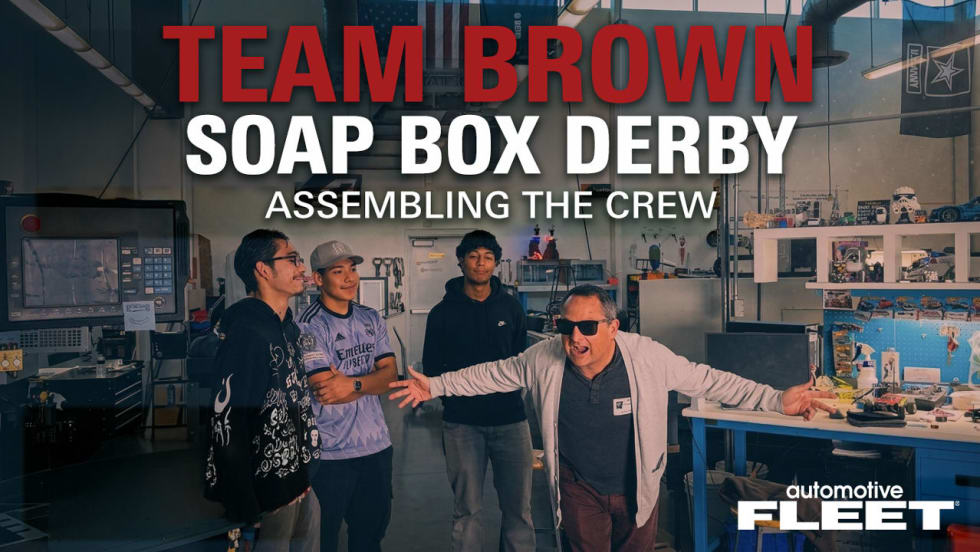
Soap Box Derby Challenge: Assembling the Crew
Meet Gabriel, Matthew, and Angel — the team helping bring this soap box derby build to life.
Read More →