





Related: The Pros & Cons of Centralized or Decentralized Fleet Operations
Finding Unity in a Decentralized Fleet
With more than 90 individual client fleets, CBRE, Inc., manages a highly decentralized fleet. But, with one eye trained on meeting individual needs and the other on running a high performing fleet, keeping its customers’ bottom line in mind is one key to continued success.
May 11, 2015
10 min to read
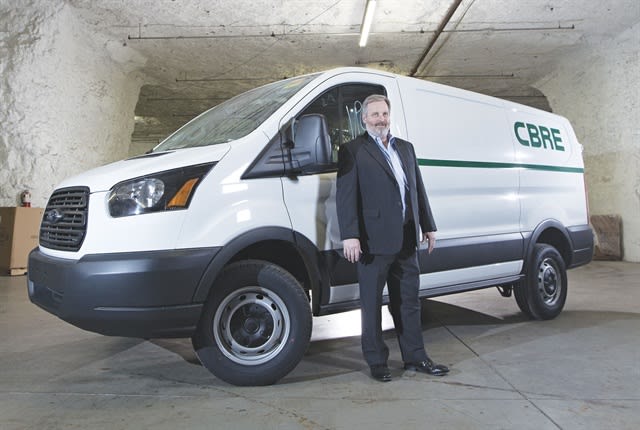
J.J. Keig, CAFM, corporate fleet manager for CBRE. Photo courtesy of Mike Tsai/4Honor Photography
A fleet in excess of 2,500 vehicles is a lot to manage on its own. Now, divide that fleet into more than 90 stand-alone fleets and spread them across the U.S. and Canada and Puerto Rico, and you have a snapshot of CBRE’s North American fleet operation.
And, it’s set up this way for a reason: One aspect of the global leader in commercial real estate’s operational portfolio is leadership in facilities management. Depending on the dynamics of the services required, often vehicles are required as a support function.
Each customer — for example, the owner of warehouses for retail goods — requires vehicles, which mobile engineers use to provide repair and maintenance to these facilities. Although these client-based fleets operate independently, CBRE provides corporate fleet guidelines and leadership.
With a highly decentralized fleet to manage, J.J. Keig, CAFM, corporate fleet manager for CBRE, Inc., must perform a balancing act — meeting corporate objectives while considering individual, client-based fleet interests. Managing at a corporate level, but granting autonomy to individual client-based fleets. CBRE has done this and more — while also employing effective maintenance, safety, and environmental programs.
Managing a Decentralized Fleet
What’s the secret to managing a highly decentralized fleet? According to Keig, it’s getting to know the people, not just the vehicles.
“Developing and maintaining relationships is one of the most critical aspects,” he said. “This is a subset of the larger picture to understand the unique and specific vehicle and upfitting needs that are required to support the services we provide to our clients.”
CBRE’s fleet portfolio includes sedans, ½-, ¾-, and 1-ton two-wheel-drive and four-wheel-drive pickup trucks, cargo vans, SUVs, and medium-duty trucks. Vehicles are carefully upfitted to meet the specific needs of the client that is being serviced.
“The needs of the vehicles assigned to our client accounts may vary as much as the accounts themselves,” Keig said. “CBRE takes great strides to customize the services we provide to each of our clients. As our clients have individual and unique opportunities, so must our fleet be tailored to support those needs. While we strive to suit vehicles to specific needs, we must also identify commonalities and thus economies of scale. This is one method that allows us to demonstrate and return value to our clients.”
Along with helping the overall fleet run more efficiently, client-based fleet administrators oversee their individual fleet at the local level.
“With a decentralized fleet, like ours, there are more stakeholders that are involved in the day-to-day management of the vehicles,” Keig said. “This requires that we empower each fleet administrator with generous latitude to self-manage the vehicles assigned to their specific client account.”
At the corporate level, CBRE manages the relationships necessary for vehicle acquisition and upfitting. The company also develops vehicle specs and lifecycle projections, vehicle maintenance parameters, a vehicle pool, all factory orders, and, when needed, out of stock purchases.
The individual fleets manage vehicle assignments, maintenance approvals that are above the threshold of CBRE’s leasing company, driver assignments, fuel card PIN numbers, and review of fuel transactions, telematics activities, compliance with driver training, and similar duties.
“We have developed a comprehensive list of roles and responsibilities that provide guidance and resources so that each client-based fleet administrator can manage their fleet as needed,” Keig said. “Client fleet administrators are provided resources that enables them to make the best decision that supports the objectives of our clients.”
Keeping Costs in Check
To keep costs in check, Keig appropriates the human resources mantra, “hire right, train right, treat right,” with a fleet-specific approach: “spec right, maintain right, and remarket right.”
“By creating proper maintenance guidelines and relying on the technical expertise of our leasing company’s maintenance department, we strive to perform preventive maintenance in a timely fashion with no unnecessary services. If repairs are needed, they are addressed immediately and reviewed thoroughly to ensure the highest degree of safety and vehicle integrity,” he said.
CBRE’s approach to maintenance is one of the company’s key cost-containment initiatives. Keig looks at it like this: Optimum maintenance practices support the lowest total cost of ownership while, at the same time, guaranteeing the highest level of safety and reliability.
“If a vehicle breaks down and results in a missed customer commitment, placed the driver in an unsafe situation, or resulted in a costly tow, which may have been due to inadequate or minimized maintenance practices, how much money was really saved?” he asked.
The cornerstone of any successful maintenance program is to read and understand the maintenance section of the owner’s manual, focusing on “fluid management;” one critical aspect of which is engine coolant, especially as it relates to diesel vehicles. Engine oil and transmission, transfer case, and axle fluids must all be managed appropriately to avoid either premature or delayed maintenance.
“As with many fleet operations, a perfect world would be a one-size-fits-all approach, especially from a driver’s perspective,” Keig said. “Unfortunately, when a fleet has a diverse fleet profile that spans a number of model years, this can result in needlessly complex variations.”
At a corporate level, CBRE also works closely with its maintenance management provider to take the complexity out of various maintenance schedules to make it simple for field operations.
One area that Keig has seen companies shed dollars has been with needless and unwarranted maintenance. To avoid being “upsold” these services, CBRE looks to its maintenance management provider as the first line of defense.
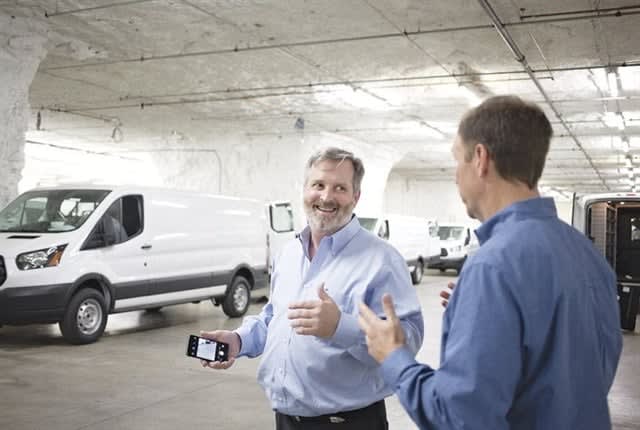
Keig, (left) sees to the varied needs of the company’s standalone fleets. Photo courtesy of Mike Tsai/4Honor Photography
“Once a service advisor realizes the maintenance of a fleet vehicle is managed by a professional, rather than the driver or someone at the field office or corporate office, this immediately eliminates a significant amount of upselling,” Keig explained. “Due to negotiated and national account pricing, a good maintenance management program should be able to pay for itself and then some.”
As an added bonus, maintenance management programs are able to provide extensive data details to identify where excessive maintenance dollars are spent, or if not enough maintenance is being realized, Keig noted.
“Too little maintenance can be as costly as too much maintenance. Both require investigation and correction,” he said.
The company also relies heavily on intelligent oil life monitoring systems that are becoming more prevalent on fleet vehicles.
According to Keig, “when these systems began to appear several years ago, they were quite rudimentary, indicating to change the oil by little more than mileage alone; however, the intelligent oil life monitoring systems found today’s vehicles monitor a wide array of critical engine, vehicle, and environmental inputs resulting in a robust and highly accurate communication to the driver.”
As a result, CBRE has a high comfort level in relying on these systems to know when to change the engine oil and filter, regardless of the length of time, mileage, or operational conditions. Relying on intelligent oil life monitoring allows the company to maximize oil change intervals, eliminating the potential of needless oil changes and saving time, money, and natural resources.
“From a cost perspective, it is unwise to change the engine oil and filter prematurely when the oil still has significant life left; however, it is equally important to not delay oil changes until after the oil life has been depleted,” Keig said. “From an environmental perspective, CBRE is extremely sensitive to pursue every opportunity to minimize unnecessary contributions to any waste stream.”
Ensuring a Safer, Better Fleet
While CBRE keeps a close eye on maintaining fleet vehicles, the company also cares for its employees by placing a premium on safety.
“Simply put, our employees are our most valuable asset. It is our duty to provide our employees a safe working environment, of which a company vehicle is a clear extension,” Keig said. “Vehicle safety is achieved in many different forms. If executed properly, the sum total can exceed the value of each component. A progressive and accountable culture can make the difference.”
The company’s first step toward a safer fleet goes back to the intended mission of the vehicle. Keig asks both what the vehicle will be used for and what could it be used for, noting that “it’s all about prevention.”
Keig continued, “It is critical to match the vehicle to its intended purpose and to take the necessary steps for securing cargo by utilizing appropriate vehicle configurations and upfitting. Unsecured cargo not only has the potential to damage tools, equipment, and the vehicle itself, but can also provide either a distraction to the driver or serious injury if the vehicle must brake harshly, execute an evasive maneuver, or is upset.”
To ensure driver safety, a number of factory options are selected when available, including lumbar adjustment for the driver’s seat, canopy side air bags, factory installed back-up cameras and back-up sensors, daytime running lights, and auto head lamps when wipers are activated. If purchasing a vehicle out of stock, these items are sought out or installed during the upfit process whenever feasible. Additional on vans typically include bulkheads, ergonomic ladder racks, non-slip floors, proper interior lighting, ensuring there is “a place for everything and everything in its place.”
Further, maintenance parameters include adherence to OEM maintenance schedules and ensuring any and all maintenance is performed by qualified professionals. The company also forbids deviation of tire size or rating and discourages the changing of spare tires by employees for multiple safety reasons.
CBRE also employs a robust and comprehensive online driver training program, with numerous modules that are presented throughout the year, each of which requires a score of 90 percent or greater to move on to the next module.
The company is also implementing a “Safety Is My Goal” motorist observation report program. This has a two-fold benefit, according to Keig. Foremost, it is preventive in nature. A driver is less likely to operate their vehicle in an irresponsible manner if he or she knows that it is easy to identify and report their vehicle.
The second element is accountability. Anytime inappropriate behavior is reported, it is immediately investigated and acted on. If patterns are detected, appropriate measures are taken. This is complemented by a GPS platform, which can also verify or disprove the arrival or departure of a vehicle from any specific property, and similar profiles.
“Strategic investments in safety are investments in the welfare of our employees and the company itself to provide the safest environment possible for the men and women who operate our vehicles each day,” Keig said. “This culture has an inherent benefit as our drivers understand that we are putting them first. This translates to safer employees with higher morale, better performance and stronger retention.”
Working at Carbon Neutrality
In addition to understanding how the company’s choices affect the individual employee, CBRE also accounts for how its actions affect the environment. With the goal of being as carbon neutral as possible, the company employs a number of environmentally friendly tactics, including reducing oil change intervals, utilizing low rolling resistance tires whenever feasible, considering alt-fuel vehicles, and rightsizing vehicles for the job.
According to Keig, rightsizing vehicles can offer a tremendous potential to reduce emissions.
“Verifying if a ½-ton pickup or van can adequately replace a ¾-ton model has produced excellent results,” he said. “Another opportunity is to consider a hybrid in the place of a conventional gasoline-fueled vehicle. These are some of the opportunities that we have successfully leveraged. Emissions notwithstanding, rightsizing also typically results in reduced capitalized and maintenance costs.”
Of course, this should never be forced so that the vehicle could be overloaded in some fashion.
Creating Successful Relationships
Although individual fleet vehicles are dispersed across two countries and are managed by more than 90 individual fleet administrators, CBRE has successfully implemented maintenance, safety, and environmental programs fleet-wide.
Again, Keig credits relationships for this success. “Get to know your stakeholders and understand the unique challenges that each market area, division, and region has,” he recommended to others managing a decentralized fleet. “In a best-case scenario it would make things very simple if a ‘one-size-fits-all’ approach could be embraced. However, reality tells us that there are often unique requirements that must be carefully understood and met to accommodate client needs, geographic, terrain, and other variables. This all goes back to relationships.”
Subscribe to Our Newsletter
More Operations

How Fleets Can Recruit and Train Veterans for Technician Roles
Here's how the technician shortage has affected uptime for fleets, and what to do about it.
Read More →
Avis Budget Group Deploys Neology Toll Management Technology Across Major Brands
Neology’s neoFleet platform will manage toll transactions and toll-authority operations for vehicles across Avis, Budget, Payless, Budget Truck and Zipcar.
Read More →
Fleet Personal-Use Charges Edge Higher in 2026
Nearly eight in 10 surveyed fleets allow personal use of company vehicles, while just over half of respondents report charging employees for the privilege.
Read More →
The Future of Fleet + What’s Changing Right Now | AF News Recap
Could developments overseas offer a preview of what’s coming for U.S. fleets? This week, we’re looking at the future of AI, autonomy, and electrification, plus Ford Pro’s new certified pre-owned program, smarter vehicle offboarding, and a new way for fleets to manage toll expenses.
Read More →
How to Handle Vehicle Offboarding
What do fleet managers need to do when a driver leaves?
Read More →
Sponsored•October 1, 2026
Fleet Manager’s Ultimate Playbook: Navigating the New Standard in OEM Connectivity
Rising operating costs, driver safety concerns, and unplanned downtime are putting unprecedented pressure on modern fleets. Discover how fleet managers use embedded OEM connectivity and real-time vehicle data to cut TCO, prevent downtime, and protect drivers without aftermarket telematics hardware.
Read More →
U.S. Bank Adds Verra Mobility Toll Management to Voyager Fleet Platform
The integration allows U.S. Bank Voyager fleet customers to manage toll payments and violations alongside fuel, EV charging and maintenance expenses.
Read More →
ADAS Prevents Crashes. But Repairs Cost More | AF News Recap
ADAS-equipped vehicles may crash less often, but they can cost more when they do. This week, we’re breaking down what that tradeoff means for fleets, plus Subaru’s first Forester Wilderness Hybrid, Nissan’s new e-POWER Rogue, and why Calstart has become Catalyst Mobility.
Read More →
Moventum Fleet Management Names Mark Iorillo Head of Sales
Iorillo brings nearly 20 years of fleet management and sales experience to the role, including previous positions at Element Fleet Management, CEI, Donlen and Ryder.
Read More →
Fleet Has a Talent Pipeline Problem. What Comes Next? | AF News Recap
Where will fleet’s next generation of leaders come from? This week, we’re looking at the industry’s talent pipeline, what certification can add to a fleet career, how to build an award-worthy track record, and the return of Automotive Fleet’s Personal Use Survey.
Read More →