





Related: OTD Goes Bad to Worse from Pre-Pandemic to Pandemic
Fewer Railcar Constraints but Transporter OTD Issues Persist
During the 2020 model-year, the fleet industry did not experience significant railcar-related issues as seen in past model-years. However, fleets did report transportation issues with car haulers and last-mile deliveries to the dealers.
September 29, 2020
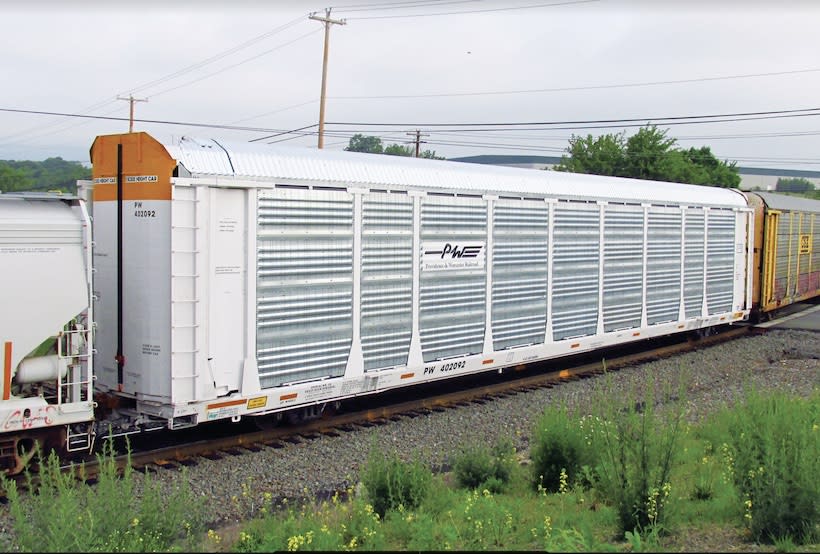
Photo: Flickr
6 min to read
Two perennial problems with the fleet order-to-delivery (OTD) process are those related to railcar and car hauler issues. However, the issues encountered in 2020 model-year orders were mixed. During the pre-pandemic period, there were fewer rail and transportation related delays than what was encountered in prior years. However, during the pandemic, there was an uptick in reported rail and car hauler issues.

Eric Miller
[EMPTY CREDIT]
“Before COVID-19 was declared a pandemic, there were minimal railcar and car hauler issues,” said Eric Miller, director – stock ordering & order fulfillment for Element Fleet Management.
LeasePlan USA also reported fewer rail-related delays in the 2020 model-year. “This year, we did not experience the rail-related issues we have seen for the past several years. We did, however, see transportation issues with the car haulers and last-mile deliveries to the dealers. Once production restarted in May 2020 following the COVID-19 shutdowns, we saw a few delays that included holds for quality checks, as well as bottlenecks due to railcars and trucks operating at full capacity. As production returned to pre-shutdown levels, these delays have since corrected themselves,” said Billy Nation, manager, vehicle acquisition for LeasePlan USA.

Billy Nation
[EMPTY CREDIT]
Following the declaration that COVID-19 reached the level of a pandemic and the subsequent temporary suspension of new-vehicle production there emerged additional disruptions with rail deliveries. “Due to the shutdown of production at Ford, FCA, and GM, railcars sat empty awaiting plants to produce inventory. Upon inventory becoming available, it took a few weeks to get back to sufficient levels to provide steady flow. It also took carriers a few weeks to bring back their furloughed employees,” said Miller of Element.
Other fleets likewise reported significant delays to OTD during the pandemic attributed to railcar issues. “Unfortunately, railcar shortages once again hampered the vast majority of the auto industry for the 2020 model-year, resulting in some significant delays at times,” said Ted Davis, vice president, North American supply chain for ARI.
Rail Logistics Constraints
Railroads are the primary long-distance transporter of finished automobiles. Despite the high volume, the auto industry makes up only 3% of all railroad business. As a result, automotive OEMs are competing for constrained rail resources against much larger users, such as coal shippers, agricultural users, or multi-modal shipments.

Angie Lauer
[EMPTY CREDIT]
“OEMs continue to compete against other industries that are also trying to move commodities and resources across the country via rail,” said Angie Lauer, assistant vice president of vehicle acquisition for Enterprise Fleet Management.
Railway chokepoints are another cause of railway congestion, in particular in metro areas with high rail traffic, such as in Houston, Richmond, Va., and Chicago. For instance, one quarter of all rail freight passes through Chicago since six of the biggest North American railroad company networks intersect there.

Ted Davis
[EMPTY CREDIT]
“At ARI, we continue to adjust accordingly to account for the bottleneck on the rails and communicate regularly with our supply chain partners to ensure we have visibility to any issues on the horizon. This ongoing dialogue helps us stay ahead of disruptions in the supply chain and allows us to implement contingency plans that minimize business impact,” said Davis of ARI.
Railroads transport new vehicles in specially designed fully enclosed railcars that have ether two or three levels within them. Called bi-level or tri-level autoracks, these enclosed railcars protect vehicles from damage while in transit.
The key reason for railcar constraints is the limited number of railcars that can accommodate the transport of larger sized trucks and high-roof vans, which are becoming a higher percentage of fleet orders. Bi-level railcars are needed to ship medium- and high-roof vans. These vehicles are too large for tri-level railcars.
“Railcar shortages continue to cause delays, especially near the end of the calendar-year. The greatest impact is for the special bi-level or single level rail cars needed to transport mid- and high-roof vans,” said Lauer of Enterprise Fleet Management.
In prior years, tri-level railcars were more common, transporting passenger cars on three levels within a single railcar, but with the increased volume of trucks and high-roof vans, they now require the additional space provided by bi-level railcars, which, as a consequence, carry fewer total vehicles.
A less frequent cause of rail-related OTD issues is when a train accident occurs. “In late July 2020, there was a freight train that derailed and caught fire in Tempe, Ariz., damaging a rail bridge and causing it to be inoperable. This impacted OTD times for vehicles going into or through that area,” said Lauer of Enterprise Fleet Management.
Another area of congestion were at ports receiving imported vehicles. “Many ports are starting to see increased traffic and volume as 2020-MY production closes and 2021-MY ordering begins,” said Lauer.
Uptick in Car Hauler Issues
One beneficiary of the rail congestion has been the auto carrier industry. An auto carrier (also known variously as a car hauler, car-carrying trailer, or auto transport trailer) is a type of trailer or semi-trailer designed to transport vehicles via truck.
“We’re seeing a growing number of customers move towards turn-key delivery solutions provided by driveaway vendors to avoid potential delays due to OEM logistics,” said Davis of ARI.
While there is an additional cost to move finished vehicles long distances by truck, it is less expensive than having vehicles sit stranded waiting for rail pickup, but there are also constraints found in the car hauler business segment.

Tim Cengel
[EMPTY CREDIT]
“A shortage of over-the-road drivers for truck carriers also influenced OTD performance in 2020,” said Lauer of Enterprise Fleet Management.
Wheels likewise cited issues with car haulers before the pandemic. “We were impacted by car hauler issues that delayed the pickup of vehicles from the upfitters or from railyards and ramps,” said Tim Cengel, senior procurement manager for Wheels Inc.
Concurring with this assessment was Merchants Fleet. “The impression of transportation delays is still being blamed on lack of railcars from years past,” said Candice Groth, director of operations, fleet acquisitions for Merchants Fleet. “From what I have been told, researched, and read, there is a significant lack of experienced car hauler drivers to keep vehicles moving to final destinations. Some OEMs made changes allowing third-party driveaway services to deliver vehicles from the VDC (vehicle distribution center) to dealerships.”

Candice Groth
[EMPTY CREDIT]
With the restart of production in May 2020, the key delivery issues were with transporters. But these disruptions were short-lived once vehicle assembly production hit its stride. “In mid-May, once the assembly plants reopened, we saw vehicles move through the system faster than expected. It took some time to get vehicles built, but once they were in transportation they moved quickly,” said Cengel of Wheels.
The final destination of the fleet delivery process are dealers, where delays occur due to late communication of a vehicle’s arrival or driver reluctance to go to the dealership to pick up their replacement vehicle due to contagion fears.

Matt Miller
[EMPTY CREDIT]
“The logistics and transport network timeframes had seemed to level off prior to COVID. They still were trending a bit longer, but at least they were relatively consistent,” said Matt Miller, vehicle status specialist for Donlen. “Once the plants opened and product started moving again it seemed like most of the congestion was at the end destination ramps. Most of those issues were due to intermittent shortages of available truck drivers and equipment to haul the last leg of the journey to the final dealers.”
However, earlier improvements implemented by OEMs were paying off during the 2020 model-year ordering.
“Both pre- and post-factory shutdowns, Merchants Fleet experienced better than previous years order-to-delivery timeframes on many vehicle models. This is the first full year fleet is benefiting from many improvements the OEMs have made to transportation practices.” said Groth of Merchants Fleet. “As soon as the factories started back up and vehicles rolled off the line again, we were able to continue to report back to our clients no significant delays in order-to-delivery processing. There was a tremendous effort by OEMs during the shutdown to continue to allow car haulers to load and deliver vehicles to end destinations. This helped with vehicles that required upfit and also keep deliveries moving in areas where businesses/dealerships were open.
Subscribe to Our Newsletter
More Operations

Fleet Has a Talent Pipeline Problem. What Comes Next? | AF News Recap
Where will fleet’s next generation of leaders come from? This week, we’re looking at the industry’s talent pipeline, what certification can add to a fleet career, how to build an award-worthy track record, and the return of Automotive Fleet’s Personal Use Survey.
Read More →
Smith System Launches Driver Risk Management Program
Fleets have more driver data than ever, but identifying risky behavior doesn't necessarily correct it. Smith System's new Driver Risk Management program combines monitoring, training, and follow-up coaching to help fleets connect risk signals with driver intervention.
Read More →
Automotive Fleet Opens 2026 Personal Use Survey for Commercial Fleet Managers
Less than two weeks left! Commercial and corporate fleet managers are invited to share how their organizations handle company vehicle personal-use policies, charges, and driver eligibility.
Read More →
From AI Prompts to AI-Generated Safety Songs | AF News Recap
Can better prompts make AI more useful for fleet managers? This week, we’re breaking down smarter fleet analysis, an AI-assisted experiment that turned safety training into music, and what happened to fuel prices in August.
Read More →
How to Write Better AI Prompts for Fleet Analysis
Include these six elements in your fleet prompts to generate more relevant analysis and accurate answers.
Read More →
Fleet Meets: Eric Kilgore
This edition of the Fleet Meets series features one of the industry's best leaders driving multi-market and national operations.
Read More →
Why Reactive Fleet Management Is Becoming Too Expensive to Sustain
Research highlights a growing need for proactive management strategies to address rising costs in fleet operations effectively.
Read More →
Sponsored•August 12, 2026
What Your Fleet KPIs Aren’t Telling You
Tracking fleet metrics is only useful when the data leads to better decisions. This guide helps fleet leaders assess cost, utilization, and downtime more accurately, identify performance gaps, and prioritize the actions that can improve operational results.
Read More →
Sponsored•August 7, 2026
Hidden in Plain Sight: Fleet Compliance Risks
Fleet compliance isn't just about having policies — it's about consistently enforcing them. This practical guide reveals six hidden compliance risks common in public sector and shared fleet operations and outlines proven strategies to improve visibility, accountability, and audit readiness
Read More →
Turning Fleet Payment Data into Executive Insights
Does data alone drive results in operations?
Read More →