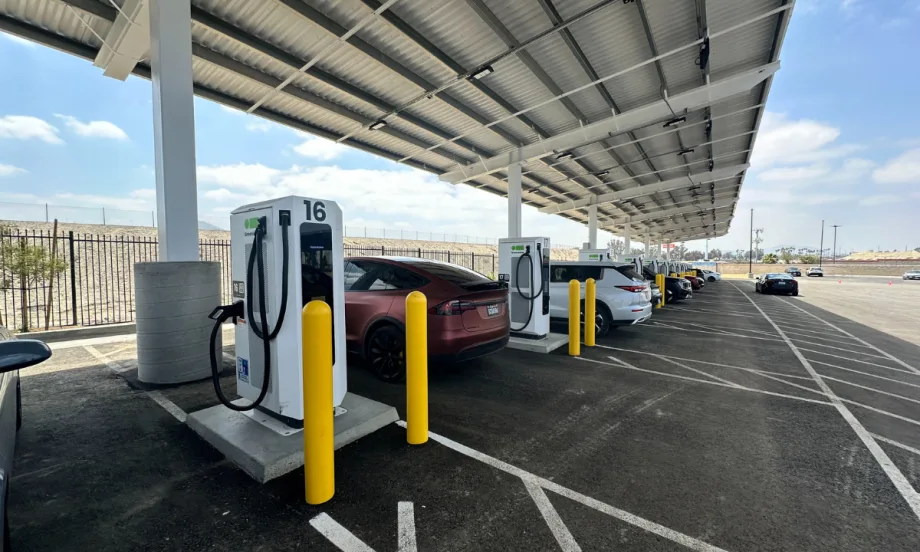
So far, only 6% of the charging sessions in the EVC dataset are DC, though that percentage has increased over the last year and is expected to grow.
Photo: Chris Brown
3 min to read
For fleets transitioning to electric vehicles (EVs), charging infrastructure is the foundation that supports successful operations.
Ad Loading...
Insights from Utilimarc’s Electric Vehicle Consortium (EVC), which aggregates real-world EV data from member fleets, show how charging speeds and types are deployed for optimal operational efficiency.
Ad Loading...
The analysis is gleaned from 260,346 charging sessions since 2023, a driver sentiment survey conducted in June 2024, and a roundtable on charging infrastructure.
Among EVC members, Level 2 chargers are the workhorses of the charging ecosystem; 68% of all charging sessions use a Level 2 charger. The most common power levels are 6 kW and 11 kW, which strike a balance between speed and cost-effectiveness. Members have found that Level 2 charging at fleet depots works well for vehicles with predictable overnight dwell times.
For situations where faster charging is necessary — such as during shift changes or when vehicles are on mission-critical routes — members are strategically placing DC fast chargers (DCFCs). These higher-powered units ensure vehicles can get back on the road quickly, but come with significantly higher installation costs. So far, only 6% of the charging sessions in our dataset are DC. A small number, but it’s increased over the last year, and we expect to see even more deployed in the near future.
Charging infrastructure projects are long-term investments requiring careful planning and strong utility partnerships. To avoid costly retrofits, whenever possible, EVC members are incorporating larger conduits and additional electrical capacity into current construction projects, even if the need isn’t immediate. This forward-thinking approach reduces future installation costs and accelerates the deployment of additional chargers as fleet electrification ramps up.
Innovation and creative thinking are also playing a role in a successful charging infrastructure strategy. Several members have deployed portable solar chargers and mobile charging units to address charging gaps in remote or temporary locations. These flexible solutions are particularly useful for emergency response fleets, field crews, and seasonal operations where permanent infrastructure may not be practical.
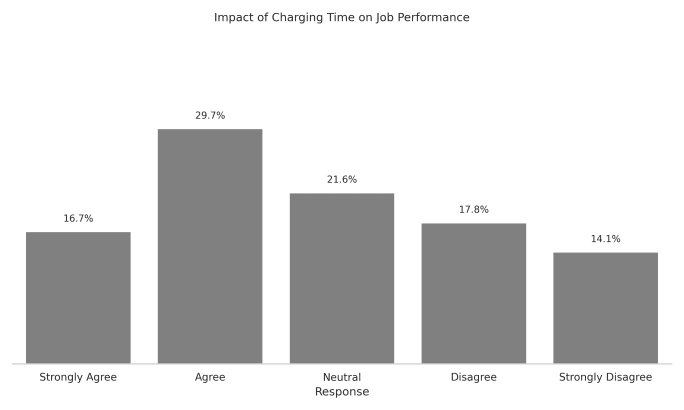
Over 46% of respondents agreed or strongly agreed that the amount of time required to charge EVs does not impact their ability to do their jobs.
Data: Electric Vehicle Consortium
Driver Sentiment: Insights Into Charger Availability
The EVC’s 2024 driver sentiment survey indicates that drivers value charger availability just as much as charging speed. Both were documented concerns in the survey.
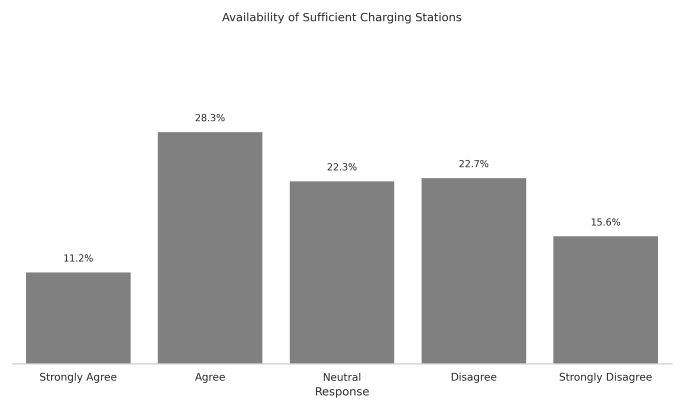
Over 38% of respondents disagreed or strongly disagreed that they had access to a sufficient number of charging stations.
Additionally, 32% of respondents reported that time spent charging got in the way of doing their jobs. Persistent challenges like limited station availability, slow charging speeds, and out-of-service units risk undermining driver confidence in EV adoption.
Ad Loading...
To alleviate driver concerns and expand charging opportunities, some EVC members are taking a proactive approach by implementing home charging policies and reimbursement programs, making it easier and more convenient for employees to charge their vehicles.
These initiatives not only improve the driver experience but also allow organizations to take advantage of lower residential electricity rates and increase the availability of company-owned charging stations for broader fleet use.
Over 38% of respondents disagreed or strongly disagreed that they had access to a sufficient number of charging stations.
The Electric Vehicle Consortium brings together fleet professionals, data analysts, and sustainability administrators to collaborate on solving the unique challenges of fleet electrification. Our members benefit from real-world data insights, collaborative research, and a strong peer network.
Fleets or vendors interested in joining or sponsoring can contact evconsortium.org to learn more.
New one-day registration gives fleet professionals the flexibility to attend Tuesday, Wednesday, or Thursday, with passes available for $199 through Sept. 18.
Five fleet professionals — none with programming skills — discuss how they’re using AI to build fleet solutions in-house and in a fraction of the time.
This session will examine succession planning, knowledge transfer, and the skills the next generation of fleet leaders will need as veteran professionals leave the industry.
The CoMotion founder will draw on developments across Europe, China, the Middle East, and other international markets to identify trends that could influence how U.S. fleets plan for the coming decade.
A new Automotive Fleet webinar explores how fleet managers are using AI and vibe coding to automate routine work and create simple operational tools without traditional programming skills.