




EV Resale Values Hard to Predict
"Black Book"’s Ricky Beggs noted that electric vehicle resale values are being impacted by rapidly advancing powertrain technologies.


Despite the growing popularity of electric vehicles among fleets, there are still unknowns when adding them to a fleet’s vehicle lineup, including their long-term resale values, according to Ricky Beggs of "Black Book."
Fleets are increasingly testing electric vehicles (EVs) to determine their real-world applications, but large-scale adoption has yet to occur. One reason fleets are holding back has to do with the unknowns regarding EV residual values.
As both electric-vehicle and traditional gasoline-powertrain technologies change, becoming more efficient every year, predicting what the residual values of electric vehicles will be a few years from now presents a challenge. Complicating matters further, according to "Black Book"’s Vice President and Managing Editor Ricky Beggs, is that end-user demand isn’t the core driver of EV design; regulation is, specifically meeting the federal government’s upcoming CAFE standards.
“There is a lot of hype and talk about EVs,” Beggs said. “It’s all being driven by CAFE requirements and about average corporate fuel economy that manufacturers have to meet. I think they get a certain number of credits for hybrid and EV units even if they don’t meet those units. If gasoline was sitting at $5 per gallon and staying there, we would have a different perspective, but that’s not where we’re at. The price of gasoline is holding interest [in EVs] back right now.”
Beggs cited range as a key challenge for most EV buyers, both fleet and consumer. He noted the Chevrolet Volt stands out in terms of range, but that other models still induce “range anxiety” in drivers. Still, there are potential savings from reduced fuel costs that an EV (including hybrid models) can provide.
“As a consumer, if you were driving a gasoline-engine car, and you achieved 20 mpg, based on 20,000 miles driven per year at $3 per gallon, and you jump to a 25 mpg car, the same number of miles and price of gasoline, you’re only going to save $770 per year,” Beggs said. “If you’re a fleet with 500 cars, and you go from 20 mpg to 25 mpg, that’s $385,000 per year.”
Even with those cost savings, the inability to predict relatively accurate residual values is a major problem that affects the potential popularity of EVs.
“There is really no historical data to look at,” Beggs said. “When we project residuals at Black Book, we look at how much technology will be out in two or three years. Will that new technology affect the value of the vehicle two to three years from now? If you can get 40 miles on a charge now, what if a new model of a vehicle comes out that costs less than the current model does today, but gets 90 miles per charge?”
Navigating the Unpredictable EV Market
Unpredictable residual values mean higher costs associated with leasing, which many commercial fleets use to keep costs down.
“If a fleet wants to do this as a closed-end lease, the leasing company has to take the risk, so they will have to lower the residual,” Beggs said. “If the fleet does it as an open-end lease, it will have to take the risk. There are all sorts of scenarios you have to look at.”
Beggs said the fuel economy of late-model mid-size cars is another issue that reduces the residual values of EVs and hybrids.
“Look at the fuel economy those vehicles are getting today,” Beggs said. “It’s not the subcompact getting 40 mpg; it’s the mid-size car. There are pretty nice cars getting mpg into the high 30s.”
Beggs said Black Book does believe more types of EVs will be coming to market in the years to come, primarily for one inescapable reason: regulations.
“If you just look at the 2012 models, there are eight new hybrids from that year that weren’t in 2011,” Beggs said. “Are they high volumes? No, they’re not high volumes. For example, with Toyota’s RAV4 EV, there are only 1,100 coming out over the next three years. I see more and more hybrids coming into play, because it helps the automakers meet CAFE standards.”
Although there are still many unknowns regarding EVs, ultimately there won’t be that many EVs coming back onto the market as used vehicles in the next few years, according to Beggs, citing current sales figures for all three types of electrified vehicles.
More Green Fleet

Merchants Fleet Reports 290M EV Miles as Fleets Navigate Changing Electrification Market
From millions in operating savings to hundreds of millions of EV miles, Merchants Fleet’s latest report reveals what’s working and what’s changing in fleet electrification.
Read More →
The EV Breakdown Nobody's Talking About: Why Most Electric Vehicle Roadside Calls Aren't Mechanical Failures
Here's why EV breakdowns are widely misunderstood.
Read More →
ChargePoint Now Available in Energy Pass
ChargePoint and additional planned charging network integrations were added to GM's Energy Pass.
Read More →

First Look: Slate Auto's Electric Fleet Pickup
Could an affordable, modular EV pickup make electrification more practical for fleets?
Read More →
Slate Debuts Colorful, Unique EV Models
A recent media and client event, studded with electric vehicles dressed up on platforms, planted a new position for the manufacturer in the wider EV market. Fleets will find cost-saving advantages.
Read More →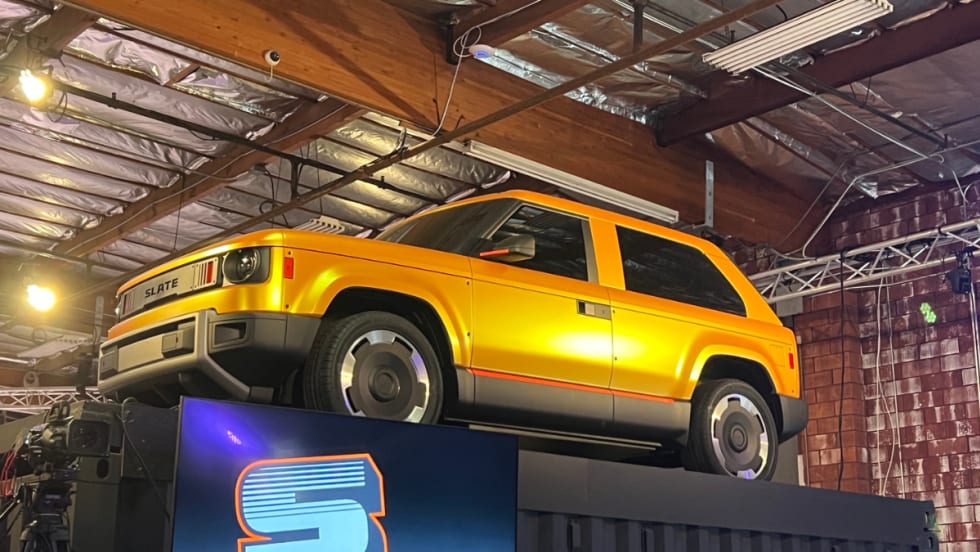
Slate Electric SUV, Pickup Switchable Model Aims For Light-Duty Fleets
Everything about this EV is counterintuitive and understated, making it stand out from the crowd.
Read More →
Inspiration Mobility Acquires Key Electrada Assets
Inspiration Mobility Group has acquired select assets of Electrada, adding the fleet electrification provider's team, technology, and charging infrastructure development capabilities to its energy management business.
Read More →
Turning Connected Vehicle Data Into Decisions That Matter
Fleet leaders have more data than ever, but turning that data into clear, actionable decisions remains a challenge. This white paper shows how leading organizations are using connected vehicle data to improve safety, reduce costs, and optimize fleet performance. Learn how to turn insight into action across your fleet.
Read More →
Are You Tracking Your Fleet's True Total Cost of Ownership?
Bobit Business Media surveyed 190 fleet professionals and found that while most fleets are tracking costs, fragmented systems and data gaps are keeping true TCO visibility out of reach. With rising pressure to control spend in an increasingly volatile environment, the gap between what fleets think they know and what the data actually shows is wider than you might expect. See how your peers are managing costs today and where the industry still has room to improve.
Read More →