




European Fleets Respond to New Emissions Standards
Fleet registrations in the European Union saw record breaking numbers in August, bolstered by the Worldwide Harmonised Light Vehicle Test Procedure (WLTP) deadline, which is a new required measurement of fuel consumption and CO2 emissions from passenger cars and light commercial vehicles, as well as their pollutant emissions, effective Sept. 1.

The WLTP requires manufacturers to ensure that passenger cars and new light commercial vehicles, weighing roughly less than 26,455 pounds, meet a new required emissions standard before they are able to legally sell the vehicle in Europe, and it went into effect at the beginning of September.
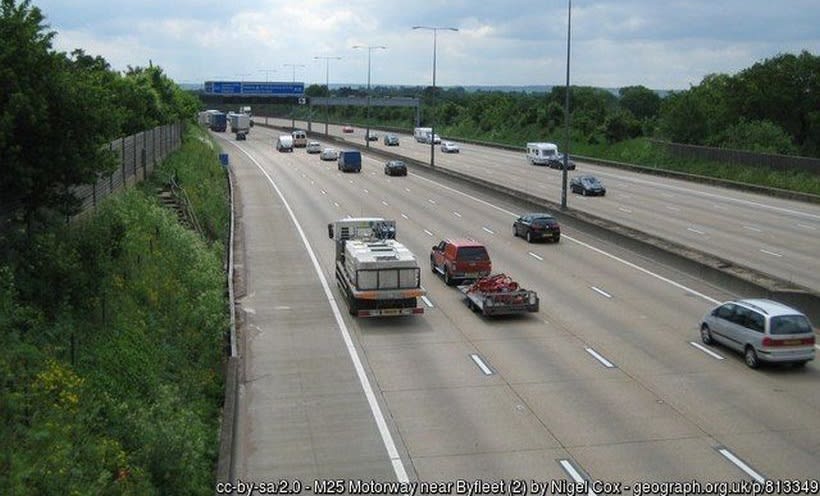
Photo of a highway near Byfleet, England, courtesy of Nigel Cox via Wikimedia Commons.
Fleet registrations in the European Union saw record breaking numbers in August, bolstered by the Worldwide Harmonised Light Vehicle Test Procedure (WLTP) deadline, which is a new required measurement of fuel consumption and CO2 emissions from passenger cars and light commercial vehicles, as well as their pollutant emissions, effective Sept. 1.
The WLTP requires manufacturers to ensure that passenger cars and new light commercial vehicles, weighing roughly less than 26,455 pounds, meet a new required emissions standard before they are able to legally sell the vehicle in Europe, and it went into effect at the beginning of September, according to Volkswagen.
However, many manufacturers have not been able to reach the WLTP deadline, which caused the huge increase in August registrations, because, prior to Sept. 1, vehicles were sold under the New European Driving Cycle (NEDC), according to Dataforce. The previous standard was created in the 80s and followed a more antiquated perspective that was criticized as understating emissions.
“Given these circumstances there were only two feasible options for manufacturers and importers: either to register the car until the end of August or to store them temporarily until the testing procedures has been fully completed,” said Christian Spahn, account manager international for Dataforce.
This adjustment to emissions standards means that multinationals fleets with operations in Europe who haven’t yet been impacted by the new requirements should assess their handling of the vehicle acquisition process.
“We will be working very closely with our fleet leasing company to ensure our vehicle grading policy stays up-to-date as new fuel consumption figures are released,” said an anonymous global fleet manager. “We plan to run a Pan-European auto manufacturer RFP once we gain some clarity around the WLTP. This RFP will allow us to see which manufacturers are best prepared for the new WLTP testing, and how we can minimize our TCO under the new criteria.”
The WLTP was created as a global test cycle across different world regions, so pollutant and CO2 emissions as well as fuel consumption values would be comparable around the world, according to WLTP Facts.
“Now the new WLTP measurement of testing is in place, the key strategy is to maintain a strict stance on C02 levels whilst considering different drivetrains (electric, diesel, plug-in electric hybrid, petrol etc),” according to Alphabet International. “The introduction of different drivetrains will accelerate the overall pollution reduction strategy even further, rather than just focusing on a more limited C02 target of the past.”
More Global Fleet
GeoFencing Adds to Your Truck Security Arsenal
Geofencing is a familiar fleet tool today, but its early adoption marked a major shift in vehicle tracking, route monitoring, and the debate over employee privacy.
Read More →
Holman Takes Full Ownership of ARIZA in Mexico
Holman is bringing its Mexican fleet management operation fully under its own brand after more than 30 years as a joint venture. The change gives multinational fleet customers a single Holman operation across the U.S., Canada, and Mexico.
Read More →
5 Tire Maintenance Tips to Help Prevent Work Truck Downtime
Regular tire checks can do more than extend tread life. These five maintenance practices can help work truck fleets catch problems early, reduce costs, and prevent downtime.
Read More →

Proven Ways to Reduce Work Truck Downtime
The age-old problem of downtime will always be a reality, but with new strategies at hand, fleets have more ways to keep trucks on the road longer.
Read More →


Cameras, Safety and Insurance: From Reactive Claims to Real-Time Prevention (Part 2 of 2)
Part Two: Commercial auto remains one of the most challenging and costly lines of coverage for fleet operators and insurers alike. Continue learning more about how to effectively address these issues from Onur Aksan, Enterprise Business Development Executive, Geotab
Read More →
Cameras, Safety and Insurance: From Reactive Claims to Real-time Prevention
Commercial auto remains one of the most challenging and costly lines of coverage for fleet operators and insurers alike. Learn more about how to effectively address these issues from Onur Aksan, Enterprise Business Development Executive, Geotab.
Read More →
Fleet Costs Are Rising: Here’s How Leaders Are Responding
Fleet leaders are under pressure to reduce costs, adapt to economic uncertainty, and make smarter decisions. See how peers across North America are responding with real data, proven strategies, and forward-looking insights. Download the 2026 Market Pulse Report to benchmark your strategy and uncover where you can gain an edge.
Read More →
Enterprise Fleet Management Surpasses 900,000 Vehicles in U.S. & Canada
Enterprise Mobility connects with mobility solutions around the globe
Read More →