




This article appeared in the 2021 Connected Fleet Guide, which offers resources to turn connected car data into actionable insights to foster safer and more efficient fleets.
Employing Essential Data for an Effective Electrification Program
Fleets can get the most out of their EVs by ensuring they have the right data to keep them running efficiently and effectively.
by Staff
October 20, 2021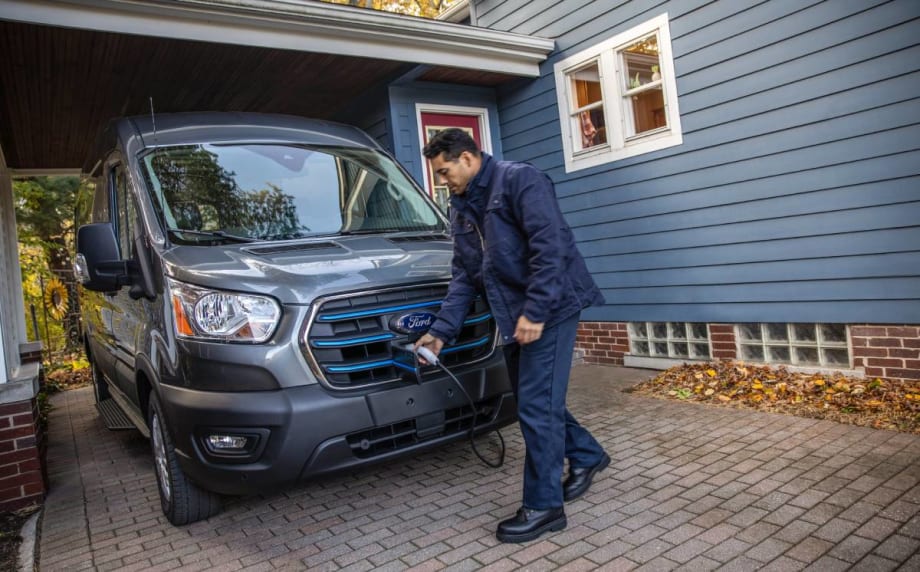
The 2022 Ford E-Transit will be charged at the depot, on the road, and at drivers’ homes. In these varied environments, fleet operators need data and context around state of charge and energy consumption, as well as whether the vehicle is in operation, on a charger, or parked for the night.
Photo: Ford Motor Co.
5 min to read
The world has changed in many ways over the past year, with the surge toward vehicle electrification taking many in the industry by storm. In a short time, many OEMs are predicting a full slate of electric vehicle models, with some pushing for all-electric in less than a decade. But before you run, you need to walk, and in the case of EVs, you need to learn how to effectively manage your vehicles as well as your charging infrastructure.
In all, OEMs are either producing or have announced production of more than 119 EV models, an increase of 24% from one year ago, according to the State of Sustainable Fleets 2021 report. The mass production of EVs will inherently bring down costs on not only the vehicles, but the components as well, especially batteries — the lifeblood of the EV movement. Improvements in energy density will also help speed up acceptance, as range anxiety is one of the top concerns for many fleets looking to make the transition.
“Commercial customers are practical,” said Michelle Moody, marketing director for Ford Commercial Solutions, during a session at this year’s Data Driven Experience. “Battery-electric vehicles need to be the right tool to get the job done and they need to provide the lowest total cost of ownership to win at scale.”
EVs have a bit of an advantage over internal combustion engines. With 30% less parts and reduced maintenance time, fleets will get more out of their vehicles and see a drop in TCO (total cost of ownership).
A Surge in Infrastructure
According to the U.S. Department of Energy’s Alternative Fueling Station Locator, there are more than 43,000 EV stations with a little over 106,000 chargers in the country, from coast to coast. Of those, approximately 5,200 stations also offer fast chargers — something that more fleets will need to get the EV ball rolling at a faster rate.
“Charging infrastructure is growing,” said Moody. “Charging capacity is growing, the speeds are increasing, and it’s beginning to grow beyond where we've seen a high concentration of interest in places like California, to more cities, as everyone begins to think about how to improve air quality and reduce carbon emissions.”
And with all the smart technology baked into almost all emerging technologies, there is a lot of information available to the fleets that are savvy enough to utilize it.
Understanding the Data and What’s ‘Driving’ It
Electric vehicles offer a wide range of benefits as well as challenges, which can include understanding each vehicle’s state of charge and how your drivers and their behavior can affect this.
“In order to operate a fleet like this you need data and real context around your state of charge, whether the vehicle is in operation, on a charger, or parked for the night,” said Moody. “You need to understand energy consumption and driver behavior so that you can optimize your vehicle range.”
A keen understanding of charging infrastructure is also important: Where are they located? How do you pay for charging? How will drivers be reimbursed? This is much different than fueling a gas- or diesel-powered vehicle, which is why you must properly manage these elements to get the most out of your electrified fleet. The weather can also affect charging schedules, and chargers can be programmed to precondition an EV each morning, such as warming the internal cabin on cold, wintery mornings. This allows the vehicle to get the most out of its overnight charge, as it is still “fueling” while it preps for the day.
The location of the charger can also determine the best time — or times — to recharge the vehicle. Working with your infrastructure solution provider can help when not only planning the installment of chargers, but how to gain better insight into the data that can help develop your charging strategy. Energy usage reports give fleet managers a better understanding of which EVs need the most charging, what times are most effective for charging, and how to maximize each vehicle’s usage and support continual uptime.
Notifications can also be set up so that fleet managers can alert the driver if they need to take certain actions to ensure their vehicle gets a full charge and can support their planned — or unplanned — daily routes. The last thing a fleet manager needs is a call from a driver that his or her EV ran out of “gas.” These alerts can also help drivers locate a charger in an emergency situation.
“Notification alerts will be really a critical part of the user experience,” said Moody. “And then you're going to need to know if the vehicle wasn't plugged in. Did the driver arrive home at night, kids come running out with an exciting story and forget to plug the vehicle in?”
Ford will provide fleets tools to optimize range including alerts when the vehicle is low on charge or not charging when you expect as well as a live map with graphical overlay for the real-time range of the vehicle and Ford Blue Oval charge network locations.
To properly manage and enhance range, fleet managers need a keen understanding of the distance each vehicle drives on a daily basis. For some, this might be easy, since their drivers have dedicated routes each and every day. Or, in terms of last-mile delivery fleets, there is an area they cover that can be used to calculate the routes.
But other factors can impact range, including the temperature and weather, as well as any load a vehicle could be carrying, which in some cases could include towing a trailer. The geography each driver must cover, whether hilly or flat, can also affect vehicle range.
Understanding driver behavior can also influence EV range. For example, an aggressive driver who brakes or accelerates aggressively can further reduce range. And while idling in an EV does not have negative environmental consequences, it can unnecessarily reduce battery range. Monitoring driver behavior through telematics solutions will be an important tool for fleet managers when attempting to optimize vehicle range.
Doing Your Homework
Beginning any fleet-focused program starts with good, solid research, not only in terms of vehicle and infrastructure selection, but vehicle monitoring as well. Before dipping your toes into the vehicle electrification pond, make sure you perform your due diligence and prepare yourself, your drivers, and your fleet for the next steps.
Subscribe to Our Newsletter
More Green Fleet
Sponsored•October 1, 2026
New Propane Autogas Program Offers Fleet Compensation
Qualified commercial fleets can receive $7,500 per eligible propane autogas vehicle and up to $10,000 for new refueling site prep. Learn how the program works and see whether your fleet qualifies.
Read More →
EV Charging Use Is Outpacing Infrastructure Growth
ChargePoint’s 2026 Charging Forward Report points to rising charger use, higher-powered charging, commercial vehicle electrification, and energy-management technology. Here’s what fleets should know.
Read More →
Merchants Fleet Reports 290M EV Miles as Fleets Navigate Changing Electrification Market
From millions in operating savings to hundreds of millions of EV miles, Merchants Fleet’s latest report reveals what’s working and what’s changing in fleet electrification.
Read More →

The EV Breakdown Nobody's Talking About: Why Most Electric Vehicle Roadside Calls Aren't Mechanical Failures
Here's why EV breakdowns are widely misunderstood.
Read More →
ChargePoint Now Available in Energy Pass
ChargePoint and additional planned charging network integrations were added to GM's Energy Pass.
Read More →

First Look: Slate Auto's Electric Fleet Pickup
Could an affordable, modular EV pickup make electrification more practical for fleets?
Read More →
Slate Debuts Colorful, Unique EV Models
A recent media and client event, studded with electric vehicles dressed up on platforms, planted a new position for the manufacturer in the wider EV market. Fleets will find cost-saving advantages.
Read More →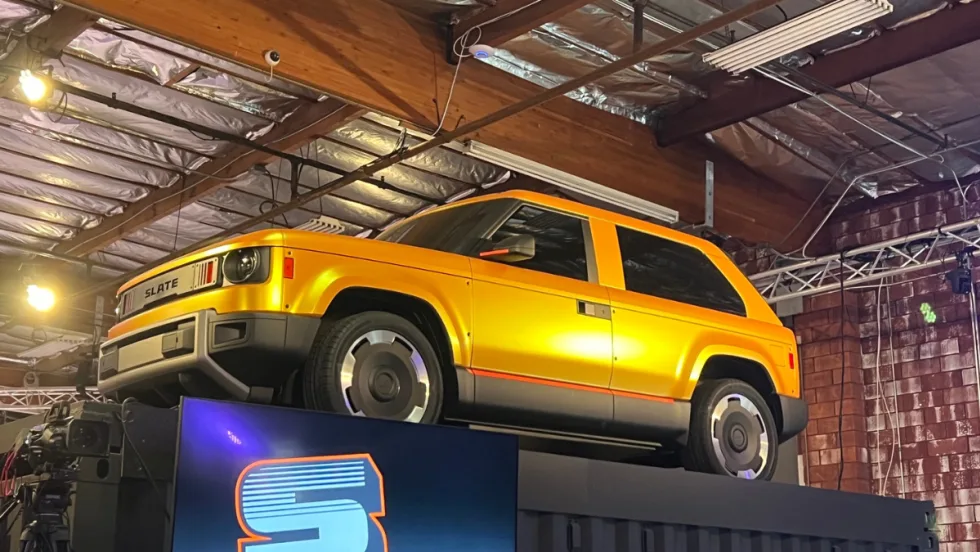
Slate Electric SUV, Pickup Switchable Model Aims For Light-Duty Fleets
Everything about this EV is counterintuitive and understated, making it stand out from the crowd.
Read More →
Inspiration Mobility Acquires Key Electrada Assets
Inspiration Mobility Group has acquired select assets of Electrada, adding the fleet electrification provider's team, technology, and charging infrastructure development capabilities to its energy management business.
Read More →