




Electrifying Transportation in North Carolina
Centralina Clean Fuels Coalition is paving the way for electric vehicles in the greater Charlotte region.
As electric vehicles hit the market in increasing numbers, Jason Wager and Emily Parker of the Centralina Clean Fuels Coalition (CCFC) are helping fleets plug in and charge up. CCFC, one of North Carolina’s two U.S. Department of Energy (DOE)-designated Clean Cities coalitions, is working with public- and private-sector partners to deploy electric vehicles; plan for charging infrastructure; and educate fleets and consumers about the associated benefits, challenges, and opportunities of electrification.
“We’re making steady progress through a lot of thoughtful planning,” said Wager, who has led the coalition since 2000. “We’re looking closely at what’s working elsewhere before we invest our resources, and we’re making sure that our infrastructure deployment is commensurate with market demand.”
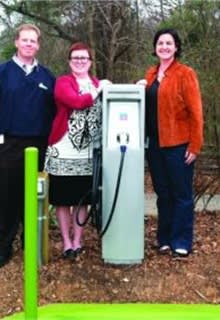
(L-R) CCFC Coordinator Jason Wager, the City of Gastonia’s Kristy Crisp, and CCFC Co-coordinator Emily Parker unveil a GE Gexpro Level II, partially funded by CCFC.
The University of North Carolina Charlotte is one of many CCFC stakeholders turning to electricity as an alternative to petroleum. The campus has more than 110 electric-drive vehicles that serve a variety of functions, including groundskeeping, maintenance, and housekeeping.
“[The university is] reducing petroleum use, saving money on fuel and protecting students from breathing exhaust fumes,” Wager said.
Other EV leaders in the coalition include the City of Charlotte and Duke Energy, which have already incorporated Chevrolet Volts and Nissan Leafs into their fleets.
On the statewide level, CCFC is leading the North Carolina PEV Readiness Initiative: Plugging In From Mountains to Sea. With $500,000 from the DOE, participants in the initiative are preparing a state readiness plan, developing regional plans for North Carolina’s most populous regions, and strengthening existing local and regional efforts.
Through the initiative, CCFC recently launched a new website, www.Go4PEV.org, dedicated to providing EV readiness guidance to businesses, government agencies and consumers, and sharing lessons from early adopters.
“What we’re hearing from folks is that there’s a need for education and collaboration. If the City of Charlotte has gone through the process of procuring charging equipment, for example, why not share what it learned?” Wager asked.
About the Author Julie Sutor is a staff member with the Communications Office of the National Renewable Energy Laboratory in Golden, Colo.
Get Involved With Clean Cities Through the work of nearly 100 local coalitions, Clean Cities advances the nation’s economic, environmental, and energy security by reducing petroleum use in transportation. Clean Cities is an initiative of the U.S. Department of Energy. Find out more at www.cleancities.energy.gov. For more information about CCFC, visit www.4cleanfuels.com or www.Go4PEV.org.
More Green Fleet

EV Charging Use Is Outpacing Infrastructure Growth
ChargePoint’s 2026 Charging Forward Report points to rising charger use, higher-powered charging, commercial vehicle electrification, and energy-management technology. Here’s what fleets should know.
Read More →
Merchants Fleet Reports 290M EV Miles as Fleets Navigate Changing Electrification Market
From millions in operating savings to hundreds of millions of EV miles, Merchants Fleet’s latest report reveals what’s working and what’s changing in fleet electrification.
Read More →
The EV Breakdown Nobody's Talking About: Why Most Electric Vehicle Roadside Calls Aren't Mechanical Failures
Here's why EV breakdowns are widely misunderstood.
Read More →
ChargePoint Now Available in Energy Pass
ChargePoint and additional planned charging network integrations were added to GM's Energy Pass.
Read More →

First Look: Slate Auto's Electric Fleet Pickup
Could an affordable, modular EV pickup make electrification more practical for fleets?
Read More →
Slate Debuts Colorful, Unique EV Models
A recent media and client event, studded with electric vehicles dressed up on platforms, planted a new position for the manufacturer in the wider EV market. Fleets will find cost-saving advantages.
Read More →
Slate Electric SUV, Pickup Switchable Model Aims For Light-Duty Fleets
Everything about this EV is counterintuitive and understated, making it stand out from the crowd.
Read More →
Inspiration Mobility Acquires Key Electrada Assets
Inspiration Mobility Group has acquired select assets of Electrada, adding the fleet electrification provider's team, technology, and charging infrastructure development capabilities to its energy management business.
Read More →
Turning Connected Vehicle Data Into Decisions That Matter
Fleet leaders have more data than ever, but turning that data into clear, actionable decisions remains a challenge. This white paper shows how leading organizations are using connected vehicle data to improve safety, reduce costs, and optimize fleet performance. Learn how to turn insight into action across your fleet.
Read More →