




Ed Bobit's Publisher's Page
The true meaning is that without the seat belts, airbags simply are not effective enough.


After years of corporation watching, from several different vantage points, I've concluded that many businesses are run more on their own energy than by thoughtful leaders who fully anticipate outside influences and prepare adequately to meet them. I'm convinced that many managers don't understand their jobs. --John Z. DeLorean: an address to the National Postal Forum; Washington, D.C., 1974.
Federal Standard 208 says one must be able to survive a 30 mph crash without major injury through completely passive means. DOT now admits that this standard cannot be met without seat belts; which just happen not to be passive restraints.
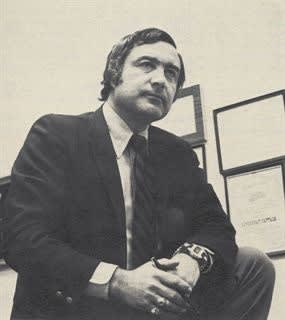
The National Highway Traffic Safety Administration is trying to decide whether to order airbags into all cars beginning with the 1977 models that will be introduced in the fall of 1976. NHTSA Chief, Dr. James B. Gregory, now states that "airbags are no longer a passive restraint system." The true meaning is that without the seat belts, airbags simply are not effective enough. Their recently released study shows that airbags (with seat belts) are twice as efficient in saving lives as the safety belt interlock system.
This study takes on added significance now that all drivers have been granted relief from the buzzers and interlocks on seat belts that were so irritating. The study, importantly, is labeled as an assessment of cost-benefits of various restraint systems.
The AAA-sponsored study analysis finds that airbags are only a third as good as seat belts. A number of organizations have questioned the cost benefit ratio of airbags.
To quote the AAA; "The DOT study greatly over estimates the versatility of airbags. They are effective primarily in frontal crashes, but only marginally effective in side impacts, rollover, rear-end or multiple crashes, where belts are very effective. Despite glib assertions from NHTSA, this defect has not been overcome.
"Costs must also be an important consideration. Claims that mass production will lower the cost of the airbag considerably simply cannot be substantiated. NHTSA not says the cost will be $210, but General Motors, which has been offering the bags at $225, has just announced an inflation-caused increase to $300."
Another study released just before the congressional lifting of the interlock mandate has some interesting statistics. According to be Institute for Highway Safety, 59% of the motorists who purchased 1974 cars were utilizing the protection of the seat belt interlock. That also means that 41% were not. That appears to be the reason for the pro-airbag people now pushing for their new mandate.
As most know, the airbag does not deploy unless you are involved in a 12 mile per hour or higher crash. Then you can add to the cost benefit ratio another $500 or more for the replacement airbag.
Dr. John Paul Stapp, who pioneered in automotive restraint testing, has recently voted for belts over bags. He has been quoted as saying "airbags may not inflate when needed ... they may inflate when not needed ... they are one-shot devices which offer no protection in second collisions ... they can break neck of driver or passenger if out of position, bending, turning ... they offer no protection in side impacts ..."
You just may agree with the AAA which states, "Congress should couple its assurance that bags will not be mandated with the request that automakers immediately improve design of belt systems."
Whether you agree or not, you certainly should understand your job and responsibility enough to voice your opinion to your congressman now, since the decision on airbags is likely to be made shortly.
More Safety
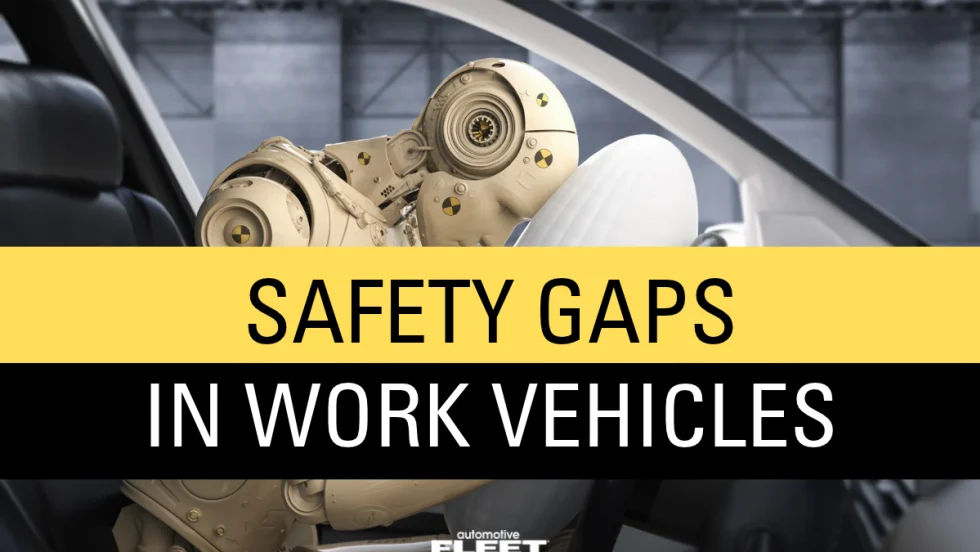
IIHS Crash Avoidance Tests Reveal Safety Gaps in Cargo Vans and Work Trucks
New crash-avoidance ratings from the Insurance Institute for Highway Safety reveal inconsistent performance among commercial vehicles, with several popular cargo vans and heavy-duty pickups struggling to avoid collisions with other vehicles and pedestrians.
Read More →
What’s Next for Fleet? Safety, AI & Industry Recognition | AF News Recap
Could your company's culture be encouraging distracted driving? This week, we're exploring how workplace expectations affect driver safety, what AI, EVs, and autonomous vehicles could mean for the future of fleet management, and how fleet professionals can strengthen their award nominations.
Read More →
Does Your Fleet's Culture Encourage Distracted Driving?
What happens when the people responsible for enforcing safety rules are the ones setting the wrong example? The answer may reveal why some of the biggest risks to fleet drivers have little to do with what's written in the employee handbook.
Read More →
Fleet Manager’s Ultimate Playbook: Navigating the New Standard in OEM Connectivity
Rising operating costs, driver safety concerns, and unplanned downtime are putting unprecedented pressure on modern fleets. Discover how fleet managers use embedded OEM connectivity and real-time vehicle data to cut TCO, prevent downtime, and protect drivers without aftermarket telematics hardware.
Read More →
From Driver Well-Being to EV Charging | AF News Recap
Mental health belongs in the fleet safety conversation. This week, we’re looking at five ways fleets can support employee well-being before a crisis, plus Holman’s expansion in Mexico, new one-day Fleet Forward passes, and why EV charging demand is outpacing infrastructure growth.
Read More →
Nexar-Nauto Merger Aims to Give Fleets Better Safety Intelligence Through Larger Driving Dataset
Stefan Heck tells Automotive Fleet that combining more than 10 billion miles of driving history with Nexar's AI models will give fleets deeper insights into driver risk and roadway conditions than either company could provide independently.
Read More →
Don't Wait for a Crisis: 5 Ways to Build Mental Health Into Your Fleet Safety Program
For Suicide Prevention Month, fleet and safety leaders have an opportunity to put mental health where it belongs: at the center of workplace safety.
Read More →
How Camera Data Can Strengthen a Fleet’s Insurance Renewal
Insights from a commercial insurance carrier and a broker show how fleets can turn video telematic data, driver coaching, and improved claims results into a stronger case at insurance renewal.
Read More →
The Safest Fleets Aren’t the Ones with the Most Technology
You’ve made the telematics investment. Here’s how to capture the other half of its value and build the safest fleet on the road.
Read More →
Hidden in Plain Sight: Fleet Compliance Risks
Fleet compliance isn't just about having policies — it's about consistently enforcing them. This practical guide reveals six hidden compliance risks common in public sector and shared fleet operations and outlines proven strategies to improve visibility, accountability, and audit readiness
Read More →