




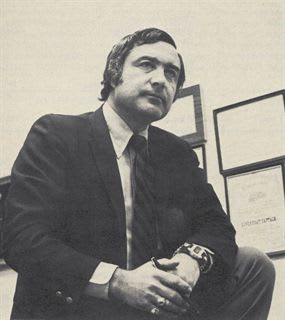
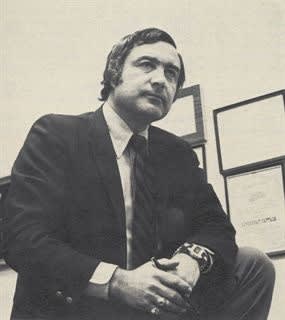
Ed Bobit's Publisher's Page
Most of us are aware that the vehicles that are purchased with '75 stickers are going to be up from better than $400 to over $1400, depending upon the model. That is stiff to say the least. No one has to be a professional finance man to know that the prime rate for interest is at 12% or better and this penetrates the cost picture for every purchaser; it influences the lease rate; and it directly affects the dealer in his floor planning.

"I have but one lamp by which my feet are guided, and that is the lamp of experience. I know of no way of judging of the future but by the past ... "Patrick Henry: Speech on the Stamp Act, Virginia Convention, March 23, 1775.
During these months of attempting to hold costs in line in the fleet business we are faced with a number of key basic elements, all of which influence the strong inflationary pressures put upon us. The net effect is that the cost of doing business is rising radically on all fronts. All areas except one.
Most of us are aware that the vehicles that are purchased with '75 stickers are going to be up from better than $400 to over $1400, depending upon the model. That is stiff to say the least.
No one has to be a professional finance man to know that the prime rate for interest is at 12% or better and this penetrates the cost picture for every purchaser; it influences the lease rate; and it directly affects the dealer in his floor planning.
Depending upon where you cars are being fueled around the country, you are now paying in excess of 55 cents for every gallon and getting less mileage out of it. The auto companies currently assure us of a gain of somewhere around 15% on mileage with the '75's; and that is good news.
There is little question that service and repairs and just plain maintenance are soaring in costs also. Mechanics remain difficult to recruit and they are being paid record wages. Replacement parts follow the same pattern with continued regular price increases.
In spite of the fact that many of today's so-called "paper dealers", who are assigned the bulk of a major purchaser's requirements for a certain make that are ultimately drop shipped by a delivering dealer, are at least partially responsible for the depressed dealer rates because of the huge volume; there still exists the need for proper parity for the delivering dealer who presumably maintains the proper get-ready and delivering tasks.
Almost everything else is keeping pace with the cost spiral. Everywhere you look you can find parking, tolls and business forms totaling more dollars each month. Costs are pointing up with no halt in sight. Pointing up except for one instance in our business.
That one is the fleet dealer's fee for the sale of the cars.
Our publication is dedicated to the fleet man and we support his efforts to extract the best price possible for any purchase in volume. It is axiomatic that a fleet purchaser has that credo as his fundamental objective. It remains the same through the years.
In my opinion, this the time for fleet-minded dealers to re-assess their marketing programs in their fleet departments. Dealer operational costs are increasing like everyone else's. There are no new shortcuts to make-ready and delivery. The so-called basic fleet car that closed out at about $3,000 a half dozen years ago, crept up to about $4,000 in '74. Now we are looking at something close to $5,000, for '75.
During this period various fees have been charged usually ranging from the daily rental companies demanding the getting $25 over 1% to the $75 or $100 over for the flee that demands more in service. These rate just have not changed that much over the years. Only a handful of the wiser dealerships have been innovating with higher rates.
In checking with a number of purchasers and dealers during the past few months, there seems to be a trend developing to raise the fleet dealers' rates on '75 cars. Where it will settle, and just how successful the negotiations between buyer and seller are, will be evident in the months ahead.
It is also evident that because of the tight money position, even many of the larger leasing companies run "a little late" with reimbursement. Another real cost to the dealer.
It seems clear to me that the fleet buyers today can expect, and I think properly, growing pressures to increase the dealer sales rate. If it comes, you can refer to the analysis to determine if you feel it is justified. It just could be.
More Operations
Here's When You Should Make an Exception to Fleet Policy
Fleet policies are designed to create consistency, but not every driver or situation fits neatly within standard rules.
Read More →
AI-Native or AI-Acquired: What Should Fleet Managers Look for in an AI Platform?
Six questions can help fleet managers look beyond AI marketing claims to evaluate integration, data access, and real-world operational performance.
Read More →
A buyer's guide to fleet management software in 2027
Buying fleet management software in 2027 means looking beyond features and price. As fleet operations, technology and expectations evolve, this guide explores what today’s fleet professionals should consider when choosing a system that can deliver value now and adapt to what comes next.
Read More →

What Will Shape the Next Era of Fleet Management?
EVs, AI, and autonomous vehicles are reshaping fleet management. Discover what’s ahead—and how fleet leaders can prepare for the next era.
Read More →
How Fleets Can Recruit and Train Veterans for Technician Roles
Here's how the technician shortage has affected uptime for fleets, and what to do about it.
Read More →
Avis Budget Group Deploys Neology Toll Management Technology Across Major Brands
Neology’s neoFleet platform will manage toll transactions and toll-authority operations for vehicles across Avis, Budget, Payless, Budget Truck and Zipcar.
Read More →
Fleet Personal-Use Charges Edge Higher in 2026
Nearly eight in 10 surveyed fleets allow personal use of company vehicles, while just over half of respondents report charging employees for the privilege.
Read More →
The Future of Fleet + What’s Changing Right Now | AF News Recap
Could developments overseas offer a preview of what’s coming for U.S. fleets? This week, we’re looking at the future of AI, autonomy, and electrification, plus Ford Pro’s new certified pre-owned program, smarter vehicle offboarding, and a new way for fleets to manage toll expenses.
Read More →
How to Handle Vehicle Offboarding
What do fleet managers need to do when a driver leaves?
Read More →
Fleet Manager’s Ultimate Playbook: Navigating the New Standard in OEM Connectivity
Rising operating costs, driver safety concerns, and unplanned downtime are putting unprecedented pressure on modern fleets. Discover how fleet managers use embedded OEM connectivity and real-time vehicle data to cut TCO, prevent downtime, and protect drivers without aftermarket telematics hardware.
Read More →