




Driving and Prescription Drugs Can be a Lethal RX
As a business driver, any time you use an over-the-counter or prescribed medication, you must consider the risk and the effect it might have on your ability to drive. Impairment from alcohol and illegal drugs is a leading cause of vehicle crashes, but impairment can also be caused by many common prescription and over-the-counter medications, reports the National Safety Council, which recently launched a public service campaign to educate Americans about the hazards of drug-impaired driving.


As a business driver, any time you use an over-the-counter or prescribed medication, you must consider the risk and the effect it might have on your ability to drive. Impairment from alcohol and illegal drugs is a leading cause of vehicle crashes, but impairment can also be caused by many common prescription and over-the-counter medications, reports the National Safety Council, which recently launched a public service campaign to educate Americans about the hazards of drug-impaired driving. Some medications, such as antihistamines used to treat allergies and anti-anxiety medications, may affect driving by inducing drowsiness or excitability or by altering reaction times. Other medications, including some cold and cough medications, sleeping pills, and painkillers, can also impair driving skills.
Non-prescription drugs, by law, must provide adequate directions for use. Before taking these drugs, read their labels to determine what effects, if any, they might have on your ability to drive. Because of potential side effects, most non-prescription drugs carry warnings against driving while taking them. People sometimes ignore these warnings. A survey of allergy suffers showed that 61 percent of those who take non-prescription allergy medications drive despite warnings against doing so. Other research undertaken by the American Medical Association indicates that one in every two prescription drugs is not taken correctly. In addition, 30 percent of prescription drugs are misused in ways that threaten health. If there is no warning label for the medication, ask your pharmacist how the medication should be taken, for instance, before or after a meal, and the potential side effects. If in doubt, you can always call the pharmacist, even if you are on the road.
“The effects of impairment vary with each person, but can generally be defined as a change in a person’s ability to perform routine daily tasks at the normal level of functioning,” said Alan McMillan, president of the National Safety Council. “Impairment can affect driving ability, among other things, but changes can often be difficult to identify. In fact, people may be drug impaired and not realize it.” Signs and symptoms of impairments are drowsiness, excitability, altered reaction times and altered depth perception.
Danger Signals
In many cases, drivers should avoid drugs entirely when driving is necessary. In any case, by law, drug use is the driver’s responsibility.
Ask your doctor or pharmacist how prescribed drugs might affect your ability to drive safely.
Read labels and follow instructions exactly.
Never take more than the recommended dose.
Don’t mix medications without first checking with your healthcare provider or pharmacist.
Don’t mix alcohol with medications.
Don’t take drugs or medicines prescribed to other people.
Be cautious of newly advertised drug products when you don’t know their side effects.
Ask your healthcare provider about non-impairing alternatives.
More Operations
What Fleet Managers Really Want From Vendors
From customer service frustrations and technology breakdowns to RFQs, change management, and the growing impact of turnover across the industry, this conversation pulls back the curtain on the real operational challenges fleet managers are navigating every day.
Read More →
Fleet Safety Masterclass: Industry Leaders on Storytelling, Strategy & Innovation
In this special masterclass episode, industry leaders break down what it really takes to build safer fleets in today’s increasingly distracted and data-driven world.
Read More →
Integrating Legacy Fleet Systems and Historical Data
In this episode, we bring together fleet and technology leaders to unpack the realities of data integration, system migrations, and the evolving role of AI in fleet management.
Read More →

From Resistance to Results: Change Management Strategies for Fleets
From new technologies and safety programs to evolving regulations, fleets are under constant pressure to adapt. But as Dr. Betz explains, success isn’t about the system you implement—it’s about whether your people actually use it.
Read More →
Where We're Headed: A Practical Look at AI in Fleet
Discover how AI is actually being deployed in fleets, not just marketed, including practical use cases and emerging risks.
Read More →
How Coca-Cola United Protects Its Fleet from Growing Legal Risk
Growing legal exposure can put fleets at risk. Here's one company's approach.
Read More →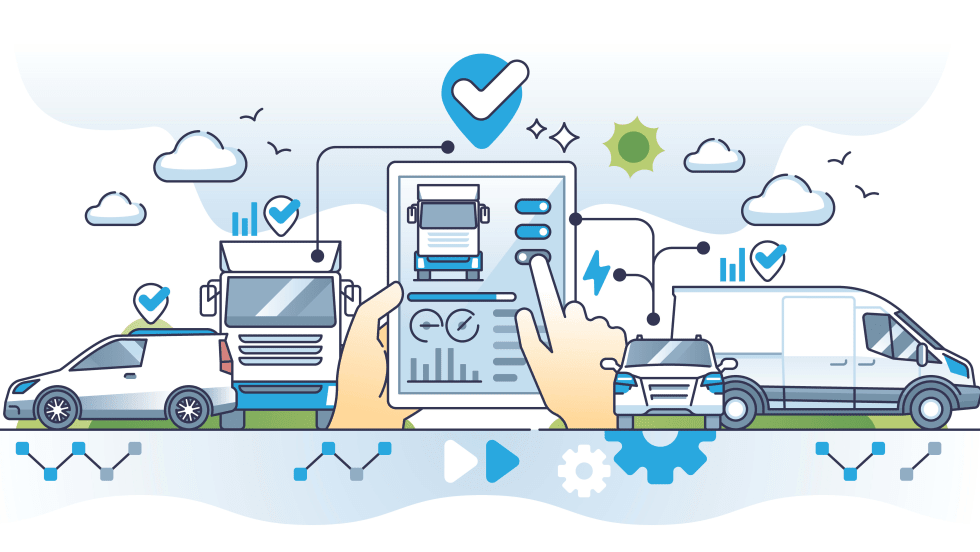
Fleet Managers Think They Understand Their Costs. The Data Says Otherwise.
Most fleet managers say they have a strong handle on their costs, but new research from Bobit Business Media tells a different story. A 2026 survey of 190 fleet professionals reveals a widespread "confidence gap" where fragmented systems, disconnected data, and delayed reporting are leaving major blind spots hidden beneath the surface. Find out what the data actually shows.
Read More →
Cameras, Safety and Insurance: From Reactive Claims to Real-Time Prevention (Part 2 of 2)
Part Two: Commercial auto remains one of the most challenging and costly lines of coverage for fleet operators and insurers alike. Continue learning more about how to effectively address these issues from Onur Aksan, Enterprise Business Development Executive, Geotab
Read More →
New Trucks, AI & Summer Downtime | AF News Recap
From new truck updates to AI-powered driver coaching and summer maintenance tips, this week's fleet headlines are all about keeping things moving.
Read More →
Beyond Utilization Rates: Smarter Fleet Replacement Decisions
Vehicle replacement decisions affect every aspect of fleet performance, from operating costs to asset availability. This guide explores how fleet leaders use integrated data, benchmarking, and lifecycle analytics to determine the right fleet size and optimize replacement timing with greater confidence.
Read More →