




Driver Engagement & Cross-Department Collaboration
All stakeholders — from senior management to local supervisors — should be engaged in the process of managing driver behavior. A corporate safety program will not succeed without driver engagement.


Photo: Gettyimages.com/NASTASIC
Driver compliance is critical to the success of any fleet program. A corporate safety program will not succeed without driver engagement. Likewise, cost-cutting and sustainability initiatives are similarly doomed if drivers are not engaged. For instance, the way employees drive company-assigned vehicles can improve (or decrease) safety, fuel economy, and reduce (or increase) emissions.
All stakeholders — from senior management to local supervisors — should be engaged in the process of managing driver behavior. To ensure success, senior leadership must support the initiative and communicate that support to everyone within the organization.
In addition, it’s absolutely critical that an organization has a well-communicated policy in place that defines acceptable driving practices as well as standard driving performance expectations, and that drivers fully comprehend the organization’s polices.
Training: New hires should receive onboarding assessments and training. Existing drivers should receive regular driver training to keep safety fresh in their minds. Violators should receive remedial training to help them improve deficient skills.
Measurement and Scoring: Organizations need to measure driving behavior through regular MVR checks and real-time evaluation of the driver provided by telematics. Drivers should be scored for their driving performance. Whenever a driver exceeds the organization’s threshold for a given data parameter, the driver should be assigned points. Points should be tracked, aggregated, and categorized in order to identify high-risk drivers, as well as consistently safe drivers.
Immediate Management Action: When an event occurs — whether it is an accident, an infraction, a violation, or exceeding a set organization threshold — it is critical that action be taken immediately to improve the driver’s behavior. The action may include driver training, supervisor coaching, or ride-along observations, but it needs to be immediate in order to reinforce safe driving expectations.
The safety message must be viewed as a message from senior management. All employees must have no doubt that the corporate fleet safety program is being championed by the president or CEO as the corporate safety culture.
The message must be consistent and regularly reinforced throughout the year by all levels of management. Focus on at-risk drivers, field managers, and new-hires.
The safety culture policies must be clear and concise for everyone. Set the level of expectation from the beginning. There should be no gray areas in how policies are interpreted. Likewise, there should be no exceptions to violations regardless of rank or stature within the company. Everyone must be treated equally. Establish accountability. The best approach is a carrot-and-stick strategy. Reward and recognize safe driving behavior. Institute accountability and consequences for unsafe driving behavior. The message must be that it is a privilege to drive a company vehicle, not an entitlement.
It is important to establish and communicate a written fleet safety policy and procedures to set clear and consistent expectations of drivers. It is critical that senior management is vocal in its support of the fleet safety policy.
A safety program establishes the policies and procedures to ensure a safe work environment for employees and to help minimize liability resulting from vehicle accidents. Establish clear hiring standards and a thorough screening process for anyone who drives on company business. Based on this policy, it is important for HR to screen applicants who would drive company vehicles.
It is important to make fleet policy flexible enough to cover unanticipated situations. If fleet policy lists prohibited vehicle uses, be sure to include a qualifying phrase “including but not limited to.”
It is important for a company to identify all employee drivers, even occasional drivers who are not assigned a company vehicle. Businesses are often not completely aware of the full extent of their non-company vehicle exposure.

There should be no exceptions to violations regardless of rank or stature within the company. Everyone must be treated equally in order to establish accountability.
Photo: gettyimages.com/blueshot
Liability Mitigation
Implementation and documentation are important to reduce a fleet’s legal liability. There must be evidence that training programs were implemented. Programs should be well documented including details as to when the training occurred, length of training, training topics, and whether there was testing of driver retention of the materials covered.
When liability claims occur, the ability to produce records can reduce the amount of a potential settlement.
The biggest deficiency in safety training programs is a lack of ongoing driver engagement. Safety training should be ongoing for all drivers regardless of seniority. They should be reminded and reinforced of the lessons learned in previous training sessions.
When experienced drivers received repeated defensive driving courses, they’re more likely to apply that training in an emergency.
Maintaining Driver Engagement
Securing management buy-in to a safety program is critical, but so too is getting driver input and support.
The driver is the “on-the-job expert” who is doing the work day in and day out. More times than not, they are the people who can identify the inefficiencies and possible remedies.
Hold quarterly safety meetings to reinforce the company safety policy, but also to solicit driver feedback, such as ways to minimize backing up accidents, and reinforce compliance with the fleet’s core safety values.
For new drivers, onboarding programs allow them an opportunity to get to know a fellow driver to discuss issues or ask questions they would not feel comfortable asking a manager.
For veteran drivers, quarterly safety meetings help avoid complacency and ensures they are up-to-date on the company’s safety standards.
A safety program will not work if drivers do not comply with safety policy or do not modify bad driving behavior. The way employees drive company vehicles can either improve or decrease the incident of preventable accidents.
Attaining Management Support
Senior management support is the key to success for a fleet safety program.
The hard reality is that many senior managers do not consistently view fleet safety as a top priority.
When you talk with suppliers of fleet safety programs and related services, they point out that the “talk” often does not translate into action. Management interest in fleet safety ebbs and flows.
Fleet safety is currently a hot button issue due to fleets experiencing an uptick in preventable accidents. The primary cause of the uptick is due to driver distraction. Liability exposure resulting from preventable accidents has made senior management more sensitive to enforcing fleet safety policies. Unfortunately, this sensitivity sometimes arises after the fact following a lawsuit or fleet-related fatality.
Industry studies show that accidents represent 14% of a fleet’s total expenses, although it is probably even higher since these studies do not take into account soft costs, such as downtime, lost employee productivity, etc.
The annual accident rate for fleets averages around 20%, with some industries, such as pharmaceuticals, even higher. In terms of fleet safety programs, any vehicle-related accident should be viewed as a defect. What company would view a 20% or more defect rate as acceptable?
Of the 20% of vehicles involved in an accident, about 40% are involved in preventable accidents due to driver negligence. If 40% of all accidents are preventable, this presents a huge opportunity to reduce what a fleet spends on accident-related costs.
Overall, accidents represent 14% of a fleet’s total expenses. Eliminating preventable accidents would lower the expense rate to just over 8%. In today’s fleet world, there are few areas where such dramatic cost savings can be achieved.
Cross-Department Collaboration
Fleet should seek out cross-collaboration opportunities with other departments. One cross-collaboration opportunity is with EHS, which is responsible for employee safety issues elsewhere in the company, such as the factory floor and workstation ergonomics. In recent years, EHS has been extending its reach into fleet because company drivers are one of the largest sources of workers’ comp claims.
Driver-related ergonomics issues that result in workers’ comp claims are on the rise at truck fleets. OSHA requires an employer to provide a workplace free from recognized hazards and OSHA considers company vehicles to be a workplace.
Vehicle ergonomics has a direct bearing on driver productivity, employee satisfaction, and frequency of workers’ comp claims. Optimized ergonomics can increase accident avoidance. Poor ergonomics increases driver discomfort, which increases fatigue, a key contributor to preventable accidents.
Overall, accidents represent 14% of a fleet's rental expenses. Eliminating preventable accidents would lower the expense rate to just over 8%. In today's fleet world, there are few areas where such dramatic cost savings can be achieved.
Photo: gettyimages.com/simpson33
Telematics as a Safety Tool
Many fleets have successfully adopted effective technology solutions, such as telematics systems and GPS productivity tools, to modify driver behavior. These fleet managers have successfully developed the business case to acquire these technological tools. Telematics and GPS productivity tools have proven to be highly effective getting drivers to reduce fuel consumption, drive “greener,” and be safer behind the wheel of a vehicle.
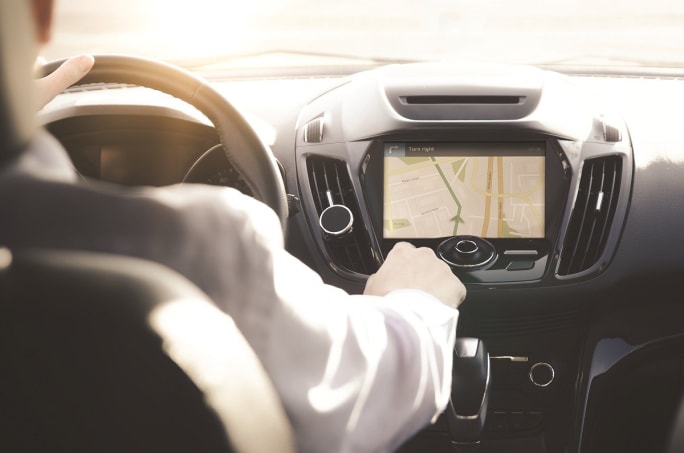
One way to identify at-risk drivers is by using telematics. GPS-based telematics has come a long way from just being a routing and location solution. Today, it is used in a fleet safety program to minimize risk associated with distracted driving and risky driving behaviors.
Telematics technology can help fleets modify driver behavior by helping to monitor, identify, and correct the underlying behavior that lead to increased risk, crashes, and liability exposure. Telematics documents dangerous driving behaviors, such as aggressive driving, hard braking, hard cornering, sudden lane change allowing identification of drivers who need coaching or remedial driving skills.
Telematics can pinpoint the specific driving behavior that needs to be corrected. Because telematics monitoring is often in near-real-time, fleets can address these driving issues quickly before an incident occurs.
Training Drivers
Safe driving is intertwined to other corporate initiatives, such as fuel cost reduction and achieving corporate sustainability goals. The best opportunity to modify driver behavior is by training drivers to perform their job more efficiently. For instance, if up to 30% of a vehicle’s fuel efficiency is impacted by driver behavior, you need to make partners out of drivers to achieve corporate cost reduction and sustainability goals.
The way employees drive their vehicles can either increase or decrease fuel economy and greenhouse gas (GHG) emissions. If you change the driving behavior of your employees, you have a direct impact on the amount of fuel consumed and the amount of emissions produced. Even small increases in mpg can result in substantial savings when extrapolated across the entire fleet.
Fleet managers who have implemented eco-driving training programs report a 5% to 30% reduction in annual fuel consumption by changing driver behavior. The term eco-driving refers to specific driving behaviors that can improve fuel economy, reduce operating expenses, decrease GHG emissions, and promote safe driving. In fact, eco-driving practices, by default, make employees safer drivers by discouraging aggressive driving and speeding. Many fleets correctly view eco-driving and safe driving as being intertwined.
Besides decreasing fuel consumption, eco-driving also helps lower other operating costs by extending the life of wear items, such as tires and brakes. A good example is to recommend to drivers to pre-plan trips to minimize stop-and-go driving, which burns fuel more quickly and increases emissions.
To maintain driver motivation, you need to have an ongoing eco-driving training program for new hires and periodic refresher courses for current drivers, offering tangible incentives for employees who perform well.
Policy Impacts Compliance
All too often, managers attempt to control fleet costs on the backend. The best time to control cost is before it occurs and the way to do this is through establishing policies and procedures that inhibit unnecessary spending and establish the parameters as to how drivers operate and maintain an asset. By establishing fleet policies up-front for expense control and making a concerted effort to ensure these policies are uppermost in the minds of your drivers, you will reap substantial cost savings. Fleet policy institutionalizes the mechanisms to curb money-wasting behaviors.
Unless you have an enforcement program with incentives, the danger is that drivers will drift back to old behaviors. It has been proven that by using more “carrot than stick,” you can maintain these efficiencies over the longer-term. The No. 1 reason corporate sustainability programs are not “sustainable” is due to driver non-compliance.
To make sustainability programs work, you must turn drivers into stakeholders in the program. The overwhelming majority of drivers want to do the right thing, but most do not see sustainability as part of their job responsibilities.
More Safety
IIHS Crash Avoidance Tests Reveal Safety Gaps in Cargo Vans and Work Trucks
New crash-avoidance ratings from the Insurance Institute for Highway Safety reveal inconsistent performance among commercial vehicles, with several popular cargo vans and heavy-duty pickups struggling to avoid collisions with other vehicles and pedestrians.
Read More →
What’s Next for Fleet? Safety, AI & Industry Recognition | AF News Recap
Could your company's culture be encouraging distracted driving? This week, we're exploring how workplace expectations affect driver safety, what AI, EVs, and autonomous vehicles could mean for the future of fleet management, and how fleet professionals can strengthen their award nominations.
Read More →
Does Your Fleet's Culture Encourage Distracted Driving?
What happens when the people responsible for enforcing safety rules are the ones setting the wrong example? The answer may reveal why some of the biggest risks to fleet drivers have little to do with what's written in the employee handbook.
Read More →
Fleet Manager’s Ultimate Playbook: Navigating the New Standard in OEM Connectivity
Rising operating costs, driver safety concerns, and unplanned downtime are putting unprecedented pressure on modern fleets. Discover how fleet managers use embedded OEM connectivity and real-time vehicle data to cut TCO, prevent downtime, and protect drivers without aftermarket telematics hardware.
Read More →
From Driver Well-Being to EV Charging | AF News Recap
Mental health belongs in the fleet safety conversation. This week, we’re looking at five ways fleets can support employee well-being before a crisis, plus Holman’s expansion in Mexico, new one-day Fleet Forward passes, and why EV charging demand is outpacing infrastructure growth.
Read More →
Nexar-Nauto Merger Aims to Give Fleets Better Safety Intelligence Through Larger Driving Dataset
Stefan Heck tells Automotive Fleet that combining more than 10 billion miles of driving history with Nexar's AI models will give fleets deeper insights into driver risk and roadway conditions than either company could provide independently.
Read More →
Don't Wait for a Crisis: 5 Ways to Build Mental Health Into Your Fleet Safety Program
For Suicide Prevention Month, fleet and safety leaders have an opportunity to put mental health where it belongs: at the center of workplace safety.
Read More →
How Camera Data Can Strengthen a Fleet’s Insurance Renewal
Insights from a commercial insurance carrier and a broker show how fleets can turn video telematic data, driver coaching, and improved claims results into a stronger case at insurance renewal.
Read More →
The Safest Fleets Aren’t the Ones with the Most Technology
You’ve made the telematics investment. Here’s how to capture the other half of its value and build the safest fleet on the road.
Read More →
Hidden in Plain Sight: Fleet Compliance Risks
Fleet compliance isn't just about having policies — it's about consistently enforcing them. This practical guide reveals six hidden compliance risks common in public sector and shared fleet operations and outlines proven strategies to improve visibility, accountability, and audit readiness
Read More →