




Does Your Policy Protect You From An Employee's Side Job? Are You Sure?
Having a policy prohibiting personal use may not be enough. It is crucial that it be communicated to employees and consistently enforced.
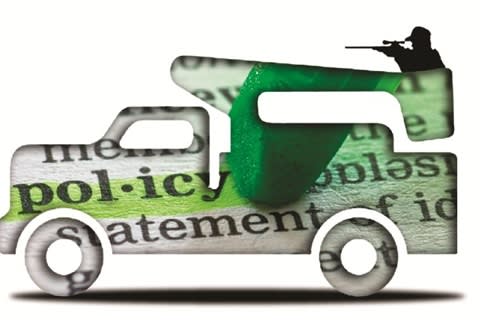
Among the most ridiculous (and perhaps spurious) ways an employees has used a bucket truck in his off-time was as a deer stand for hunting.
In today's difficult economy, people are working harder to make ends meet. For many, this means working two jobs or operating a side business, which can be especially tempting for employees with access to company vehicles useful for an extracurricular side business.
Such possibilities run the gamut from the obvious - employees using service vans for freelance plumbing work or off-the-clock limo drivers taking kids to the prom - to the ridiculous - using a company bucket truck as a deer stand for hunting (which actually happened).
Although it's convenient to assume companies are not liable when an employee uses a company vehicle for non-company business, it is not that simple. Companies can absolutely be held liable, especially if the employee claims there was no policy forbidding vehicle use or if the policy was not clearly communicated or enforced.
Have a Policy
The first step in limiting liability is having a policy in place that clearly prohibits the personal use of the vehicle for any use outside of the requirements of the job. For example, language such as:
"[Company] provides vehicles for use by qualified drivers only to conduct official business, and to maintain the ability to respond to [Company's] business outside the employee's normal work hours when special equipment or tools are available in or on the vehicle. [Company's] vehicles shall not be used for personal business, and all use except for official [Company] business is strictly prohibited."
It is important to make the policy clear and easy to understand and to clarify that any use outside of official use is prohibited, not just "personal use."
Communicate the Policy
Having a policy on the books is not enough. To possibly shield you from liability, it is important the policy be communicated effectively to all company vehicle drivers. In addition, you should be able to prove that all drivers received - and understood - the policy. Including the policy in employee handbooks is a good start; however, make sure employees sign documentation confirming receipt. Go over the policy in live meetings on a regular basis. And consistently repeat the policy in employee newsletters and other communications.
The path to avoiding liability is often the ability to paint an employee as a "loose cannon" who knowingly broke policy. In doing so, it is crucial to have a policy in place and be able to prove it has been communicated and understood. An employee's written acknowledgment is essential in establishing this and successfully defending any claim as a result of violation of the policy.
Enforce the Policy
For a policy to count, it has to be enforced. It is easy to look the other way, especially if the violating employee is a "good guy" who does good work for the company. Also, some managers may view personal use of company vehicles as a nice "perk" for an employee who works hard. However, overlooking violations can be construed as tacit approval of the behavior. And, an employer that is perceived as allowing non-company use against its own policy is likely to be viewed as liable for anything that takes place.
One enforcement tool worth considering is GPS tracking. Such a system allows managers to know the location of vehicles at all times. Perhaps more important, installing such a system, communicating the fact that it has been installed to all employees, and using it to enforce policy may be the best way to let employees - and perhaps a jury - know the policy is serious and always enforced.
Most companies already have a policy prohibiting outside use of fleet vehicles. But, that may not be enough. To avoid liability, it is important to ensure that policy is communicated, understood, acknowledged, and enforced.
About the Author

Richard Alaniz is senior partner at Alaniz and Schraeder, a national labor and employment firm based in Houston. He can be reached at (281) 833-2200 or ralaniz@alaniz-schraed
More Operations
How to Manage Conflict for Your Fleet Operations
Conflict management is becoming a core leadership skill. Here are five strategies fleet leaders should know.
Read More →
Turning Connected Vehicle Data Into Decisions That Matter
Fleet leaders have more data than ever, but turning that data into clear, actionable decisions remains a challenge. This white paper shows how leading organizations are using connected vehicle data to improve safety, reduce costs, and optimize fleet performance. Learn how to turn insight into action across your fleet.
Read More →
Cameras, Safety and Insurance: From Reactive Claims to Real-time Prevention
Commercial auto remains one of the most challenging and costly lines of coverage for fleet operators and insurers alike. Learn more about how to effectively address these issues from Onur Aksan, Enterprise Business Development Executive, Geotab.
Read More →

Are You Tracking Your Fleet's True Total Cost of Ownership?
Bobit Business Media surveyed 190 fleet professionals and found that while most fleets are tracking costs, fragmented systems and data gaps are keeping true TCO visibility out of reach. With rising pressure to control spend in an increasingly volatile environment, the gap between what fleets think they know and what the data actually shows is wider than you might expect. See how your peers are managing costs today and where the industry still has room to improve.
Read More →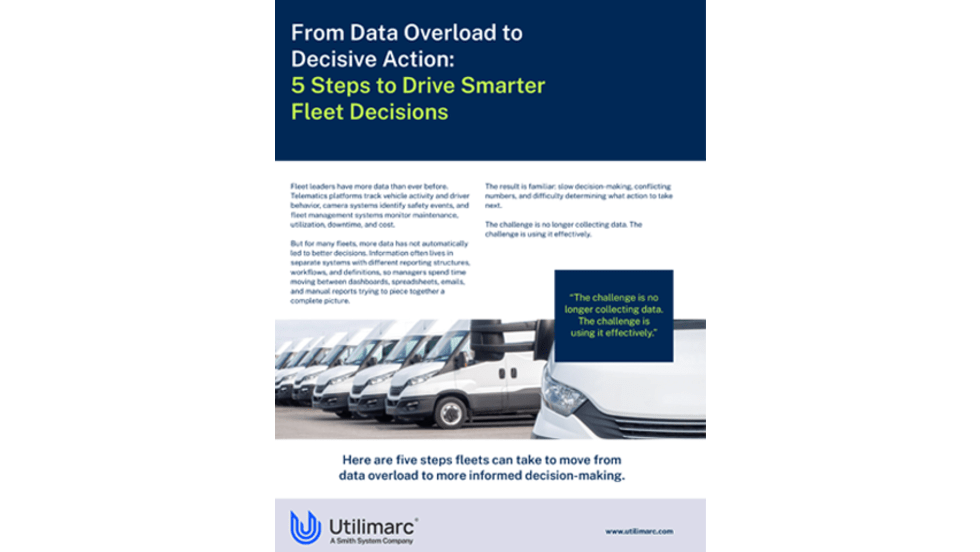
Turn Fleet Data Into Smarter Decisions
Fleet leaders have access to more operational data than ever, but disconnected systems and unclear metrics often slow decision-making instead of improving it. This whitepaper outlines five practical steps fleets can take to transform fragmented data into actionable insights that improve planning, safety, utilization, and long-term performance.
Read More →
Hybrids: Electrification Without the Challenges
For fleet managers, fuel is one of the biggest line items in the budget — and it's one hybrids can shrink without changing how your people work. Download the eBook to see the numbers, understand the technology, and get a step-by-step guide to making the switch.
Read More →
How NOV Uses Telematics to Improve Fleet Safety Across 160 Locations
James Victory of NOV discusses how the company manages fleet safety, maintenance, and telematics across more than 150 locations supporting oilfield operations throughout the U.S.
Read More →
Fleet Meets: Steven Santostasi
This edition of the Fleet Meets series features Steven Santostasi, the current TSP channel manager for Ford Pro.
Read More →
Why Fleet Managers Are Replacing Departmental Vehicles with Shared Motor Pools
Departmentally assigned vehicles often create hidden costs through underutilization, poor visibility, and increased administrative burden. This white paper explores how shared motor pool strategies help fleets reduce costs, improve accountability, and optimize vehicle utilization.
Read More →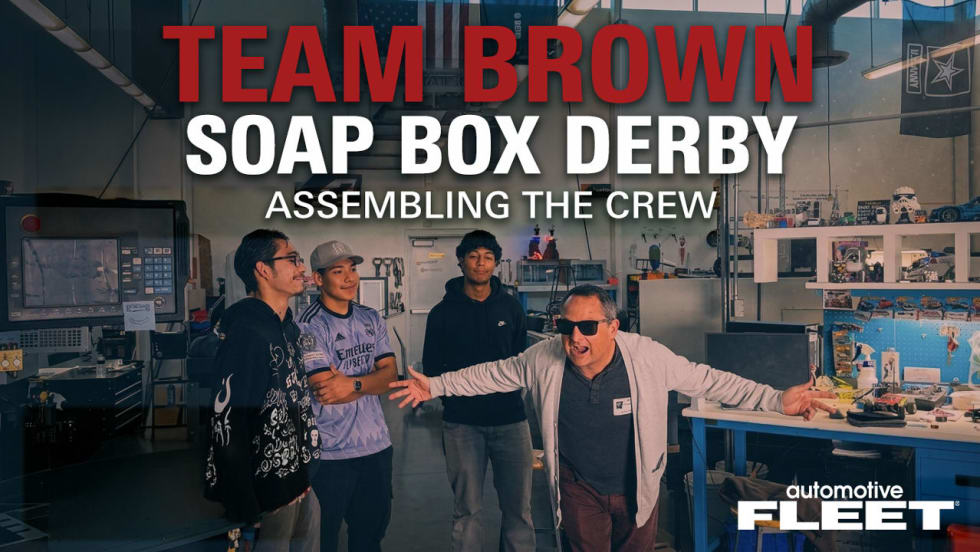
Soap Box Derby Challenge: Assembling the Crew
Meet Gabriel, Matthew, and Angel — the team helping bring this soap box derby build to life.
Read More →