




About the Author: Sarah Richey is the manager of Partner Products & Implementation at Mike Albert Fleet Solutions. She helps clients maximize the benefits of the company's products and services. Under her leadership, fleets have adopted new solutions, such as telematics, that enhance safety and efficiency while reducing costs. Richey remains committed to helping companies maximize their fleet investments through strategic solutions and collaborative partnerships.
Overcoming Driver Resistance to In-Cab Cameras
Here's why drivers resist in-cab cameras and how fleets can respond.
by Sarah Richey
March 25, 2026
As fleets adopt AI-powered in-cab cameras, success depends less on the technology itself and more on building driver trust through transparency, coaching, and a culture of support.
Credit: Automotive Fleet
5 min to read
Fleet safety has never been a simple problem, and it’s not getting simpler. While national traffic fatalities have trended downward, the costs associated with fleet incidents continue to climb. The most recent Federal Highway Administration data pegs a single-fatality crash at $15.9 million, a serious injury crash at $1.7 million, and a property-damage-only incident at $18,100. Factor in downtime, premium spikes, and lost customer confidence, and the total cost increases significantly.
The fleet industry has access to better technology than ever before. AI-powered dashcams, advanced driver assistance systems (ADAS), and predictive analytics can detect risks before they become a claim. Yet many organizations still struggle to move the needle. The reason often isn’t the technology itself; it’s how it’s introduced.
The Trust Problem
In-cab cameras remain one of the most effective tools available for reducing fleet accidents. Studies show they can drive a 60 percent reduction in incidents and an 86 percent reduction in collision costs. However, driver acceptance remains low. A 2023 American Transportation Research Institute study found that drivers’ approval of in-cab recording was just 2.2 out of 10, with even lower approval among female drivers.
That resistance is often tied to concerns about surveillance—the perception that a camera in the cab is there to catch mistakes rather than prevent them. When technology is framed as a monitoring tool, it can create a “gotcha culture,” where drivers feel they’re being watched rather than supported. Traditional surveillance systems monitor continuously and indiscriminately, often resulting in high false-positive rates that erode trust and make drivers feel unfairly targeted.
The distinction matters. Modern AI-powered camera systems don’t just record—they interpret. They can differentiate between emergency hard braking and aggressive driving, between a momentary glance and prolonged distraction. That contextual intelligence can reduce unfair flags and increase perceived fairness. When drivers experience fewer false positives, they are more likely to trust the system, and that trust is the foundation on which everything else is built.
From Surveillance to Support
The way you communicate a safety initiative determines whether it succeeds or fails. Telling your team “we’re installing cameras to catch bad drivers” can hinder adoption before the first device is mounted. Reframing matters by saying, “We’re adding tools to protect you” and “You’ll have evidence if you’re involved in a not-at-fault incident,” which changes the conversation.
Transparency is also essential—and in many jurisdictions, it’s legally required. Fleet operators should clearly document what is recorded, how footage is used, who can access it, and how long it’s retained. When operating across state lines, comply with the strictest applicable standard, particularly around two-party audio consent. Ongoing communication avoids surprises and reinforces the message that drivers are partners in the process, not subjects of it.
What AI Actually Does in the Cab
Today’s AI camera systems go far beyond simple event recording. They detect distracted driving, cell phone use, fatigue, and smoking in real time. Rather than saving footage for a fleet manager to review days later, a voice notification plays in the cab, allowing the driver to self-correct before an incident occurs. That shift from reactive review to real-time coaching represents a significant change. One fleet using predictive models saw its collision rate drop from 1.8 to 0.72 per million miles, according to Geotab data.
Next-generation capabilities are expanding quickly. Weather condition detection, road condition monitoring, and integrated risk scoring are all on the near horizon, combining multiple data points into holistic driver risk assessments. These tools will help fleet managers move from asking “what happened?” to “what’s about to happen?”
The AI accuracy itself creates a self-reinforcing cycle: fewer false positives lead to fairer detection, which increases driver acceptance, which drives behavior change, which produces better data, which further improves the AI. But that cycle does not begin if drivers do not trust the system in the first place.
Culture and Implementation
Technology is only as effective as the culture in which it operates. Safety initiatives succeed or fail based on leadership, and adoption can decline when leaders treat cameras as a “driver problem” rather than an organizational commitment. Leaders must model the behavior they expect, communicate the reasoning behind new programs, and invest in coaching and development, not just discipline.
Research supports this. A Federal Motor Carrier Safety Administration (FMCSA) found that fleets that prioritize safety culture experience fewer roadside violations, higher driver retention, and improved business outcomes. A study published in the Journal of Safety Research showed that fleets combining in-cab feedback with regular supervisory coaching achieved a 61 percent reduction in incidents, outperforming automated alerts alone. When coaching is consistent, personalized, and supportive, it can influence long-term behavior.
Recognition also plays a role. Gamification programs, such as “Driver of the Month” awards with tangible rewards like gift cards or preferred routes, can position safety as a positive outcome rather than a punitive one. A 2024 telematics study from the U.K. found that 71 percent of fleets saw improved driver performance through a positive reinforcement rewards program.
The Business Case
For fleet managers building the investment case, the data indicates strong returns. ADAS features alone deliver a five-to-one return on investment, according to the FMCSA. Research has also found that effective safety programs can reduce insurance costs by 50%, and defensive driving training returns up to six dollars for every dollar spent.
The cost of inaction also warrants consideration. There are legal costs and settlements, increased insurance premiums, and the impact of turnover. A poor safety culture can contribute to driver attrition, with each replacement carrying operational and recruiting costs. In an industry already grappling with workforce shortages, retaining experienced drivers remains a key consideration.
Where to Start
If your organization hasn’t yet adopted AI-powered camera systems or a structured coaching program, the place to begin isn’t with a purchase order—it’s with a conversation. Review your claims and telematics data to understand where your biggest losses are coming from. Then, before rolling out new technology, invest in communicating the “why” to your drivers and pilot on a subset of routes. Lead with exoneration data and coaching, not consequences. Building trust early can support stronger safety outcomes over time.
For example, the asset enables profit, but the operator brings it to life. Every safety initiative should start by answering one question: How does this protect and support drivers? Addressing that question can help reduce incidents while reinforcing a safety-focused culture.
Subscribe to Our Newsletter
More Safety

Sponsored•October 1, 2026
Fleet Manager’s Ultimate Playbook: Navigating the New Standard in OEM Connectivity
Rising operating costs, driver safety concerns, and unplanned downtime are putting unprecedented pressure on modern fleets. Discover how fleet managers use embedded OEM connectivity and real-time vehicle data to cut TCO, prevent downtime, and protect drivers without aftermarket telematics hardware.
Read More →
From Driver Well-Being to EV Charging | AF News Recap
Mental health belongs in the fleet safety conversation. This week, we’re looking at five ways fleets can support employee well-being before a crisis, plus Holman’s expansion in Mexico, new one-day Fleet Forward passes, and why EV charging demand is outpacing infrastructure growth.
Read More →
Nexar-Nauto Merger Aims to Give Fleets Better Safety Intelligence Through Larger Driving Dataset
Stefan Heck tells Automotive Fleet that combining more than 10 billion miles of driving history with Nexar's AI models will give fleets deeper insights into driver risk and roadway conditions than either company could provide independently.
Read More →
Don't Wait for a Crisis: 5 Ways to Build Mental Health Into Your Fleet Safety Program
For Suicide Prevention Month, fleet and safety leaders have an opportunity to put mental health where it belongs: at the center of workplace safety.
Read More →
How Camera Data Can Strengthen a Fleet’s Insurance Renewal
Insights from a commercial insurance carrier and a broker show how fleets can turn video telematic data, driver coaching, and improved claims results into a stronger case at insurance renewal.
Read More →
The Safest Fleets Aren’t the Ones with the Most Technology
You’ve made the telematics investment. Here’s how to capture the other half of its value and build the safest fleet on the road.
Read More →
Sponsored•August 7, 2026
Hidden in Plain Sight: Fleet Compliance Risks
Fleet compliance isn't just about having policies — it's about consistently enforcing them. This practical guide reveals six hidden compliance risks common in public sector and shared fleet operations and outlines proven strategies to improve visibility, accountability, and audit readiness
Read More →
NETS Sets 2026 Fleet Safety Benchmark Conference for Indianapolis
The Sept. 15–17 program will feature fleet benchmarking data, case studies, emerging technologies, and implementation strategies while running alongside the NSC Safety Congress & Expo.
Read More →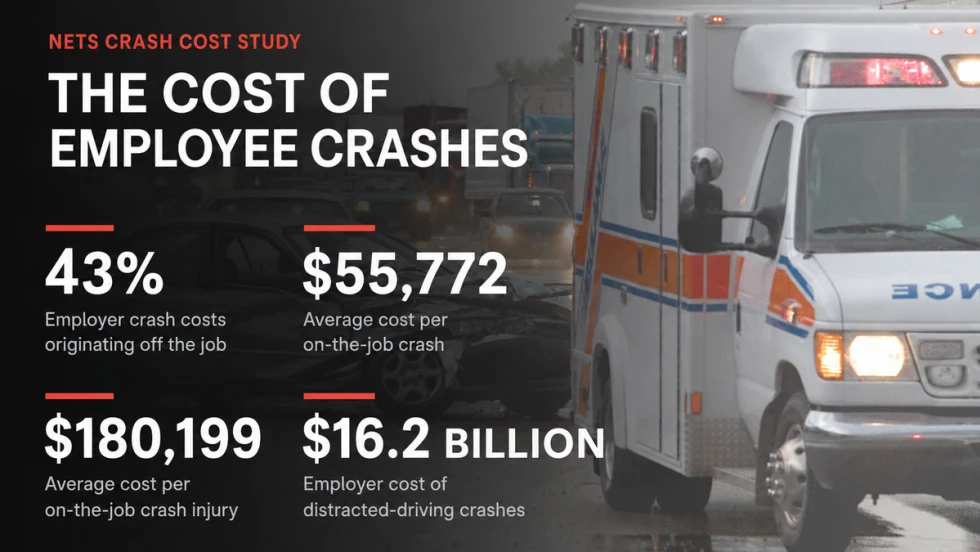
Off-the-Job Crashes Account for 43% of Employers’ $61.7 Billion Crash Burden
NETS quantifies costs dispersed across fleet, risk, HR, and other departments while providing new per-crash benchmarks for employers.
Read More →
Ram Recalls More Than 1.27 Million 1500 Pickups for Seat Belt Anchor Issue
The recall affects certain 2019-2026 Ram 1500 pickups that may have improperly attached second-row seat belt buckle anchors.
Read More →