




Cut Costs Using Fuel Management Reports
Many companies are turning to fuel card programs for their fueling needs. Data from these programs can be mined with significant savings.
Turmoil in the Middle East, hurricanes, massive demand from India and China, a strong consumption of fuel in the U.S. — these issues and more have led to increases in gasoline prices the likes of which we’ve never seen. With average prices hovering just under $3 per gallon, fleet managers have seen fuel expenses nearly double in the past 24 months.
Fuel card programs can be a strong weapon in the battle to control fuel expense, but unfortunately fleet managers don’t always use the immense flow of data such programs generate to its best advantage. Controlling fleet fuel costs goes well beyond simply tracking miles per gallon (mpg) fuel efficiency, or cents per mile (cpm) ratios. Most fuel management programs offer users excellent reporting tools that can be used to mine the data to determine where both use and dollars can be controlled.
As Always, Start with Fleet Policy
Your fleet policy document should speak to the limits the company places (if any) on the fuel for which it will pay. The policy should cover several key issues related to fuel usage:
Personal Use. Who is permitted to drive the vehicle, when, and how often?
Personal Use Chargebacks. How will the company charge drivers for personal use?
Vehicle Expense. Exactly what vehicle expense will the company pay, and what will be the responsibility of the driver?
Expense Reporting Process. Outline the full process by which vehicle expense is captured and the responsibilities of all stakeholders in that process.
Simply reviewing reams of data is not useful unless a process is in place to take action, and no action can be taken unless the “ground rules” are set up beforehand. That is the purpose of a policy document.
Manage with Exception Reports
There is little debate on how fleet managers can best review and act upon fleet expense data. Which drivers and vehicles fall within acceptable performance parameters is not important. It is of great importance who doesn’t. That is the purpose of exception reports.The first step in creating such reports is to establish benchmarks, which in turn create exceptions. Fleet managers track two primary data vis-à-vis fuel expense: fuel efficiency as expressed in miles per gallon (MPG), and overall fuel expense as expressed in cents per mile (CPM).
MPG benchmarks can have several sources:
EPA mileage estimates.
Internal MPG performance for similar make/model.
External MPG performance for like make/model, similar industries, or vehicle type.
Once benchmarks are established, fleet managers should determine the degree of difference that will prompt the exception report. Keep in mind that if this criterion is set too low (say, a 10-percent variance), too many exceptions are likely to appear. There are reasonable bases for a low level of variance that do not necessarily point to poor performance or program misuse. Generally, a 20-percent variance (if the benchmark is, say, 20 MPG, and the vehicle is achieving only 16 or greater than 24 MPG) will suffice.
Once exceptions are reported, it is usually relatively simple to weed out the most egregious. Major exceptions (a vehicle showing 5 or 50 MPG) are usually caused by reporting problems, such as wrong mileage. These exceptions can be corrected. MPGs dramatically lower than the benchmark can be caused by any number of reasons, some of which are actionable:
Preventive maintenance may not be up-to-date. Improperly maintained vehicles will not achieve the acceptable level of fuel efficiency.
Driving habits, such as quick starts and stops, can significantly affect mileage.
Urban territories, which entail more idling in traffic with attendant starts and stops, can hurt fuel efficiency. In addition, higher fuel costs combined with lower mileage will result in higher cpm figures.
It is important to note that with the volatility in fuel prices, CPM can be a deceiving statistic, especially if you are benchmarking internally (against prior years’ performance). A useful method of tracking overall fuel consumption that eliminates the effect of per-gallon price changes is “gallons per card ” — tracking gross gallons purchased by each issued card. Drivers who operate the same or similar vehicles, and drive similar mileages, should be purchasing roughly the same number of gallons each period examined. When using this method, adjust for (or at least consider) that different regions of the country can have wide swings in pricing.
Exception reports are a fast and effective method for tracking underperforming drivers and vehicles.
Monitor Purchasing Habits
A fuel management program will also provide data on the purchasing habits of your drivers, i.e., what they buy, when, and how. Here are some suggestions on which of these habits can increase your fuel expense.Type of Fuel. Fuel is usually available in three grades: regular, mid-range, and premium. Unless you operate luxury or sport vehicles, your fleet can no doubt be operated using regular unleaded fuel. The difference in price can be as much as 10 cents-per-gallon between grades, and the math shows that significant savings can result in eliminating higher-grade purchases. For example, a 1,000-vehicle fleet, driving an average of 24,000 miles-per-year per unit, will accumulate 24 million miles each year. At an average of 20 MPG, this translates to 1.2 million gallons of fuel. If the price difference is a mere 20 cents per gallon, and the fleet uses premium fuel at a 10-percent rate, eliminating such usage can save $24,000 per year.
Full- vs. Self-Service. Except for states such as New Jersey or Oregon where self-serving fuel is not permitted, your drivers may be using full-service fuel. With numbers similar to the preceding example, another $24,000 may be available for savings.
Unauthorized Fuel Purchases. Although difficult to quantify, you are no doubt paying for at least some fuel purchased in violation of company fleet policy, or that is outright fraudulent. Fueling non-fleet vehicles (spouses’ or other family members’ cars), or buying fuel for equipment, such as boats and lawnmowers, can add additional thousands to your fuel expense. Some companies have policies that do not reimburse drivers for fuel purchased for personal use. Again, thousands of dollars can be saved.
Non-Fuel Purchases. The dreaded “beer and Twinkie” factor can waste precious company dollars. A significant percentage of fuel is purchased at convenience store/gas station locations, where drivers are often tempted to buy non-fuel items (ranging from food to lottery tickets). Your fuel management vendor no doubt provides data showing such spending, which can be tracked via exception. Additionally, this practice can also be controlled by placing a “fuel only” control on fuel cards. Looking for “inside purchases” can also help pinpoint violations. The large majority of fuel merchants permit “pay at the pump,” card-swipe transactions. But drivers can circumvent this by simply choosing the “pay inside/credit” option, provided the clerk is willing to ring the entire transaction up as fuel.
More Fuel
Fuel Prices Surge in September | September Fuel Update
September brought major fuel price swings, including diesel crossing $6 a gallon. Here’s how gas and diesel prices changed throughout the month, and where they stood heading into October.
Read More →
Turning Fleet Payment Data into Executive Insights
Ramel Lindsay of U.S. Bank Voyager discusses how fleets can transform payment and transaction data into actionable intelligence to reduce costs, improve oversight, and support executive decision-making.
Read More →
Why the IRS Raised Its Mileage Rate in the Middle of 2026
Fuel-price volatility drove the rare increase to 76 cents per mile, the fifth midyear adjustment since 2000.
Read More →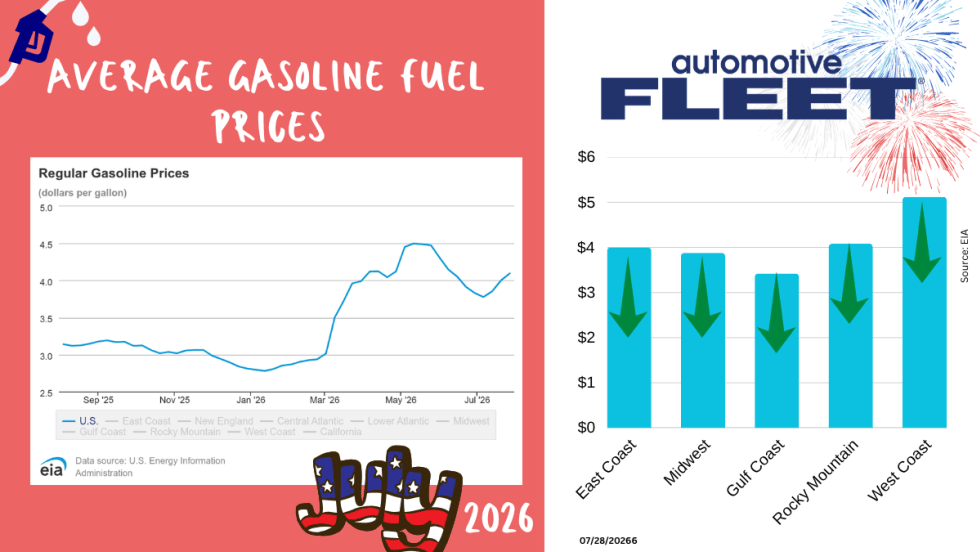
July Fuel Update: Prices Keep Rising in Light of More Conflict
Gas prices continue to rise as more and more conflicts do, too.
Read More →
Bob Adamsky on Fuel Volatility: "Don't Panic, Have a Plan."
When it comes to up and down fuel prices, Adamsky has a message for fleets: “Don’t panic.”
Read More →
How Fleets Can Gain Control of Non-Fuel Spend
Fuel often gets the spotlight, but non-fuel expenses can have a major impact on fleet costs. Ramel Lindsay of U.S. Bank Voyager discusses how fleets can gain better visibility and control over these often-overlooked expenditures.
Read More →
Fuel is Just the Start: How Middle East Tensions are Driving Up Fleet Maintenance Costs
The Middle East conflict is doing more than pushing up fuel prices. It’s also raising the cost of key maintenance products your fleet depends on, from motor oil to tires to windshield wipers. Here’s what you need to know about this budget-busting situation.
Read More →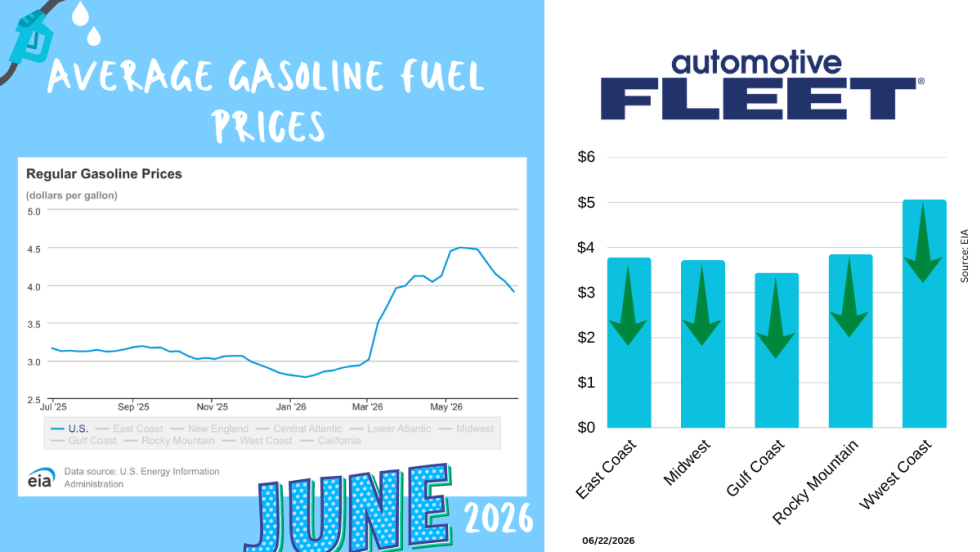
June Fuel Update: Prices Fall Below $4
Drivers are finally getting some relief at the pump. The national average gas price has dropped below $4 a gallon for the first time in months, with prices falling in 47 states as oil markets react to developments in U.S.-Iran negotiations.
Read More →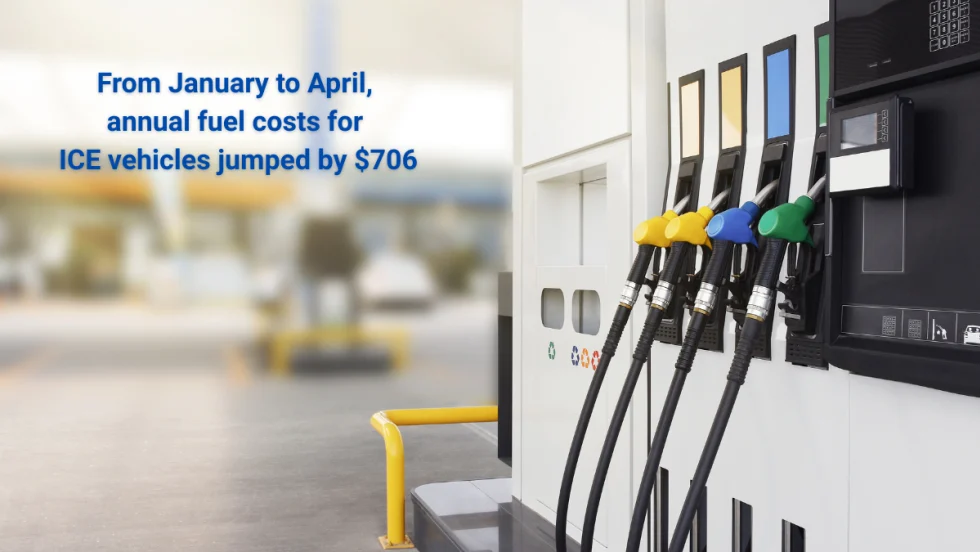
Study: How 2026's Gas Price Hikes Affect Different Vehicle Types
New data from iSeeCars reveals how rising fuel costs have affected different vehicle segments as gasoline prices climbed nearly 46% over the past four months.
Read More →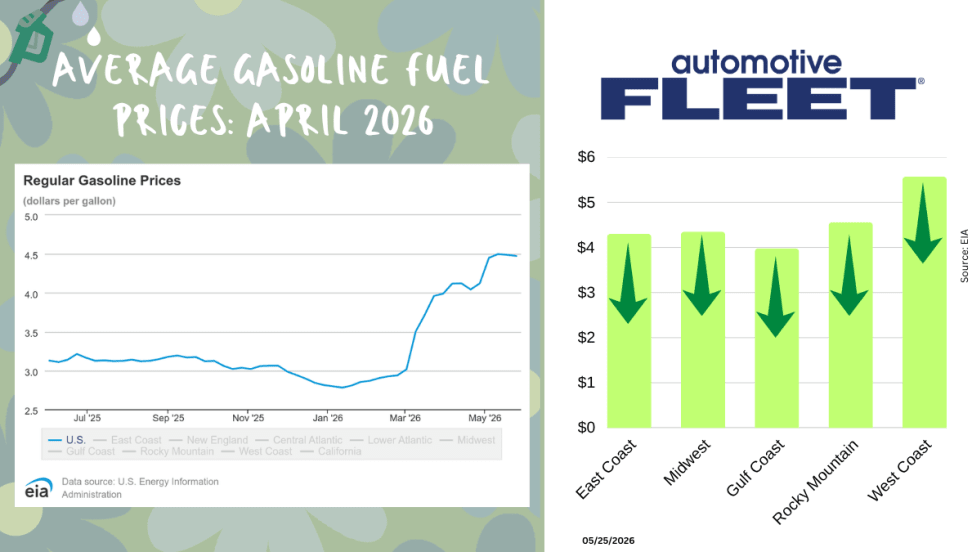
May Fuel Update: All Regions Experience Declines
Gas prices are finally easing in much of the country, but experts warn global tensions could quickly reverse the trend as the national average remains well above last month’s levels.
Read More →