




Connecticut Leads LNG Revolution on East Coast
For the past two decades, the Greater New Haven Clean Cities Coalition (GNHCCC) has worked to make fleets in Connecticut and surrounding states more efficient and sustainable.
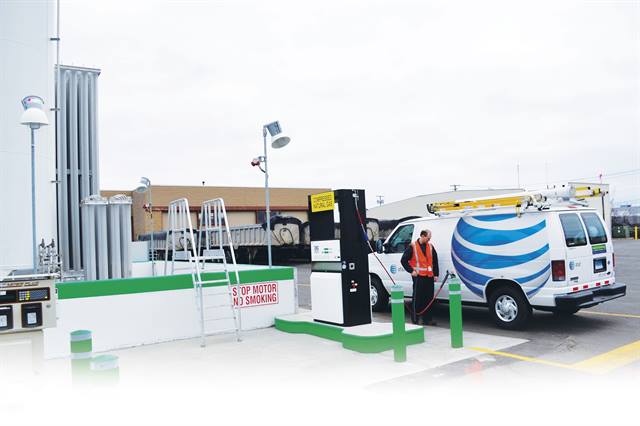
The GNHCCC manages a combined LNG- and CNG-fueling facility.
The Greater New Haven Clean Cities Coalition (GNHCCC) is helping boost the use of alternative fuels in fleets not only in Connecticut, but throughout New England’s busy transportation corridor.
“We basically started a whole liquefied natural gas (LNG) fleet operation in the Northeast with our stakeholder Enviro Express,” said Lee Grannis, coordinator of GNHCCC.
Grannis has the perspective to know about the progress, having launched the GNHCCC in 1995, and taking the reins as coordinator in 1997. The coalition has worked steadily to build ties with fleets and other stakeholders, cutting petroleum use in the Nutmeg State and beyond. For his efforts, Grannis was inducted into the national Clean Cities Hall of Fame in 2012.
The Hall of Famer serves as the lead on the $29 million Connecticut Future Fuels project, which is deploying 269 alternative-fuel vehicles (AFV) and supporting fueling infrastructure, including the first LNG station east of the Mississippi. As a direct result of the project, the number and type of AFVs has since doubled in the state, which now includes LNG, compressed natural gas (CNG), and a few hybrid vehicles. As part of the initiative, the coalition managed the $6.2 million Enviro Express combined LNG- and CNG-fueling facility established in 2010, which is adjacent to Interstate 95 in Bridgeport.
“The station really is something unprecedented,” Grannis said. “With the help of the U.S. Department of Energy, we have initiated an entirely new fueling infrastructure, serving Connecticut, New Jersey, New York, and Pennsylvania.”
This was a hallmark advance in the availability of alternative fuels in the Northeast, and is considered a showcase, which is open to both fleets and the general public.
Keeping a Vision Rolling
In his role as GNHCCC coordinator, Grannis also collaborated with Yale University as well as the National Renewable Energy Laboratory to transition Yale’s vehicle fleet to a cleaner AFV fleet. Coalition work continues to expand the use of alternative fuels in school buses. Recently, school districts in Torrington and Shelton have converted to propane-autogas buses. Grannis’ affinity for the alternative-fuel buses is no surprise. He noted the coalition was instrumental in providing the first funding to start Proterra, Inc. The project got the company rolling in 2004 as a fuel cell bus manufacturer, and the firm subsequently grew into an all-electric fast-charge bus company.
A key tactic is spreading the word especially through fleet managers, something Grannis has a lot of experience with during nearly two decades of outreach. “We talk to stakeholders all the time, providing various levels of information,” Grannis said. Up and down the Northeast, heavy-duty trucking operators, school districts, municipalities, and others continue to listen to Grannis’ message, cutting petroleum use and harmful emissions in one of the most densely populated parts of the nation.
More Green Fleet

Merchants Fleet Reports 290M EV Miles as Fleets Navigate Changing Electrification Market
From millions in operating savings to hundreds of millions of EV miles, Merchants Fleet’s latest report reveals what’s working and what’s changing in fleet electrification.
Read More →
The EV Breakdown Nobody's Talking About: Why Most Electric Vehicle Roadside Calls Aren't Mechanical Failures
Here's why EV breakdowns are widely misunderstood.
Read More →
ChargePoint Now Available in Energy Pass
ChargePoint and additional planned charging network integrations were added to GM's Energy Pass.
Read More →

First Look: Slate Auto's Electric Fleet Pickup
Could an affordable, modular EV pickup make electrification more practical for fleets?
Read More →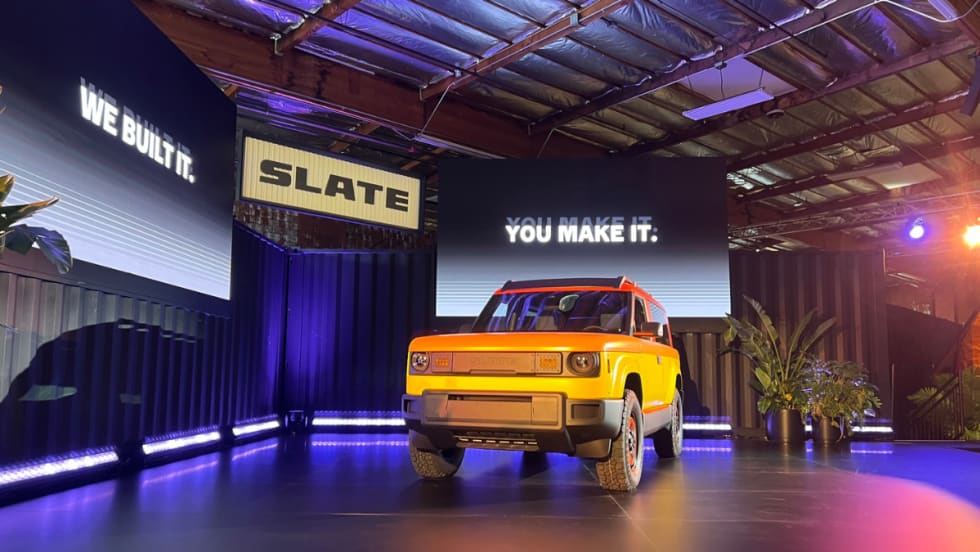
Slate Debuts Colorful, Unique EV Models
A recent media and client event, studded with electric vehicles dressed up on platforms, planted a new position for the manufacturer in the wider EV market. Fleets will find cost-saving advantages.
Read More →
Slate Electric SUV, Pickup Switchable Model Aims For Light-Duty Fleets
Everything about this EV is counterintuitive and understated, making it stand out from the crowd.
Read More →
Inspiration Mobility Acquires Key Electrada Assets
Inspiration Mobility Group has acquired select assets of Electrada, adding the fleet electrification provider's team, technology, and charging infrastructure development capabilities to its energy management business.
Read More →
Turning Connected Vehicle Data Into Decisions That Matter
Fleet leaders have more data than ever, but turning that data into clear, actionable decisions remains a challenge. This white paper shows how leading organizations are using connected vehicle data to improve safety, reduce costs, and optimize fleet performance. Learn how to turn insight into action across your fleet.
Read More →
Are You Tracking Your Fleet's True Total Cost of Ownership?
Bobit Business Media surveyed 190 fleet professionals and found that while most fleets are tracking costs, fragmented systems and data gaps are keeping true TCO visibility out of reach. With rising pressure to control spend in an increasingly volatile environment, the gap between what fleets think they know and what the data actually shows is wider than you might expect. See how your peers are managing costs today and where the industry still has room to improve.
Read More →