




Commercial Fleets See Cost Savings from Telematics
Commercial fleets are utilizing telematics to increase efficiencies and driver safety and save money. One fleet uses its system as a dispatch tool for service technicians.

Simple route mapping and vehicle tracking characterize yesterday's telematics devices and systems. Today's commercial fleet managers are adopting telematics to maximize mobile workforces, decrease accidents and increase driver safety, boost productivity, track costs, and reduce speeding.
Walgreens-OptionCare Reduces Costs
Walgreens-OptionCare, a division of Walgreen Co., provides accredited infusion services, respiratory therapies, and home medical equipment to patients with temporary or long-term needs. Based in the northern suburbs of Chicago, Moni Islam, manager of operations improvement & analysis, operates about 750 vehicles comprising cars and vans used mostly for delivery purposes.
"We are currently using the Donlen Telematics vehicle tracking solution in the majority of our delivery vehicles and piloting it on our sales vehicles," noted Islam. The telematics program has been installed in the company's delivery fleet for approximately one year.
"We have been able to reduce our total fuel cost by approximately 10 percent," said Islam. "We also were able to curb, and in some cases eliminate, unnecessary and unauthorized driving."
According to Islam, some drivers expressed concern when first notified tracking units were being installed on the vehicles, but no major issues emerged during the program's rollout and installation.
Managing Walgreen-OptionCare's mpg and emissions reductions across its vehicle segments has been critical in the company's ongoing Fleet Optimization Scorecard process.
Carrier Saves $1 Million in Fuel Costs
Carrier, a global manufacturer with more than 40,000 employees, embarked on a systematic analysis of its truck and car fleet. Through a variety of strategies, including gathering data from telematics equipment and reducing vehicle weights, Carrier reduced its fleet emissions by 30 percent and is saving $1 million each year in fuel costs.
Denise Cross, Carrier's fleet manager, is responsible for a fleet of more than 3,000 vehicles in North America. The company worked with its fleet management partner, PHH Arval, to deploy a variety of strategies, including monitoring driver behavior through telematics data.
Carrier rolled out PHH Onboard telematics devices in its service vehicles in early 2008. Program results include a 40-percent reduction in speeding and a 45-percent reduction in at-fault accidents.
Since 2006, the manufacturer has been utilizing telematics in its fleet through Trimble, a provider of advanced positioning solutions.
The telematics installation created other efficiency opportunities as well.
"We're starting to look at it as a dispatch tool," Cross said. Service technicians can be deployed more quickly in emergencies because the company knows their exact location.
The company has also used generated GPS data to make other changes. Managers saw that carrying more equipment in the trucks increases gasoline use, so they have taken steps to ensure each truck carries only necessary tools and parts.
[PAGEBREAK]ServiceMaster Weathers Rough Economic Times
ServiceMaster Restoration and Construction increased revenue by $156,000 per year through the use of telematics to improve efficiency and control the cost of each job. The Springfield, Mo.-based company provides residential and commercial services from carpet cleaning to lawn fertilizing, and furniture restoration to termite protection.
To survive the weakening economy, the fleet looked to track drivers and costs more effectively, improve vehicle efficiencies, and increase revenue without adding staff resources. At the same time, since most disaster restoration jobs require a minimum of three employees, labor cost control was a must for ServiceMaster to remain competitive.
The company addressed these challenges by installing Networkfleet on four of the most often used vehicles in its fleet. In addition to vehicle location information, the wireless fleet management system monitors and reports speed, odd-hours use, fuel usage, run-time, idle time, mileage, and engine problems, among other critical diagnostics.
System hardware connects directly to the vehicle's onboard diagnostics computer (OBD-II). Data is uploaded every two minutes to a remote database that company Vice President Ken Hedgpeth and his staff can access online, 24/7. Reports can also be scheduled and sent via e-mail to designated users. When an engine problem occurs, Hedgpeth receives an alert with information to immediately troubleshoot the problem.
"We recently received a fault code from a vehicle that had broken down 60 miles away," said Hedgpeth. "Our mechanic narrowed the problem to two possible parts, which he took with him to fix the problem on the spot. This was a huge savings because we didn't have to tow the vehicle or send out a replacement truck."
Reports revealed excessive idling, a problem Hedgpeth hadn't realized. At the same time, by receiving alerts when drivers exceeded speed thresholds, ServiceMaster has also been able to reduce average vehicle speed.
"Our trucks travel about 750 miles each week," said Hedgpeth. "An improvement from 10 mpg to 12 mpg means a fuel savings of $1,300 per vehicle annually."
LKQ Creates Efficiencies Through Telematics
A recent initiative allowed LKQ Corporation to decrease accidents and vastly improve productivity. In 2009, LKQ, a large, nationwide provider of aftermarket collision replacement, recycled OEM products, and refurbished OEM collision replacement products, won a productivity award from fleet management company PHH Arval for utilizing telematics in the LKQ fleet.
The program led to an increased number of stops fleet drivers make per day, dramatically reduced overtime costs, improved driver safety, and reduced fuel costs.
"We wanted to use only one system, and we liked what PHH had to offer. Plus, we could jointly use it with their maintenance and fuel programs," said Mike Lahr, director of logistics for LKQ.
To assess its effectiveness, the fleet team tested the system for four months, then compared before-and-after system implementation data. According to Lahr, the results were staggering and caught the fleet team off-guard regarding several issues, including:
1. Driver speed.
2. Excess idling.
3. Vastly improved productivity resulting from quicker start times and more deliveries. Also, drivers returned to dispatch faster at the end of the day because they were monitored.
"We have seen a decrease in accidents because of the controlled speed," Lahr pointed out.
[PAGEBREAK]
Safelite Uses MRM for Increased Fleet Management
Safelite AutoGlass developed a wireless mobile resource management (MRM) tool, designed to equip field technicians with GPS technology to better manage their day and handle repairs in a paperless fashion.
MRM uses BlackBerry technology to provide turn-by-turn directions and job-site credit card processing, real-time schedule updates, receipt printing, and signature capture for Safelite AutoGlass' 3,000-plus mobile service technicians. This technology helps reduce fuel costs and vehicle maintenance, trim work-order processing costs, and eliminate paper work orders.
The International Association for the Wireless Telecommunications Industry recently featured Safelite's MRM tool as a case study in its monthly webinar.
"The technology we've developed in the MRM tool has streamlined the interaction between technicians and consumers, decreasing the time involved on the consumer side and ensuring accuracy in the type of service they receive," said Chris Delong, director of Open Systems, Belron US, parent company of Safelite AutoGlass. "It has made our business more efficient and improved the quality of service we deliver."
Technicians across 46 states currently use Safelite's MRM. The tool functions on real-time electronic work order management and updates to schedules and routes. Featuring clock-in and clock-out capabilities, it captures customer vehicle identification number (VIN), mileage, and other information.
Premier Utility Services LLC Tracks Vehicles
Premier Utility Services LLC utilizes a GPS-based fleet productivity and management platform supplied by Telogis, Inc., a leading global platform for enterprise location-based services, for its 401-unit fleet comprising mostly Pontiac Vibes.
According to Ryan Martino, the utility company's asset manager, "It is a scalable, easy-to-use, software as a service (SaaS) solution for enterprise fleets. We worked closely with Telogis to deploy the system on most of our vehicles."
The system provides secure, remote access to real-time GPS vehicle and driver information. On-road vehicle location, direction, and speed are tracked. This information can be viewed easily on a dashboard monitor in the office.
"We can measure each of our team members on a range of key performance indicators (KPI)," said Martino.
Utility Services began tracking its vehicles in 2002 and moved to the Telogis platform in 2009. In selecting the Telogis product, Utility Services was looking to improve productivity and reduce operating costs.
"We wanted a solution that would enable us to better utilize our crews and vehicles. Now that our vehicles are equipped with Telogis Fleet, we are able to maximize our mobile workforce," said Martino.
The ability to track assets ensures Utility Services sends the appropriate utility locator and vehicle to each job, avoiding unnecessary cost.
"And keeping track of the vehicles' usage helps schedule maintenance more accurately, further saving money," said Martino. "Plus, having access to real-time updates ensures we deliver optimal service for all our client projects."
The utility company saw an improvement in operational efficiency as well as cost reductions.
"We're utilizing our vehicles and drivers more efficiently and delivering improved customer service," said Martino. "This delivers tangible benefits in many ways, from ensuring the correct equipment is deployed for each job through reduced maintenance and less time spent both driving between jobs and idling. In addition, we are seeing a positive change in driver behavior and safety. Our drivers are less likely to break speed limits now that the system is in place."
Utility Services wanted an easily integrated solution drivers would adopt and ultimately accept. It was important to Martino that drivers didn't feel as though they had "Big Brother" watching their every move.
"We emphasized the operational and safety benefits, and it didn't take long for everyone to be on the same page that this system improved performance and customer service, as well as actually reducing drivers' liability," said Martino.
More Telematics
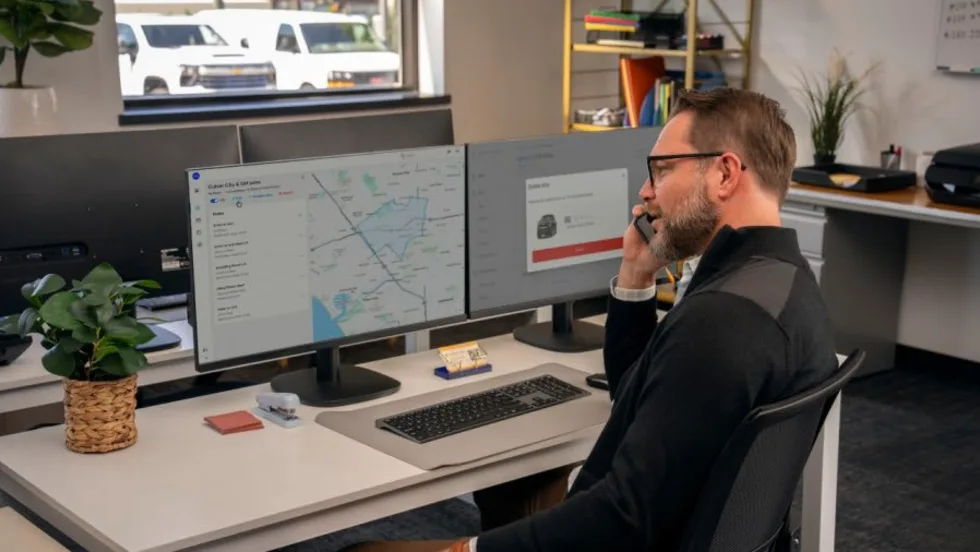
GM Launches OnStar Fleet Intelligence Platform With AI Assistant
The new platform brings vehicle data, order tracking, connected services and fleet analytics into one system, with an AI assistant that can answer fleet questions using natural-language prompts.
Read More →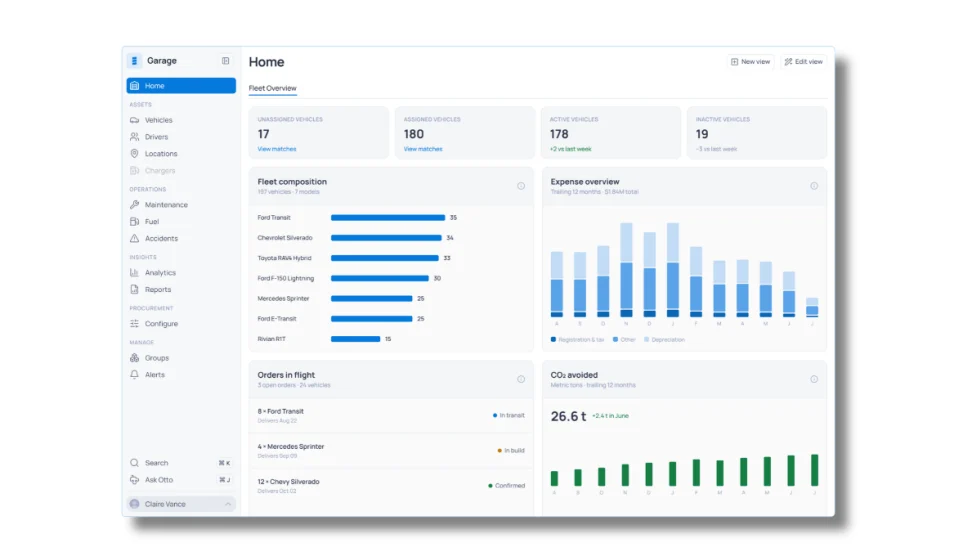
Inspiration Fleet Introduces Garage 2.0 Fleet Intelligence Platform
Fleet managers increasingly have access to data from vehicles, telematics, fuel, charging, and other systems, but those sources don't always communicate with one another. Inspiration Fleet's Garage 2.0 platform brings that information together while letting fleets keep working with different technology and service providers.
Read More →
Inside Inspiration Fleet’s New Platform for Connecting Fleet Data
Inspiration Fleet CTO Chris Getner explains how the new Garage 2.0 platform is designed to connect disparate fleet data and what that could mean for fleet managers in practice.
Read More →
Fleet Manager’s Ultimate Playbook: Navigating the New Standard in OEM Connectivity
Rising operating costs, driver safety concerns, and unplanned downtime are putting unprecedented pressure on modern fleets. Discover how fleet managers use embedded OEM connectivity and real-time vehicle data to cut TCO, prevent downtime, and protect drivers without aftermarket telematics hardware.
Read More →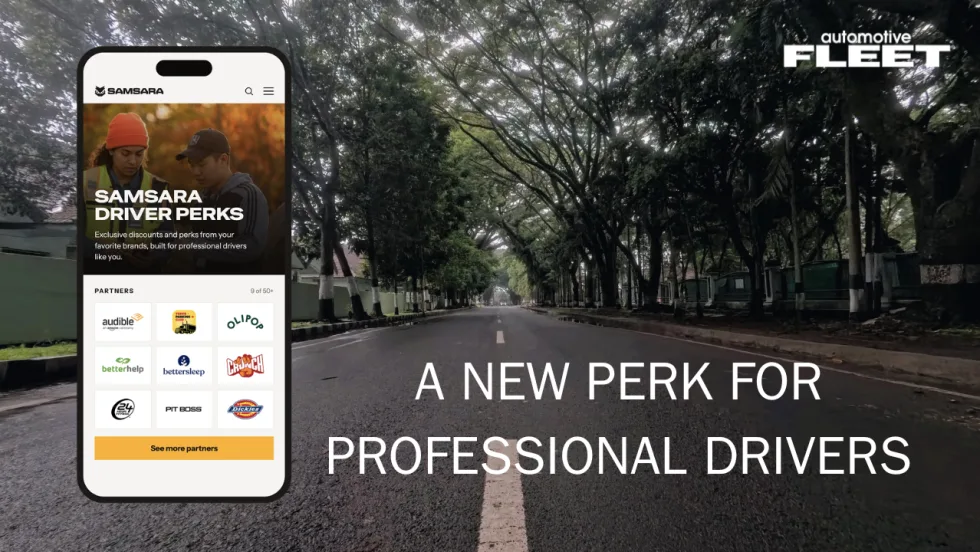
Samsara Driver Perks Adds New Benefit for Corporate Fleet Drivers
The rewards program gives eligible professional drivers access to discounts from more than 50 brands while giving fleets another way to support recruitment, retention, and the driver experience.
Read More →
Inside the Church of Jesus Christ of Latter-day Saints’ Two-Track Telematics Strategy
With 20,000 vehicles and two fundamentally different driver populations, the Church faced a fleet management problem that a single telematics program couldn't solve. How it responded offers a replicable framework for any fleet where one size doesn't fit every driver.
Read More →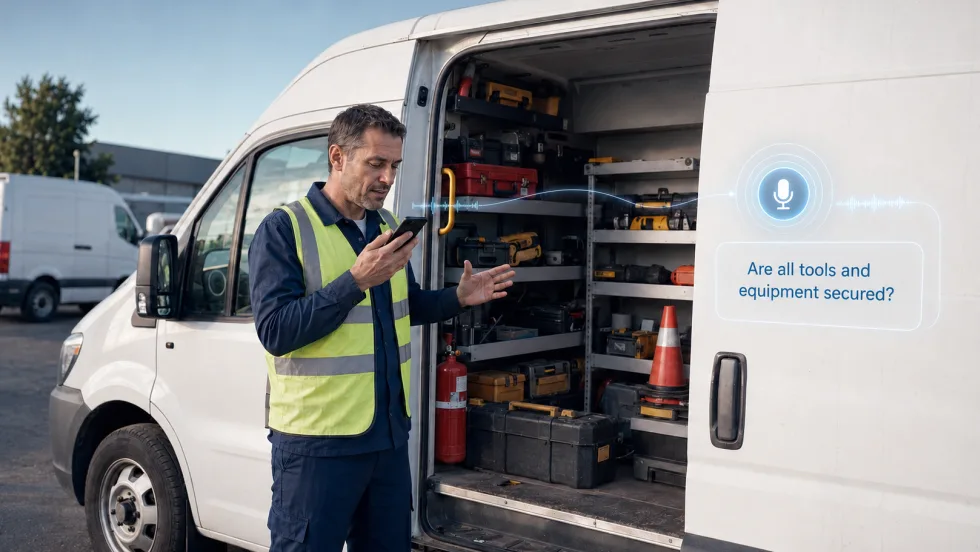
How Conversational AI Can Make Fleet Tasks Easier for Drivers
While most generative AI tools help fleet managers interpret data at their desks, Connex2X is applying voice interaction to tasks behind the wheel.
Read More →
Why Fleets Are Creating Dedicated Fleet Analyst Positions
Are fleet analyst positions the new norm? Listen here to find out.
Read More →
Teletrac Navman Begins Next Chapter as Standalone Private Company
What's new with Teletrac Navman and its new owner?
Read More →
Why Fleets Are Creating Dedicated Fleet Analyst Positions
Telematics, AI, EVs, and connected technologies are generating more fleet data than traditional teams can effectively manage. Reed Jackson explains why dedicated fleet analytics roles are emerging to turn that information into better operational decisions.
Read More →