




CNG: The Ideal Transportation Fuel
Compressed natural gas is a promising alternative to gas. However, there are obstacles preventing its widespread use. Niagara Mohawk, a New York utility, has been working hard to eliminate these obstacles.
Compressed natural gas (CNG) is the ideal transportation fuel. It's home-grown, economical, and virtually emission-free. But can it be made convenient enough, and is the delivery system economical enough to compete with liquid fuels?
Although the days of long gas lines and abrupt, across-the-board increases in the prices of all energy seem long ago, the specters of 1973 and 1979 still loom large in many memories. If we have learned anything from those experiences, it is that the world oil market is cyclical in nature and given to fluctuating periods of "boom and bust."
Nowhere are the boom and bust trends more disturbing than in the United States transportation sector. It is the biggest consumer of petroleum in our economy, accounting for more than one-quarter of all end-use energy consumption. And virtually all - 97 percent - of the products within the transportation sector are petroleum-supplied.
Compressed natural gas is one of the most promising alternative fuels that could be expected to displace petroleum fuels in significant amounts in the transportation sector.
Natural gas is plentiful in the U.S. About 95 percent of the natural gas we use comes from within the country, and 99.8 percent comes from North American sources. It is less expensive per Btu than gasoline. We have a highly-developed, million-mile gas delivery system that includes the largest storage capacity of any energy form.
Additionally, CNG is safer than gasoline. Its high ignition temperature makes it less likely to detonate. Because it is lighter than air, it dissipates quickly without forming dangerous puddles if it leaks.
Just as important are the environmental benefits of natural gas as a fuel. It's a high-Btu, high-octane (130) fuel that burns cleanly with virtually no particulate emissions, even when used in diesel engines, resulting in reduced engine maintenance and longer engine life.
The cleanliness and economy of natural gas have already led to nearly 500,000 natural gas vehicles in use worldwide, with highly successful CNG programs in Canada, New Zealand, Italy, and Brazil. In the U.S., about 30,000 cars, trucks, vans, and school buses have been converted to natural gas.
Of course, there are obstacles to further penetration of CNG as a fuel for transportation. Key among them is the relatively small size of the developed CNG market in the U.S. This has resulted in a virtually nonexistent CNG maintenance and refueling infrastructure, a critical disadvantage relative to the convenience of gasoline and diesel fuels. That may recede when large numbers of CNG vehicles enter a locality and create a demand for commercial stations.
None of the world's automakers regularly makes a vehicle specifically designed to run on natural gas. Conversion is rather costly, running as much as $2,000 per vehicle.
Another disadvantage of CNG vehicles is the reduced power and acceleration that comes from the weight of the fuel tanks and add-on equipment. Also, dual-fuel automobiles do not fully exploit CNG's high octane advantages. And there is a reluctance to change regulations regarding high-pressure gas storage.
The use of CNG in vehicles is highly sensitive to cost. As a result, customers are not rapidly switching to CNG from gasoline or diesel fuels, although increased natural gas use helps achieve the energy goal of reducing dependence on imported oil. A strong R&D effort that demonstrates cost-effectiveness and identifies the technical variables that allow cost-efficient gas use is an important step in achieving that goal.
For example, the displacement of gasoline/diesel fuels by CNG in the Syracuse-based Niagara Mohawk Power Corp. gas service area in upstate New York by only one percent could save about 90,000 barrels of crude oil per year. That becomes even more important in view of our present over-dependence on oil imports and the very long lead times required to respond to changes in supply and demand.
Consequently, Niagara Mohawk has been conducting a research effort to develop and demonstrate advanced, cost-effective technologies; to transfer those technologies for effective implementation, and to develop and demonstrate technical and cost-effective means to distribute and supply CNG as a vehicle fuel. The company has four active research projects:
Residential natural gas compressor,
Dedicated CNG vehicle,
CNG vehicle monitoring,
Demonstration of CNG in a school bus fleet.
Residential Natural Gas Compressor
The purpose of demonstrating a residential natural gas compressor and filling system is to evaluate the potential impact of using natural gas for individual and small commercial operations. The residential systems take natural gas from existing mains and compress it to 2,400 psi in storage cylinders in the trunk of the car. When the cylinders are full, the compressor automatically shuts off. Until the introduction of home gas compressors, the use of CNG was restricted to large fleet operators.
The foremost problem is the need for the residential or small commercial CNG user to have a filling site approximately each 80 to 100 miles. If public fueling stations do not become available or the driving range exceeds 80 to 100 miles, the CNG user must use gasoline or refill the car quite often. If the compressor is located at the owner's home or small business, there is more likelihood of increased use of CNG.
During 1986 and 1987, the R&D effort is focusing on various means to reduce the capital expenditure for small natural gas compressors that are commercially available to the average residential and small commercial consumer. Research is also being conducted to identify and qualify carious innovative incentive options to make investments attractive for CNG refueling, thus stimulating and potentially expanding the CNG market.
Assuming the results are favorable, this technology could allow a one percent to three-percent use of natural gas as a vehicle fuel in Niagara Mohawk's gas service territory by the year 2000.
Dedicated CNG Vehicle
Twenty-seven dedicated CNG 1984 Ranger pickup trucks were built by Ford Motor Co. and leased nationwide for trial use. Niagara Mohawk obtained two for demonstration in its gas service area. The chief advantage of the dedicated vehicle is that the engine can be optimized (i.e., acceleration and mileage improvement) for the higher octane rating of natural gas. The Ford Rangers have a compression ratio of 12.8-to-one, compared to gasoline engine compression ratios of eight- or nine-to-one. By January, 1986, the two trucks had been driven 15,784 and 8,253 miles, obtained a mileage per equivalent gasoline gallon of 11.7 and 10.2, and operating costs of $.0598 and $.0686 per mile, respectively.
It appears that CNG-dedicated vehicles will have range and performance characteristics comparable to gasoline vehicles, which will overcome the range limitations of retrofitted dual-fuel vehicles.
CNG Vehicle Monitoring
This project is to develop and demonstrate a system to collect, correlate, and report operating data from Niagara Mohawk's own CNG fleet. To date, technical and economic information is not available from vehicles operating under actual conditions. This is information the consumer must have to make appropriate fuel decisions. The monitoring system could obtain data in a more reliable and economic manner than present manual methods, and document the cost savings.
The system includes data accumulators installed on the vehicles and a central minicomputer for data retrieval, processing, and storage. The initial monitoring system was designed, installed, and tested. The onboard computer system malfunctioned due to the rigors of field conditions in early 1985. Alternative monitoring techniques were evaluated, and the resulting onboard monitoring system was reevaluated in the laboratory and under restricted road test conditions in the summer and fall of 1985. Further modifications were evaluated in early 1986.
The current phase of this research, scheduled to continue through mid-1988, is aimed at developing an advanced onboard data monitor that will also monitor gasoline and give total performance of dual-fuel vehicles. Accurate and reliable CNG refueling dispensers for measuring and documenting by vehicle are now in use. The two monitoring systems together will provide the data from which overall vehicle performance and technical and economic results can be analyzed and documented.
Where CNG Now Stands
Other gas utilities have demonstrated their interest in CNG. Nearly all of South Eastern Michigan Gas Co.'s 125 fleet vehicles have been converted. Southern California Gas Co. has a CNG fleet of more than 2,500 trucks and cars. And, 40 of Niagara Mohawk's 4,800-vehicle fleet run on CNG. However, throughout the industry, only about 13,000 vehicles use CNG.
In 1980, the U.S. government appropriated $13 million for CNG vehicle research and development. Unfortunately, little of that has been spent, primarily because low gas prices have lessened the perceived need for an alternative fuel. But as our dependence on overseas oil continues to increase, the need for alternative fuels will creep back into the consciousness of the public and officialdom. CNG's time will come again. Niagara Mohawk, among others, is preparing for that day.
More Green Fleet

Merchants Fleet Reports 290M EV Miles as Fleets Navigate Changing Electrification Market
From millions in operating savings to hundreds of millions of EV miles, Merchants Fleet’s latest report reveals what’s working and what’s changing in fleet electrification.
Read More →
The EV Breakdown Nobody's Talking About: Why Most Electric Vehicle Roadside Calls Aren't Mechanical Failures
Here's why EV breakdowns are widely misunderstood.
Read More →
ChargePoint Now Available in Energy Pass
ChargePoint and additional planned charging network integrations were added to GM's Energy Pass.
Read More →

First Look: Slate Auto's Electric Fleet Pickup
Could an affordable, modular EV pickup make electrification more practical for fleets?
Read More →
Slate Debuts Colorful, Unique EV Models
A recent media and client event, studded with electric vehicles dressed up on platforms, planted a new position for the manufacturer in the wider EV market. Fleets will find cost-saving advantages.
Read More →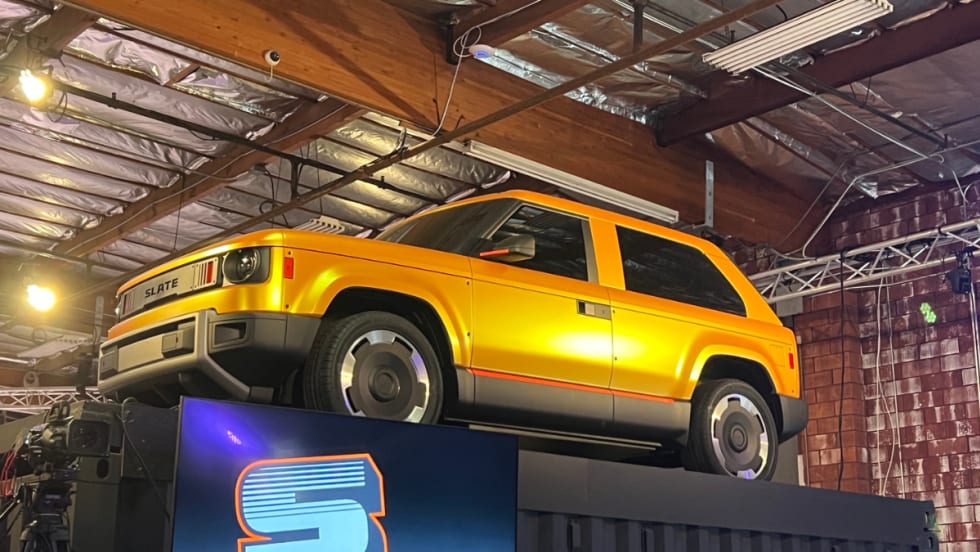
Slate Electric SUV, Pickup Switchable Model Aims For Light-Duty Fleets
Everything about this EV is counterintuitive and understated, making it stand out from the crowd.
Read More →
Inspiration Mobility Acquires Key Electrada Assets
Inspiration Mobility Group has acquired select assets of Electrada, adding the fleet electrification provider's team, technology, and charging infrastructure development capabilities to its energy management business.
Read More →
Turning Connected Vehicle Data Into Decisions That Matter
Fleet leaders have more data than ever, but turning that data into clear, actionable decisions remains a challenge. This white paper shows how leading organizations are using connected vehicle data to improve safety, reduce costs, and optimize fleet performance. Learn how to turn insight into action across your fleet.
Read More →
Are You Tracking Your Fleet's True Total Cost of Ownership?
Bobit Business Media surveyed 190 fleet professionals and found that while most fleets are tracking costs, fragmented systems and data gaps are keeping true TCO visibility out of reach. With rising pressure to control spend in an increasingly volatile environment, the gap between what fleets think they know and what the data actually shows is wider than you might expect. See how your peers are managing costs today and where the industry still has room to improve.
Read More →