




Closing the 'Barn Door': The Benefit of a Green Garage
While many fleets have invested heavily in energy-efficient vehicles to "green" their rosters, they’ve yet to make another investment in reducing the carbon footprint of their garages.

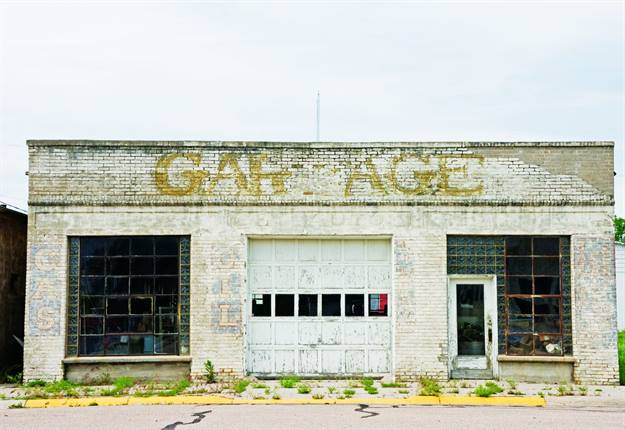
There are many benefits that can be derived from going "green." However, the overarching goal is to reduce the fleet’s carbon dioxide output (aka carbon "footprint"), helping to clean up the air and the environment.
Reducing a fleet’s carbon footprint is a win-win for everyone — the company, its drivers, and the public. For instance, carbon dioxide credits can be kept or even sold for tax credits to other organizations.
While many fleets have invested heavily in energy-efficient vehicles to "green" their rosters, they’ve yet to make another investment in reducing the carbon footprint of their garages.
Many architectural and engineering firms perform energy audits to show clients how to reduce carbon emissions by reducing their electrical draw, which, in turn, will reduce utility generation, which reduces fossil and gasoline usage.
Changes to reduce a carbon footprint and increase energy efficiency can be as simple as trading out incandescent light bulbs for fluorescent ones to illuminate the workplace with the same candlepower at the floor. Or changes can be as complex as replacing electricity needs with solar or wind technology by rehabbing present facilities with cost-saving technologies, taking the best of the worst and reducing the present carbon output directly and/or indirectly. It is a complex process, but not an overwhelming one.
Playing Catch Up
However, the best way to play catch up to modern, environmentally friendly technology and fleet progress is to scrap and replace the garage in total.
While this may sound like an extreme and expensive solution, it is not without precedence.
When the automobile was introduced more than a century ago, the horses that pulled wagons were no longer needed. The horses lived in barns, so these existing structures were used to store, maintain, and repair the now horseless carriages. As automobiles became more advanced, more were added to the fleet and the barn was modified to meet the needs of the new technology. The increase in the size of the vehicles forced them to be stored outside, so that maintenance, service, and repair could take place inside the barn.
Lights and equipment — such as jacks, lifts, drill presses, welding torches, and gantry cranes — parts and supply areas; tire service; pits; wash areas; and battery rooms were added. These additions eventually transformed the barn into a garage without physically altering the original structure — and everyone made do. In this case, the symptom was treated but the root cause was not addressed.
As the barn-based fleet increased in size, more technicians, mechanics, laborers, and semi-skilled people were added. As the staff grew, the space remained essentially static. For instance, two people had to share a bay that could only accommodate half of the vehicle with the other half outside the building. If it rained or there were other weather issues, the workers got wet and ended up taking triple the time to perform the task at hand. If it was cold, the door was — by necessity — left open and the heat escaped the building while a heater kept running, which was an expensive way to melt the snow.
There were few complaints during these "good old days." Most of the staff did what they were instructed to do inside or outside. They wanted a job, and management prided themselves on "getting it done" no matter what the cost.
However, in today’s green era, cost and resources do matter. So how does a fleet manager determine how much space he or she really needs and the real cost of doing business?
[PAGEBREAK]
Calculating Space & Manpower
Here’s an example of how to determine space needs for a new green garage for a typical fleet with a predictable mix and density, average age, and labor time of 40 percent maintenance and 60 percent repair workload. The vehicles need to be domiciled with a work schedule priority.
The sequence for maintenance and repairs covers 500 items. Each bay is open for an eight-hour shift. The work being done is either maintenance or repair. Maintenance is scheduled work with predictable times. Some tasks take a few hours and some take more based on historical information. The supervisor lines up the staff who need to work in the bay with eight hours of work, e.g., a two-hour job, a three-hour job, and two 90-minute jobs. All the fluids, parts, supplies, and tools are there to complete the job, barring any problems. One person can be assigned to one bay to predictably, proactively finish one eight-hour shift’s work in the maintenance bay.
On the other hand, repair tasks are unscheduled due to premature failure, abuses, and accidents that are not predictable. They require on-the-spot diagnosis. Sometimes, disassembly is required to get at the root cause of the problem. Once the problem is defined, the parts and supplies have to be ordered and delivered, which takes time and the vehicle is immobilized so it can’t be moved to make room for another unit.
In the repair bays, the better manpower assignment is 1½ bays per mechanic or three bays for two repair technicians/mechanics/laborers/semi-skilled workers assigned to the area. This aids in efficiency so the assigned staff have the space to work on another vehicle while the parts and supplies are delivered for the vehicle in the next bay.
Fleet people know how many direct labor hours are needed per the last 12 months to service their vehicles, because they have repair orders with time and materials for reference.
Calculations for staff and space requirements for a fleet include people getting paid 40 hours per week x 52 weeks per year which equals 2,080 hours. Miscellaneous time for vacations, sick leave, holidays, outside training, and jury duty total 580 hours per year, which leaves 1,500 at-work hours. Indirect work time, which includes coffee and restroom breaks, routine paperwork, and moving vehicles in and out of bays could be another 300 hours (six hours per week), which leaves a grand total of 1,200 hours of at-work direct time available. If the fleet takes 12,000 hours of work per year, that would mean that 10 workers are needed.
With the manpower calculation made, then the amount of space can be calculated. If 40 percent of the work is scheduled maintenance, then four out of the 10 people will get one bay each and the other six will get repair bays of 1½ bays per person; four maintenance bays, plus nine repair bays equals 13 bays total for one shift or seven bays for two shifts. If 10 people are working one shift in a seven-bay barn that is morphed into a garage, they are put at a productivity disadvantage. As the fleet morphs in size and since the facility is not designed to provide the proper space for the staff, productivity is affected and the potential for accidents increases.
The Green Garage
If a fleet pursues a green garage, technology will allow some small gains. When opportunity meets preparedness and adequate funding, a cost analysis of renovation versus replacement should be looked at. Architectural and engineering firms can perform a design-build analysis to fully take advantage of a particular economic opportunity to position garages to be more efficient and environmentally friendly.
Architects know codes, how to design facilities to fit a site footprint, and how to create energy savings. Engineers know how to build the facility with a predictable life. Some of the more efficient equipment from the barn can be moved to a new facility, but the majority of the equipment will be new, more efficient, safer, and greener, and will provide more energy savings.
It is advisable that staff input should be gathered and included in the final design. This design-build process results in productivity gains from the new equipment, the new design, and the staff feeling that their input was a part of the process. This is an overall win-win situation, both economically and environmentally, and will improve efficiency.
Greener is better. Add to that efficiency and a greater benefit is had by all.
More Green Fleet
New Propane Autogas Program Offers Fleet Compensation
Qualified commercial fleets can receive $7,500 per eligible propane autogas vehicle and up to $10,000 for new refueling site prep. Learn how the program works and see whether your fleet qualifies.
Read More →
EV Charging Use Is Outpacing Infrastructure Growth
ChargePoint’s 2026 Charging Forward Report points to rising charger use, higher-powered charging, commercial vehicle electrification, and energy-management technology. Here’s what fleets should know.
Read More →
Merchants Fleet Reports 290M EV Miles as Fleets Navigate Changing Electrification Market
From millions in operating savings to hundreds of millions of EV miles, Merchants Fleet’s latest report reveals what’s working and what’s changing in fleet electrification.
Read More →

The EV Breakdown Nobody's Talking About: Why Most Electric Vehicle Roadside Calls Aren't Mechanical Failures
Here's why EV breakdowns are widely misunderstood.
Read More →
ChargePoint Now Available in Energy Pass
ChargePoint and additional planned charging network integrations were added to GM's Energy Pass.
Read More →

First Look: Slate Auto's Electric Fleet Pickup
Could an affordable, modular EV pickup make electrification more practical for fleets?
Read More →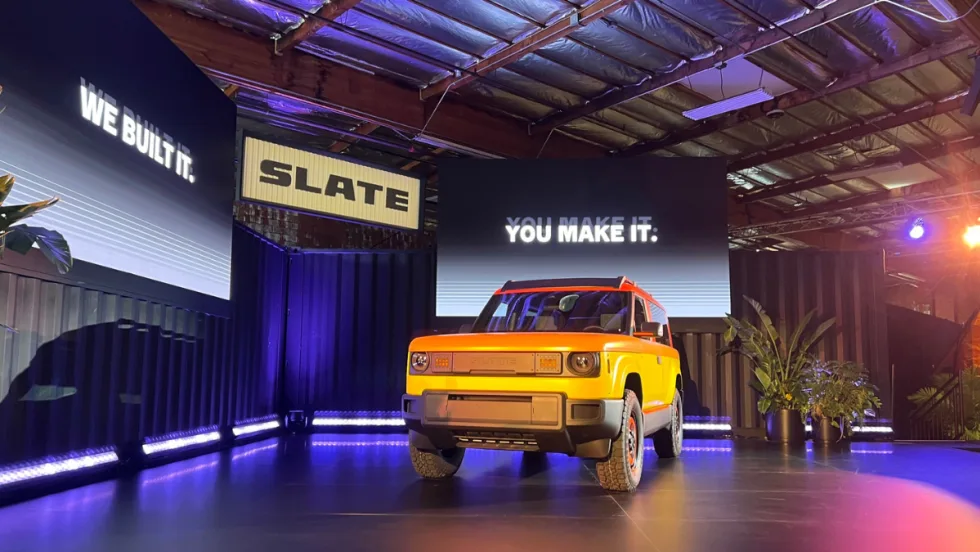
Slate Debuts Colorful, Unique EV Models
A recent media and client event, studded with electric vehicles dressed up on platforms, planted a new position for the manufacturer in the wider EV market. Fleets will find cost-saving advantages.
Read More →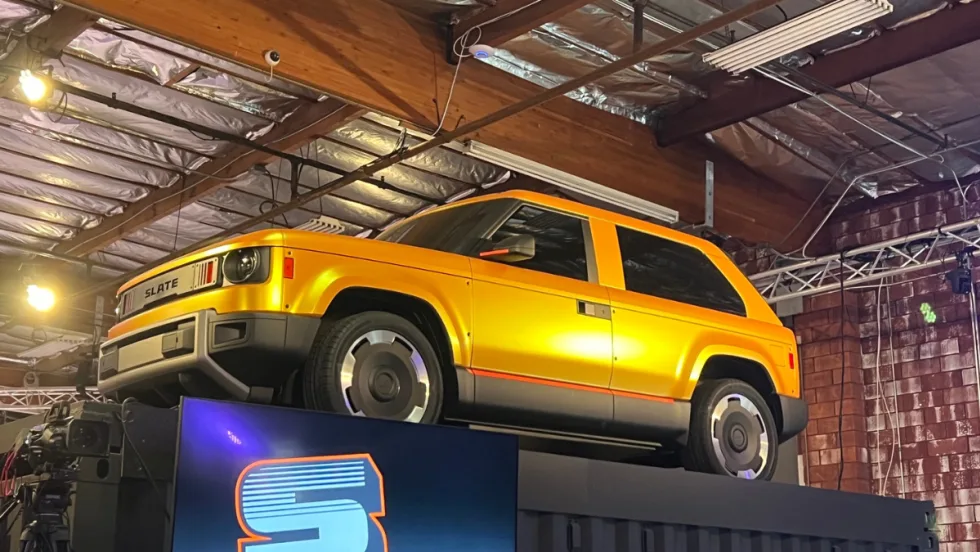
Slate Electric SUV, Pickup Switchable Model Aims For Light-Duty Fleets
Everything about this EV is counterintuitive and understated, making it stand out from the crowd.
Read More →
Inspiration Mobility Acquires Key Electrada Assets
Inspiration Mobility Group has acquired select assets of Electrada, adding the fleet electrification provider's team, technology, and charging infrastructure development capabilities to its energy management business.
Read More →